
 E-Paper



Diego Garcia, F-35: Iran's high-impact hits this week that made Trump speak of ‘winding down’
The scale, reach, and economic fallout of recent Iranian strikes appear to have weighed on Trump's sudden signal that Washington may "wind down" the war.

 Prefer HTon Google


The “war” triggered by the February 28 US-Israeli strikes on Iran saw a sharp escalation this week after Israel struck a key gas field, drawing a string of high-impact retaliations from Tehran which appeared to even force US President Donald Trump to dial down.
While the drone and missile exchange that has rattled the entire Gulf region has been going on since February 28 itself, the weekend US-Israeli strikes killed Iranian Supreme Leader Ayatollah Ali Khamenei, the Israel attack on Iran's South Pars gas field on March 18 unleashed a hard-hitting comebacks by Tehran - including what the Islamic country claims was world's first hit on a US F-35 jet. Track latest in Iran-US war here
Iran first responded to the South Pars gas field strike by damaging the world's largest LNG plant in Qatar - Ras Laffan facility - which is on the other side of the same field. This attack by Iran sent global energy prices soaring, forcing Trump to say Israel will hold off from attacking the gas field further. Trump's assurance came with a warning though.
Next came the news of Iran claiming to have hit and damaged a US F-35 jet, one of world's most advanced stealth fighters. And most recently, reports on Saturday of Iran targeting key US-UK military base Diego Garcia from 4,000 kilometres away shocked many.
Did these Iranian retaliations make Trump rethink?
For Washington, the costs of the Iran campaign it started alongside Israel on February 28 have been becoming clearer. From having energy markets shaken in the name of bringing peace and having its own critical assets like F-35 reportedly damaged, the scale, reach, and economic fallout of Iran's recent high-impact retaliation appear to have weighed on President Donald Trump’s sudden signal that Washington may “wind down” the war.
Trump on Friday said that he was considering "winding down" military operations against Iran, adding that the objectives are soon to be met.
In a post on Truth Social, Trump has now said, “We are getting very close to meeting our objectives as we consider winding down our great Military efforts in the Middle East”, with respect what he described as the “terror regime of Iran”.
His post was the strongest indication yet that he may be prepared to soon end hostilities that began on February 28.
-World's largest LNG plant hit by Iran after Israel's gas field strike
Israeli March 18 strikes on Iran's South Pars gas field damaged key infrastructure, prompting counterstrikes hours later from Iran on Gulf energy hubs, including Qatar's as Laffan LNG complex, which is on the other end of the same gas field.
The gas field under the Gulf is the world's largest and is shared by Iran and Qatar. It is called South Pars on the Iranian side and North Field or North Dome on the Qatari side. Iran relies on the field to meet its domestic energy requirements, while Qatar uses it for global LNG exports.
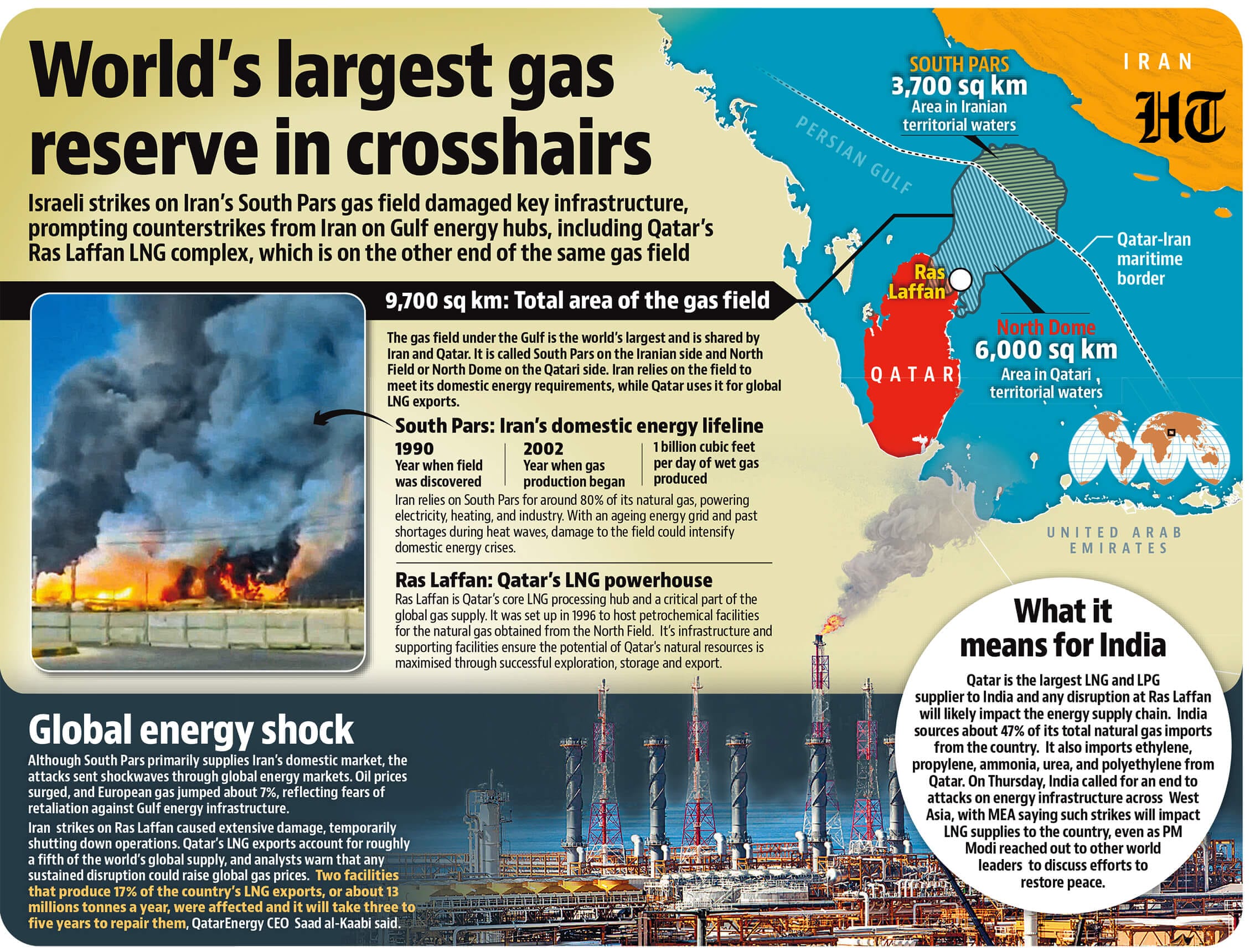
The Ras Laffan Industrial City is home to the LNG plant that accounted for about a fifth of global supply before production
Iranian missile broke through defences, causing "extensive damage" and fires to the Ras Laffan facility, raising fears of a global gas crunch. The strike rattled energy markets and directly threatened supplies to Europe and Asia-turning a regional war into a global economic risk.
Trump, shortly after the Ras Laffan strike sent energy prices soaring, took to Truth Social and announced that Israel won't hit Iranian gas field further. He did include a warning for Tehran that US could “massively blow up” the facility if Tehran launches additional strikes on Qatar’s liquefied natural gas (LNG) infrastructure.
F-35 jet damaged
Amid the drone and missile salvo, Iran claimed this week it damaged a US F-35 stealth fighter, forcing an emergency landing-potentially the first time the jet has been successfully targeted in combat.
While the US did not confirm the same, Central Command did say one of the warplanes made an emergency landing and the pilot was in stable condition.
Even partial damage to one of America's most advanced aircraft sent a strong signal: Iran's air defences remain far from neutralised despite weeks of strikes.
Iran's Islamic Revolution Guards Corps (IRGC) said it had successfully hit a US Air Force F-35 stealth fighter jet in central Iran's airspace. According to a statement released by the IRGC on its official news website on Thursday, the jet was struck at 2:50 am local time by the IRGC's air defence systems.
"The fate of the fighter jet is unclear and under investigation, and the likelihood of its crash is very high," it said.
This Iranian claim came just one day after the White House claimed in an X post that F-35 represents "decisive American power."
Iran later also released footage it said was of the F-35 being targeted by the IRGC Aerospace Force’s air defence.
Iran targets crucial US base Diego Garcia in big message
In a major revelation of Iranian defence's range, unconfirmed reports on Saturday said Iran fired ballistic missiles toward Diego Garcia, a key US-UK base deep in the Indian Ocean.
Though the missiles did not hit, the message was unmistakable: Iran can now target far-flung Western military assets, not just the Middle East.
Iran reportedly fired two intermediate-range ballistic missiles at Diego Garcia, a joint US-UK military base in the middle of the Indian Ocean, indicating that it has missiles with longer range than earlier thought.
If confirmed, this would mark Iran’s first operational use of IRBMs and a significant attempt to target areas far beyond the Middle East and threaten US interests.
Neither of the missiles hit the base which is 4,000 kilometers away from Iranian territory, Wall Street Journal reported, citing multiple US officials.
One of the missiles failed in flight, and the other was intercepted by a SM-3 interceptor fired from a US warship, according to two of the people cited by WSJ. It couldn't be determined if an interception was made, according to one of the officials.
Diego Garcia in the Chagos Islands is one of two bases Britain is allowing the United States to use for "defensive" operations in Iran. The other one is Fairfort.
Strait of Hormuz chokehold, warning for UAE
Iran has also lately intensified its campaign in the Strait of Hormuz, disrupting shipping and targeting vessels-choking a route that carries roughly 20 per cent of global oil supply.
The resulting spike in energy prices fed political pressure back in Washington, complicating further escalation.
Iran's military warned the United Arab Emirates on Saturday against allowing attacks from its territory on two disputed islands in the Gulf, near the strategic Strait of Hormuz.
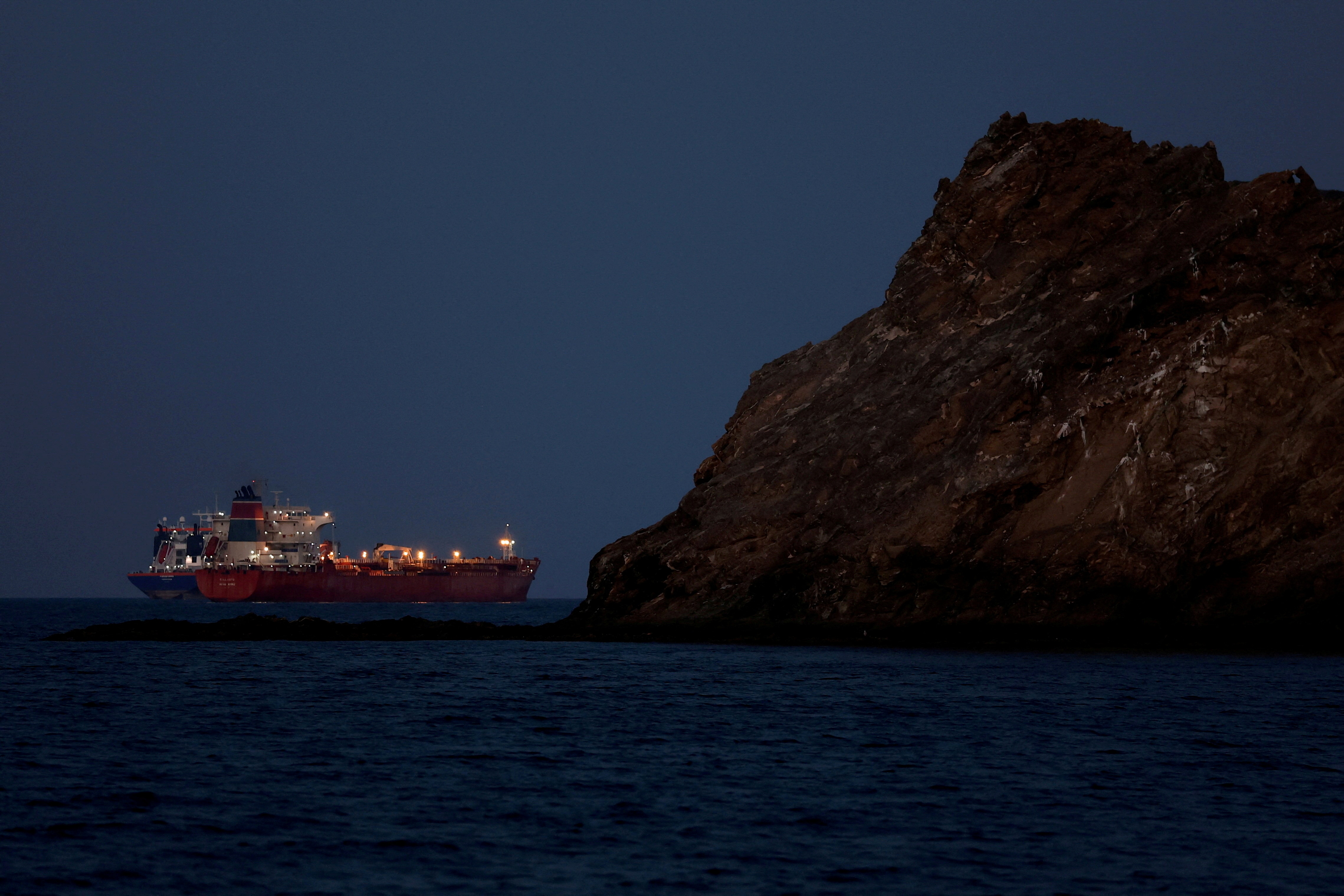
"We warn the United Arab Emirates if any further aggression originates from its territory against the Iranian islands of Abu Musa and Greater Tunb in the Persian Gulf, Iran's powerful armed forces will subject Ras Al Khaimah in the UAE to heavy strikes," the military's operational command Khatam Al-Anbiya said in a statement carried by Tasnim news agency.
Abu Musa and the Greater Tunb islands, which are controlled by Iran but claimed by the UAE, have long been a source of dispute between the two countries.
The islands are located in the Gulf near the entrance to the Strait of Hormuz, through which normally about a fifth of the world's oil passes.


