
 E-Paper



Distrust of China brought India, Japan, Australia and US together: Report
Vaccine plans and other outcomes announced at the Quad summit “could usher in a new chapter in cooperation”

 Prefer HTon Google


Distrust of China’s role in the Indo-Pacific region has “consolidated” the Quadrilateral Security Dialogue (Quad) between Australia, Japan, India and the US for now, as questions remain about its future because of India’s “inconsistent enthusiasm”, the autonomous US Congressional Research Service (CRS) has said in a new paper.
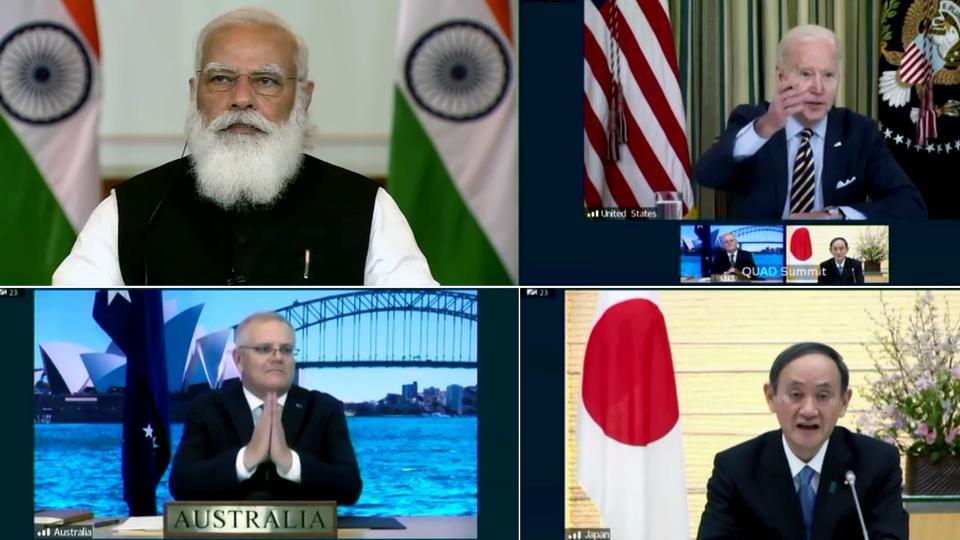
The four-nation body - known as the Quad - held its first summit-level meeting in March, virtually, and announced plans to distribute up to 1 billion doses of Covid-19 vaccines in the Indo-Pacific region countries and set up working groups for cooperation on climate change and emerging technology.
“Questions remain about the durability of the arrangement if leadership shifts in member countries, whether other countries will be brought into the Quad’s initiatives, and particularly about India’s inconsistent enthusiasm for the grouping,” the report said, adding, “For now, however, distrust of Beijing’s role in the region has consolidated the Quad.”
The CRS feeds US congress with the latest and detailed analysis on an entire range of issues from domestic to international and though it does not speak for the legislative body or its members it tends to reflect the current thinking there, which it also shapes and informs through its reports.
This CRS report looks at US-Japan relations primarily and deals with the Quad only in a section, as part of Japan’s foreign policy. Tokyo has been at the forefront of establishing the group, with former Prime Minister Shinzo Abe (who governed from 2012 to 2020) as a leading advocate of it.
“Japan’s eagerness to pursue the Quad appears driven above all by its concern over China’s increasing power, influence, and assertiveness in the Indo-Pacific region. In theory, engaging India eastward could compel Beijing to divert some of its resources and attention to the Indian Ocean,” the report said.
The Quad was born in the aftermath of 2004 Tsunami as the four nations joined hands for relief and rehabilitation efforts in the region. But, it kind of petered out as Australia pulled out. The grouping was formally relaunched in 2017 and after a series of official and ministerial meetings, it held its first summit this year.
Prime Ministers Narendra Modi, Scott Morrison of Australia and Yoshihide Suga of Japan joined the US President Joe Biden in a virtual summit on March 12, for their first and historic summit. They are expected to hold their first in-person summit later in the year, possibly on the sidelines of the G-7 meeting, which the UK is hosting in June.
The Quad summit, which was called by President Biden as his first major foreign policy initiative, “elevated the group’s profile and expanded its scope of operations,” the CRS report said and added the vaccine plans and other outcomes announced at the summit “could usher in a new chapter in cooperation”.


