E-Paper



Do not set new global climate benchmarks, says Yadav at G20 meet
In a session on ‘Paris Aligned Financial Flow’ at the ongoing G20 summit, India made an intervention stating that “the momentum of climate action can only be accelerated when there is enough support through means of implementation including finance and technology.”


Union environment minister, Bhupender Yadav, said the world “should not be shifting goalposts and setting new benchmarks for global climate ambition” at the G20 Energy and Climate joint ministerial on Friday, referring to diplomatic pressure to announce a net zero emissions target by mid-century.
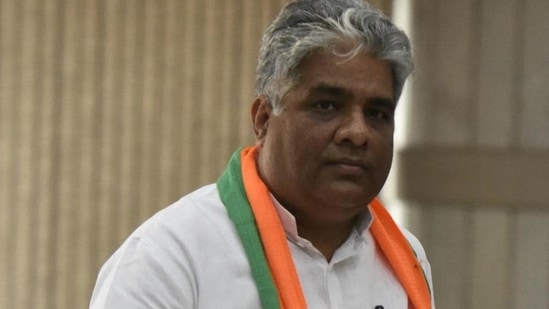
In a session on ‘Paris Aligned Financial Flow’ at the ongoing G20 summit, India made an intervention stating that “the momentum of climate action can only be accelerated when there is enough support through means of implementation including finance and technology.” “We should not be shifting goalposts and setting new benchmarks for global climate ambition,” Yadav said at the summit according to a statement issued by the environment ministry on Friday.
The United Nations is pushing for a global coalition committed to net zero emissions by 2050 which will cover all countries, Antonio Guterres, United Nations Secretary General had said in April ahead of Virtual Leaders’ Summit on Climate convened by the US.
He also called on Organisation for Economic Cooperation and Development (OECD) countries to phase out coal by 2030, and 2040 elsewhere.
Prime Minister, Narendra Modi announced the launch of India-US Climate and Clean Energy Agenda 2030 at the Leaders Summit on Climate. While not making any changes or upgrades to its commitments under the Paris Agreement, PM Modi underlined that India was already doing its part and that India’s per capita carbon emissions are 60% lower than the global average.
Yadav maintained the same position and said there is a need to cut absolute emissions rapidly while taking into account the Paris Agreement which emphasised on respective historical responsibilities, delivery of promised climate finance and technologies at low cost keeping in perspective per capita emissions, differences in per capita GDP and the unfinished agenda for sustainable development.
“India remains steadfast in its commitments to join and lead efforts to combat climate change within the multilaterally agreed convention and its Paris Agreement,” the environment ministry said in a statement adding that India has exhibited exemplary resolve by achieving its pre 2020 voluntary commitment of reducing emission intensity.
“The issue of climate finance takes a critical shape as we accelerate the implementation of nationally determined contributions towards achieving goals of the Paris Agreement , and are severely affected by the social and economic impacts of the COVD pandemic. India has exhibited resolve through its pre-2020 climate commitments by achieving a 24% reduction in emissions, against our voluntary commitment of 20-25% by 2020,” Yadav said in his intervention.
He also made it clear that India will accelerate action on climate change only when there is enough support from developed countries on finance and technology.
“We will continue to focus on the implementation of our ambitious plans through concrete actions domestically as well as globally through international collaboration such as the International Solar Alliance, Coalition of Disaster Resilient Infrastructure, etc. The momentum of climate action can only be accelerated when there is enough support through means of implementation including finance and technology,” he said.
“For the G20 to take leadership in achieving the Paris goals as a block, the developed country members of the G20 have to take leadership in fulfilling the commitment of USD100 billion per year target. We have taken note of the recent finance support announcements of some G20 developed countries. However, a lack of action and ambition in delivering climate finance is impeding ambitious climate actions," India said highlighting that the current scale, scope, and speed of climate finance actions of G20 developed country members were not matching the expectations towards meeting the commitments.
India made it clear that initiation of work on long-term finance by developed countries will provide a clear signal for developing country members of G20 to make bolder decisions and develop long-term strategies in curbing climate change.
49 parties to the Paris Agreement representing 60 countries and 54.1% of global GHG emissions, have so far communicated a net-zero target according to Climate Watch.
India reduced support to the fossil fuel industry by 4% from 2015 to 2019 even as the countries in the G20 forum of the world’s major economies are not walking the talk in addressing the climate crisis, a new BloombergNEF report released on Tuesday said. The G20 countries provided $636 billion in direct support for fossil fuels in 2019, which is just 10 less than that in 2015, it added.
The report by BloombergNEF, a global research organisation, noted India has reduced the support, but it has 66 coal power plants in the pipeline. India is second only to China, which has 247 coal power plants in the making among G20 countries while Indonesia has 33.
Most G20 countries have announced ambitious climate targets to reach the Paris Agreement goal of limiting global temperature rise to 1.5-degree C compared to pre-industrial levels. But the report said they provided $3.3 trillion support for coal, oil, gas, and fossil-fuel power between 2015 and 2019. It added the sum could have funded 4,232GW new solar power plants or over 3.5 times the size of the current US electricity grid.
"India’s disappointment with the shortfall in climate finance is understandable. Recent emphasis on net zero targets to stay within 1.5 deg C warming may also feel like shifting of negotiating goalposts. But recent extreme events have shown that even small degrees of average global warming can lead to dangerous heat waves, floods, and cyclones. For India, scaling up renewable energy and nature-based solutions can bring new jobs and better health, but much depends on clean technology partnerships for industrial production," said Ulka Kelkar, director of the climate programme at the World Resources Institute, India.