
 E-Paper



Donald Trump goes from ‘good talks’ to ‘Iran begging for a deal’: What happens now to truce possibilities?
Trump hardens stance 3 days after speaking of a thaw, as Iran remains cagey; at the same time, Pakistan says indirect talks are on: What's really happening?

 Prefer HTon Google


US President Donald Trump on Thursday pivoted back to making claims of a victory over Iran, and said Tehran is “begging for a deal”, three days after he spoke of a possible truce and “productive” and “very good” talks to end the conflict that's now in its fourth week.
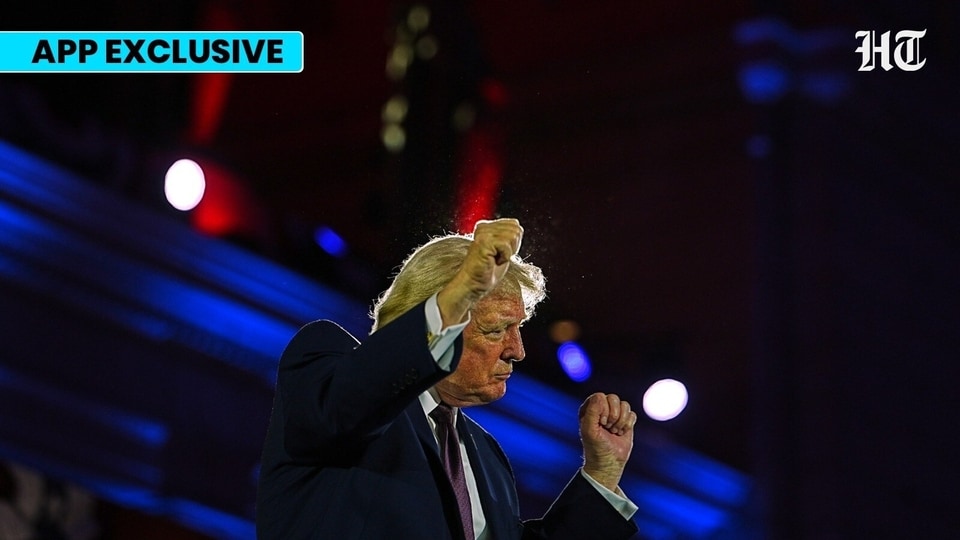
Trump's latest turnaround came simultaneously with reports saying “US-Iran indirect talks are taking place”, citing Pakistani officials.
Iran had already rebuffed the US President publicly even as its neighbour Pakistan, one of the main mediators, sent out an invite on Tuesday that Trump nodded to on social media.
But, on Thursday, Trump posted on Truth Social: “The Iranian negotiators are very different and ‘strange’. They are ‘begging’ us to make a deal, which they should be doing since they have been militarily obliterated, with zero chance of a comeback, and yet they publicly state that they are only ‘looking at our proposal.’ WRONG!!! They better get serious soon, before it is too late, because once that happens, there is NO TURNING BACK, and it won’t be pretty!”
Pakistan went further on the possibility of truce anyway. After Trump's Truth Social post, Pakistan's deputy PM and foreign minister Ishaq Dar also wrote on X on Thursday: “US-Iran indirect talks are taking place through messages being relayed by Pakistan. In this context, the United States has shared 15 points, being deliberated upon by Iran. Brotherly countries of Turkiye and Egypt, among others, are also extending their support to this initiative.”
Amid all the speculation and a mounting war bill for the US in particular, both sides have hardened their public positions.
This can be charted from Monday, when Trump first spoke of “talks”, to Thursday, March 26, when he issued the “before it is too late” threat.
Toll in Chinese currency on Hormuz Strait
Tehran has moved to formalise its control over the crucial Strait of Hormuz, which it has choked as a tactic affecting about a fifth of the world's oil supply.
Trump had on Monday paused, until Friday, his threat to bomb Iran's energy sources if the waterway was not opened. Yet, American ally Israel said on Thursday that it has killed Commodore Alireza Tangsiri, the head of Iranian Revolutionary Guard’s navy. He was the key official overseeing the closure of the strait. Iran did not immediately acknowledge Tangsiri’s killing.
Iran, meanwhile, has started charging fees from ships it allows to safely transit the strait, secretary general Jasem Mohamed al-Budaiwi of the Gulf Cooperation Council said. These payments are being made in Chinese yuan, bypassing the dollar hold.
Ground invasion coming?
The US, in turn, is now sending troops to the region for possible deployment on the ground, as so far the war has been limited to airstrikes, missiles and drones. A strike group anchored by the warship USS Tripoli drew closer to the region with some 2,500 Marines. At least 1,000 paratroopers from the 82nd Airborne unit have been ordered to the region too, news agency AP reported.
US Navy Admiral Brad Cooper, who commands the American military in the region, said his forces have hit more than 10,000 targets since Israel and the US started the war on February 28, destroying “92% of Iran's largest ships and more than two-thirds of the country's missile, drone and naval production facilities”.
“We’re not done yet,” said Admiral Cooper, who heads the US Central Command, in a video message, “We are on a path to completely eliminate Iran’s wider military apparatus.”
'Catastrophe for world's economies'
But Iran's grip on the strait and relentless attacks on energy infrastructure in the Gulf countries housing US military bases has sent oil prices skyrocketing. Brent crude, the international standard, traded at US$104 early Thursday, up more than 40% from the day the war started.
“To make it crystal clear, this war is a catastrophe for world's economies,” German defence minister Boris Pistorius told reporters during a visit to Australia.
Using Pakistan as an intermediary, the US has delivered to Iran a 15-point ceasefire proposal, which includes the reopening of the Strait of Hormuz.
Iranian state TV said the country has its own five-point proposal, which includes “sovereignty over the Strait of Hormuz".
Trump anyhow insisted on Wednesday: “They are negotiating, by the way, and they want to make a deal so badly, but they’re afraid to say it because they figure they’ll be killed by their own."
Where all the talk about ‘talks’ now stands
Iran’s foreign minister Abbas Araghchi said, however, only acknowledged that the US sent messages through other nations, “but that is not a conversation nor a negotiation".
Israel continued its wave of attacks early targeting Iranian infrastructure. Air defences were heard in Tehran, while heavy strikes were also reported around Isfahan, a key city around 330 km away from the capital and home to a major Iranian air base and other military sites, as well as one of the nuclear sites bombed by the US during the 12-day war between US-backed Israel and Iran last June.
Sirens were also sounded early on Thursday morning in parts of Tel Aviv and cities in central Israel, and later explosions were heard in Jerusalem.
Since the war began, more than 1,500 people have been killed in Iran, its health ministry says. Nearly 1,100 people have died in Lebanon, where Israel is expanding its operation statedly against Iran-backed Hezbollah militia. Also, 20 people have been killed in Israel while three Israeli soldiers have been killed in Lebanon. At least 13 American troops have been killed. Four people have been killed in the occupied West Bank and 20 in Gulf Arab states surrounding Iran.


