
 E-Paper



Countries, sectors which are most affected by Trump tariffs. Who is exempted?
Donald Trump's tariffs will be rolled out in 2 phases: a 10% baseline tariff will start on April 5, with higher tariffs for top offenders starting on April 9.

 Prefer HTon Google


Several major trading partners of the United States will face significant impacts due to President Donald Trump's new “reciprocal tariffs” which are taxes on imports. Companies bringing foreign goods into the US pay these tariffs, which are typically calculated as a percentage of the goods' value.
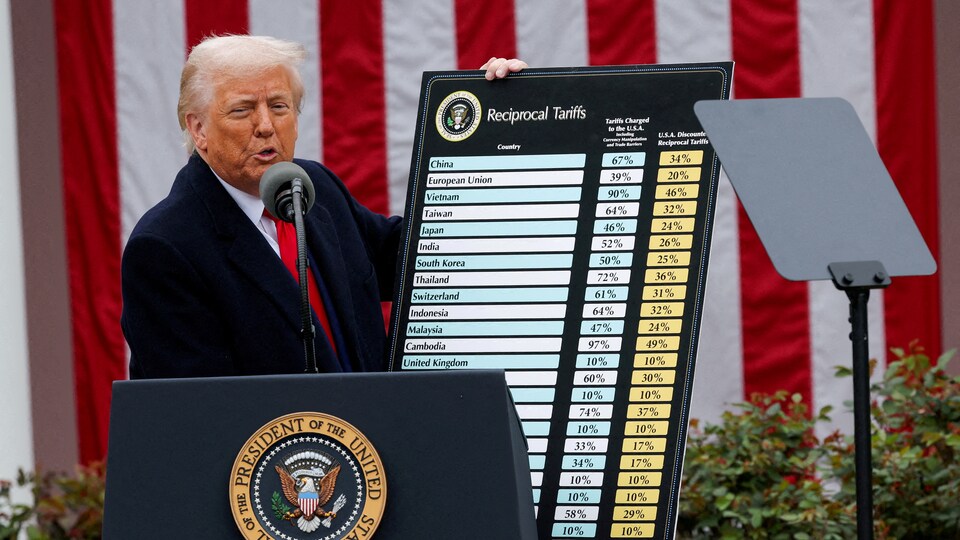
Among the hardest-hit countries is Lesotho, a small southern African nation, which faces a 50% tariff—the highest of any nation. The tariff rates were determined using a formula that calculates a country's trade surplus with the US and divides it by the total exports, based on 2024 data from the US Census Bureau. This number is then halved to produce the “discounted” rate, leading to Lesotho and Madagascar, both some of the world’s poorest nations, being hit with rates of 50% and 47%, respectively.
These tariffs mark the highest trade barriers in over a century, with a baseline 10% tariff on all imports and higher rates for certain countries. The United Kingdom will also face this 10% baseline tariff.
A total of 60 countries will face even higher tariffs, reaching up to 50%, including Cambodia, Vietnam, Malaysia, and Bangladesh. The European Union will face a 20% tariff, with the measures set to take effect in the coming days.
In addition to these tariffs, Donald Trump reaffirmed previously announced duties, such as 25% on steel and aluminium, as well as foreign-made cars. China will face a 34% tariff, which is in addition to an existing 20% duty on all Chinese imports, while the EU will also be hit with a 20% tariff.
China and the EU, which together account for about a quarter of US imports, are among the top three suppliers to the US, alongside Mexico.
Several Southeast Asian nations will see tariffs of up to 49%, with countries like Vietnam, Laos, and Cambodia particularly impacted, as these nations are vital suppliers of consumer goods, machinery, electrical equipment, and textiles.
Japan faces a 24% tariff, while South Korea will be charged 25%, despite both hosting major US military bases. Taiwan will be slapped with a 32% tariff as tensions with China continue to rise.
India’s tariff has been slightly revised, dropping from 27% to 26%, according to a White House document, and will take effect on April 9. Trump had previously presented a chart showing the tariffs that countries like India, China, the UK, and the EU will now face, with India being noted for imposing 52% tariffs, including for currency manipulation and trade barriers. The US has now imposed a discounted reciprocal tariff of 26% on India.
Implementation
The new tariffs will be implemented in two phases. A 10% baseline tariff will take effect on April 5 at 12.01 am (0401 GMT). Higher tariffs for the "worst offenders" will begin on April 9 at 12.01 am (0401 GMT). Major trading partners will face steeper rates, with China being hit with a 34% tariff, which is in addition to a previous 20% fentanyl-related tariff, bringing the total to 54%. India will face a 26% tariff, South Korea 25%, Japan 24%, and the European Union 20%.
Sectors, countries exempted from Trump tariffs
Canada and Mexico, the US's largest trading partners, were not targeted with new tariffs on Wednesday, but they already face a 25% tariff on many goods and a separate set of tariffs on auto imports.
While Mexico and Canada are exempt from the new tariffs, the existing 25% duties on exports to the US that don't comply with the United States-Mexico-Canada Agreement (USMCA) remain in place, with exceptions for Canadian energy and potash, which are taxed at 10%.
These additional country-specific tariffs will not be applied on top of existing tariffs on steel, aluminum, and autos.
In a statement following the Rose Garden ceremony, the White House noted that certain commodities, including semiconductors, lumber, copper, gold, and pharmaceuticals, will be exempt from the tariffs set to begin on April 5. The list also includes energy and minerals unavailable in the US. Additionally, aluminum, steel, and auto components are excluded from the new tariffs as they are already subject to Section 232 duties.
(With inputs from agencies)


