
 E-Paper



‘Donald Trump will avoid provoking North Korean leader Kim Jong Un’, says top US envoy
“I want to emphasize the commitments we have made to the North Koreans,” Stephen Biegun told the Shangri-La Dialogue, a major Asian security meeting in Singapore, on Saturday.


President Donald Trump will avoid provoking North Korean leader Kim Jong Un as the US looks to defuse tensions following a failed summit in February, according to his administration’s top nuclear envoy.
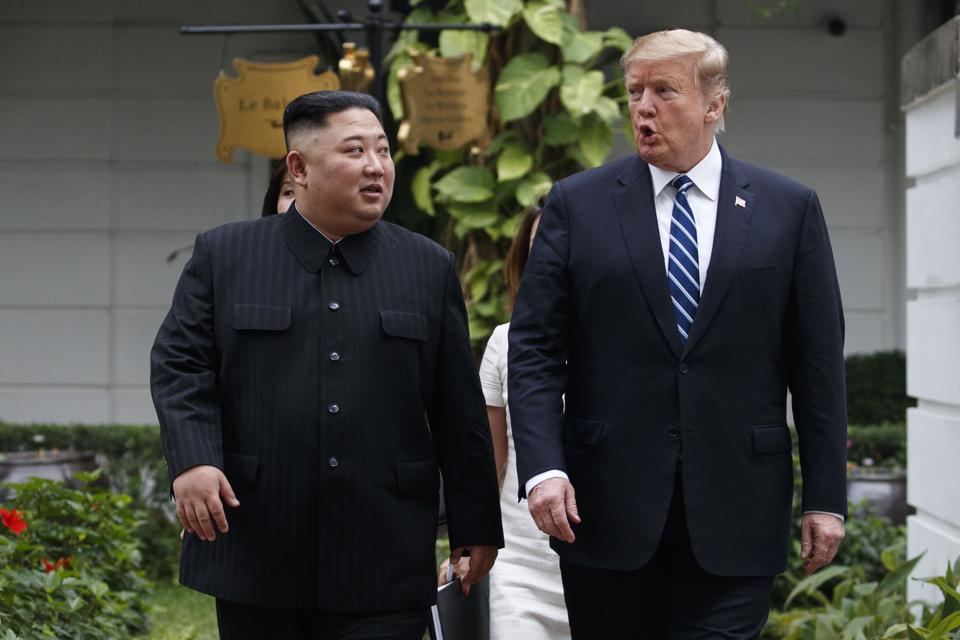
“I want to emphasize the commitments we have made to the North Koreans,” Stephen Biegun told the Shangri-La Dialogue, a major Asian security meeting in Singapore, on Saturday. “And we have made these commitments directly and indirectly, privately and publicly -- to remain engaged, avoid provocations.
“The United States is convinced that through continued negotiations, we can continue to close the gaps that separate our two countries and make further progress on all the goals that we committed to in Singapore,” Biegun added.
Tensions have risen since the collapse of talks at second summit in Hanoi, with each side blaming the other for the failure to reach a deal. Kim, who conducted ballistic missile tests last month in a move seen as violating United Nations sanctions, has given Trump until the end of the year to ease sanctions choking his state’s moribund economy.
The U.S. said the summit fell apart when Kim asked for too much in sanctions relief and offered too little disarmament. U.S. National Security Advisor John Bolton said about a week ago that Biegun “can’t wait to talk to his North Korean counterpart, but they haven’t responded.”
South Korea’s Chosun Ilbo newspaper reported Friday that North Korea executed Kim Hyok Chol, Biegun’s counterpart in the talks, along with four other foreign ministry officials in March after the failed summit. Seoul’s presidential office suggested that reports of the envoy’s demise should be treated with some skepticism, and Biegun didn’t comment on them on Saturday.
The Singapore summit in June 2018 resulted in a bare-bones declaration that contained four main items: Normalizing ties between the U.S. and North Korea, formally ending the 1950-53 Korean War, repatriating U.S. war remains and working toward the “complete denuclearization” of the Korean Peninsula.


