E-Paper



Global vaccine coverage dropped to 1/2 of what was anticipated: Gates Foundation
However, the Institute for Health Metrics and Evaluation also acknowledges that disparities caused by Covid-19 remain stark, and those who have been hardest hit by the pandemic will be the slowest to recover

 Prefer HTon Google


The global vaccine coverage dropped to just half of what was anticipated, finds Gates Foundation’s fifth annual Goalkeepers report, adding that the world stepped up to avert some of the worst-case scenarios amid the Coronavirus disease (Covid-19) pandemic.
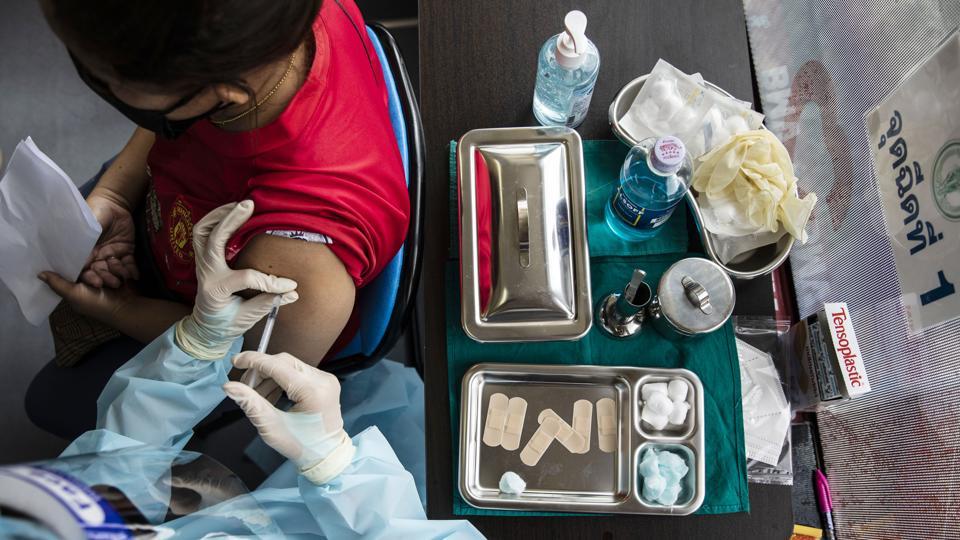
“In last year’s Goalkeepers Report, the Institute for Health Metrics and Evaluation (IHME) predicted a drop of 14 percentage points in global vaccine coverage—effectively erasing 25 years of progress in 25 weeks. New analysis from IHME demonstrates that the decline, while still unacceptable, was only half of what was anticipated,” said the report.
However, the report also acknowledges that disparities caused by Covid-19 remain stark, and those who have been hardest hit by the pandemic will be the slowest to recover. Because of Covid-19, an additional 31 million people were pushed into extreme poverty in 2020 compared to 2019. And while 90% of advanced economies will regain pre-pandemic per capita income levels by next year, only a third of low- and middle-income economies are expected to do so.
Also Read | Covid-19: Southeast China cases soar amid outbreak led by Delta variant
To ensure a truly equitable recovery from the pandemic, the co-chairs call for long-term investments in health and economies—like the ones that led to the rapid development of the Covid-19 vaccine—to propel recovery efforts and get the world back on track to meet the Global Goals.
“[The past year] has reinforced our belief that progress is possible but not inevitable,” write the co-chairs in the report. “If we can expand upon the best of what we’ve seen these past 18 months, we can finally put the pandemic behind us and once again accelerate progress in addressing fundamental issues like health, hunger, and climate change.”
While vaccine against Covid-19 was developed in record time as a result of decades of investment, policies, and partnerships that established the infrastructure, talent, and ecosystems necessary to deploy them quickly, there has not been equitable distribution of the supply.
“The lack of equitable access to Covid-19 vaccines is a public health tragedy,” said Bill Gate, Co-chair of Bill & Melinda Gates Foundation, and co-author of the report, in a statement.
“We face the very real risk that in the future, wealthy countries and communities will begin treating Covid-19 as yet another disease of poverty. We can’t put the pandemic behind us until everyone, regardless of where they live, has access to vaccines.”
According to the report, 80% of all Covid-19 vaccines have been administered in high- and upper-middle-income countries to date, with some securing two to three times the number needed so they could cover boosters; less than 1% of doses have been administered in low-income countries.
Further, Covid-19 vaccine access has been strongly correlated with the locations where there is vaccine research and development, and manufacturing capability. Though Africa is home to 17% of the world’s population, for example, it has less than 1% of the world’s vaccine manufacturing capabilities.
“We must invest in local partners to strengthen the capacity of researchers and manufacturers in lower-income countries to create the vaccines and medicines they need,” said Gates Foundation CEO Mark Suzman. “The only way we will solve our greatest health challenges is by drawing on the innovation and talent of people all over the world.”