
 E-Paper



Hemedti: warlord, power-broker and the new sultan of Darfur
After an 18-month siege, RSF fighters took the largest city still in the army’s hands in Darfur, a western region.


 Prefer HTon Google


IF ANYONE REMAINS in doubt as to the true nature of Sudan’s paramilitary Rapid Support Forces (RSF), its capture of el-Fasher on October 27th should disabuse them.
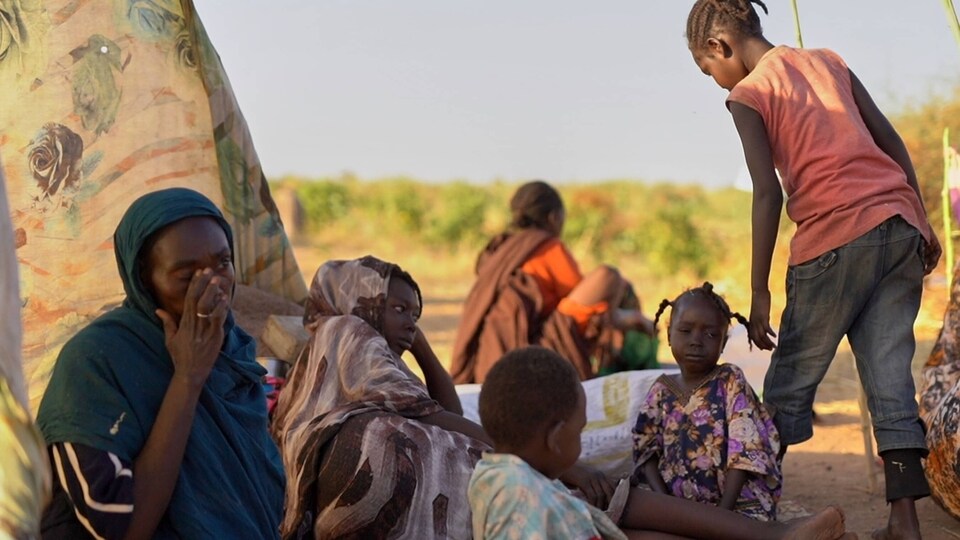
After an 18-month siege, RSF fighters took the largest city still in the army’s hands in Darfur, a western region. In doing so they committed atrocities, and proudly posted films of their acts on social media. Thousands have been killed, including about 460 patients and health-care workers at el-Fasher’s maternity hospital. The leader of the RSF, Muhammad Hamdan Dagalo, better known by the mononym Hemedti, played down what he called these “excesses” and promised an investigation. But the rampage is part of a familiar pattern of pitiless brutality.
Hemedti is now in control of his own statelet, encompassing Darfur and parts of the neighbouring Kordofan region–in effect the entire west of the country. He will have a decisive role in determining the future of Sudan’s two-year civil war, which is the world’s worst humanitarian disaster. Casualty figures are impossible to verify, but 150,000 people or more may have already been killed. Judging by Hemedti’s life so far, Sudan is probably in for more suffering.
Hemedti truly rose without trace. No one knows exactly where he was born or when (although he is about 50 years old). His family is part of the Arabic-speaking Riseigat ethnic group from the borderlands of Sudan and Chad. Hemedti briefly attended school in south Darfur, but spent much of his youth as a camel-trader, or a camel-thief, depending whom you ask.
His break came in 2003 with the start of an armed rebellion in Darfur against the misrule of the central government in Khartoum. To suppress the insurgency, the government, mostly ethnic Arab themselves, recruited Arab militiamen to form the Janjaweed, the forerunner of the RSF. Hemedti’s uncle, Juma Dagalo, was one of those militiamen, and probably recruited his nephew.
The Janjaweed massacred and burned whole villages home to the Muslim but non-Arab Fur and Masalit (among other indigenous groups). The International Criminal Court subsequently issued indictments for genocide and other crimes against the president, Omar al-Bashir, and local Janjaweed commanders. One such, Ali Kushayb, was found guilty of war crimes last month. Hemedti’s own unit was accused by the African Union of destroying the village of Adwa in November 2004, killing 126 people, including 36 children.
Hemedti excelled in the bloody milieu of the Janjaweed and became an “emir”, a senior commander. Unlike his peers, however, he also had wider ambitions. When he threatened to change sides in 2007 Mr Bashir was forced to take him into the government apparatus. Six years later Mr Bashir turned the Janjaweed militias into the RSF, and put Hemedti, now a brigadier general, in command.
To fund his rise—and the RSF’s—Hemedti seized control of Darfur’s largest “artisanal” gold mine, where miners hack away with hand tools, putting him, and his family, at the centre of a sprawling international business. By the time he turned on the president during a people’s revolution in 2019, Hemedti had leveraged his bullion empire and the violent threat of the RSF to become Sudan’s power-broker.
People who have dealt with Hemedti describe him as a pragmatist above all, ready to cut deals with anyone who can help him consolidate power. Equally, he throws aside allies as soon as they no longer serve his purposes—as Mr Bashir discovered. In the same vein, having posed as a youthful, charismatic alternative to Sudan’s ageing, corrupt elites after the revolution, he turned violently on the transitional democratic movement. In October 2021, Hemedti combined with the army leader Abdel-Fattah al-Burhan to overthrow a civilian-led government in a coup. But when General Burhan tried to fold the RSF into a unified military command in 2023, Hemedti broke ranks, precipitating the civil war.
Shrewd and attentive to detail, Hemedti has also cultivated powerful international allies. Before the revolution he spotted an opportunity when Saudi Arabia and the United Arab Emirates asked the Sudanese army to send troops to fight the Houthis. Hemedti arranged a deal on the side, separately providing RSF fighters as mercenaries for the war in Yemen. Many sources argue that the UAE remains the main military backer of the RSF, although the UAE strenuously denies this. In 2019, after the revolution, he paid $6m to a public-relations firm in Canada to give his image a makeover abroad. Conscious of how he looked and dressed, he learned to ingratiate himself with Western diplomats. He claimed to be fighting for “democracy” and branded his enemies as “radical Islamists”. On the day that Russia invaded Ukraine in 2022 Hemedti was in Moscow negotiating with the Russian government.
Today he is an amoral, independent-minded warlord backed by a battle-hardened army of what some estimate could be 100,000 men, as well as plenty of money and extremely useful friends abroad. However repulsive his methods, his appeals to Sudanese sick of military rule resonates in some quarters. On November 6th the RSF said that it agreed to an American-led proposal for a humanitarian ceasefire, and was open to negotiations to end the conflict. But the next day local media reported explosions near Khartoum. If this is merely another gambit by Hemedti, it is the people of Sudan who will suffer the consequences.


