
 E-Paper



Imran Khan tries to dodge FATF’s ‘grey list’ on 3 counts. It won’t work
Counter-terror officials in New Delhi who have been tracking the implementation of steps by Pakistan said Islamabad appeared to be heavily relying on lobbying firm Linden Strategies to sell its narrative that Pakistan was on track to deliver on its obligations and had earned a reprieve.


The Imran Khan government, which has missed another deadline to deliver on action plan outlined by anti-terror financing watchdog for Islamabad, is trying hard to get off the Financial Action Task Force’s ‘grey list’, telling the world that it should reward Pakistan for the steps taken to curb terror financing and money laundering.
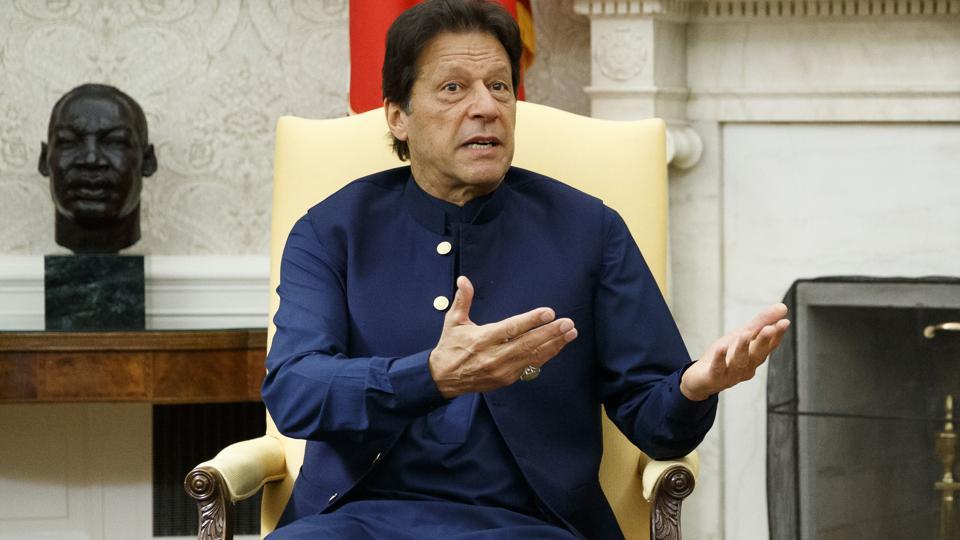
Foreign Minister Shah Mahmood Qureshi reflected the optimism in Islamabad when he recently declared that Pakistan would “very soon” get out of the grey list. Qureshi told a gathering in Pakistan’s seventh-largest city of Multan that Islamabad had complied with 80 per cent of the FATF recommendations and “very soon Pakistan will be on the white list of the FATF”.
Counter-terror officials in New Delhi who have been tracking the implementation of steps by Pakistan said Islamabad appeared to be heavily relying on lobbying firm Linden Strategies to sell its narrative that Pakistan was on track to deliver on its obligations and had earned a reprieve.
Much of this campaign is designed to identify and influence at least 12 out of the 39 member states to back up its request at the plenary meeting of Paris-based global dirty money watchdog.
This pitch, one of them said, was primarily based on three arguments that Pakistan had been putting forth.
One, the Imran Khan government will attempt to showcase the arrest and conviction of some Lashkar-e-Tayyiba leaders to claim that it had cracked down on terrorists. Second, it is expected to highlight the action taken under the anti-money laundering regime against entities of concern including those linked with terrorist outfits. Third, Pakistan is also expected to underline that it has complied with 21 out of the 27 action plan points and is about to clear the bar in the remaining six items.
“These arguments are essentially jugglery of facts… a deception,” a senior Indian official said. It is highly unlikely that anyone will fall for them.
For instance, it misses the fact that Pakistan is yet to act against the 6,500 Pakistani terrorists mentioned in the UN monitoring team’s report of May 2020 who have been deployed in Afghanistan to fulfil Pakistani objectives.
Pakistan had tried to impress the meeting of the Asia pacific Joint Group last month telling them about the arrest and conviction of a select group of the terrorist leader. But Pakistan was grilled, diplomats familiar with the proceedings said, over the prosecution of UN-designated terrorists under ancillary charges and not for terror financing. A prominent example was the verdict of an anti-terror court in Lahore that convicted three members of the Lashkar-e-Tayyiba and its front organisation, Jamaat-ud-Dawa and awarded them minor punishments. Like Abdul Rehman Makki, brother-in-law of Lashkar co-founder Hafiz Saeed was handed an 18-month jail term which was later suspended by the Lahore high court. It is not clear if Makki, who had designated a terrorist by the US in 2010 and carries a $ 2 million (Pakistani ₹32.6 crore) bounty - had to pay the Pakistani ₹20,000 fine imposed on him by Pakistan’s anti-terror court. A few months earlier, Pakistani courts had ordered release of 196 terrorists convicted by military courts.
Pakistan also had to face some embarrassing moments at the September meeting of the Asia Pacific - Joint Group where it was pointed out that Islamabad had failed to act against eight entities of concern mentioned in the FATF-approved action plan and non-profit organisations notorious for channelling funds to terror groups.
Officials also question the effectiveness of the three laws pushed through parliament at a joint session. The laws, which were ostensibly aimed at plugging the possibility of terror financing, were riddled with loopholes and did not even have a provision to penalise government officials who support terror, a Pakistan watcher said.
Pakistan has a long history of taking cosmetic steps that it uses to persuade the international community to ease the pressure, he said, recalling how Islamabad had produced a list of 7,600 individuals notified as terrorists to the FATF in October 2018 to signal that it meant business. Less than two years later, it erased 3,600 names from this list claiming that they had been added inappropriately and had incomplete details of the individuals concerned. Pakistan had earlier this year told a visiting UN team that it had been able to locate only 19 of the 130 individuals designated as terrorists by the world body’s security council.


