
 E-Paper



In China vs US, Pakistan has taken a side. It serves the army
At a time when world opinion is sharply against Beijing, Pakistan has chosen to be the devil’s advocate.

 Prefer HTon Google


Ever since the world started pointing fingers at Beijing for the spread of coronavirus, Pakistan has gone out of its way to express solidarity with China. Even to the extent of refusing to let its 1,000-odd students stranded in Wuhan, the epicentre of the outbreak, return to Islamabad in February. It is no secret that Beijing had been soliciting support from all its friends, or clients, as some analysts describe the relationship between China and Pakistan. Islamabad, indebted to China for more than one reason, had gone a step further. China was being panned by countries across the world, particularly the United States, over what was widely-perceived to be Beijing’s gross negligence, which led to the spread of the disease that has infected 11 million people across the world and killed nearly 530,000.
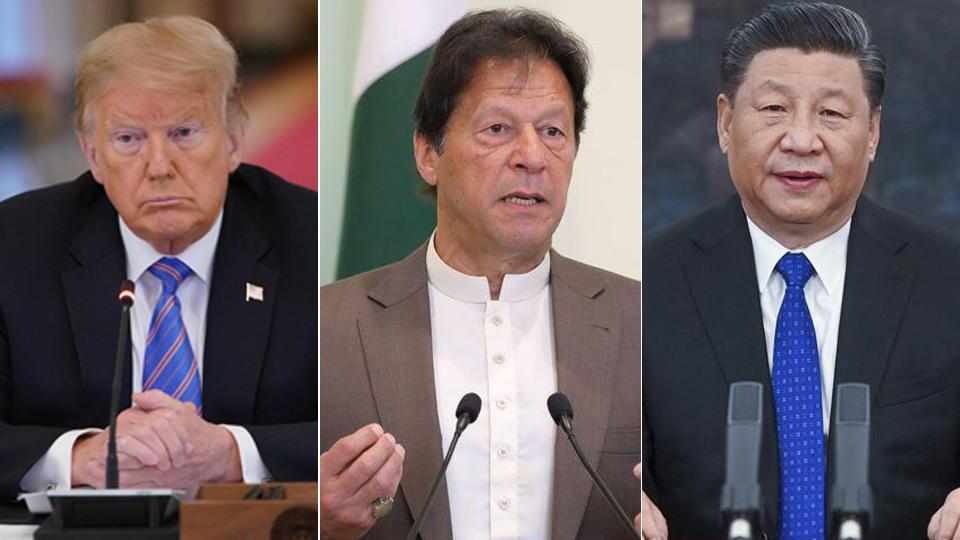
In the cacophony that followed as countries took sides, Pakistan was understandably the loudest voice in support of China despite some uneasiness in foreign policy circles of Islamabad.
Before the world was able to visualise the impact of the pandemic, Pakistan was in a comfortable position on the foreign policy front, particularly the China-US matrix. It was effectively leveraging its influence over the Taliban to extract concessions from the US in the global terror financing watchdog Financial Action Task Force. Washington was soft pedalling on Pakistan’s failure to comply with the FATF Action Plan and had allowed it extra time at the Paris Plenary in February. The reprieve, by any standards, was a fair indicator of the Pakistan Foreign Office’s successful handling of a tricky situation.
Much of this effort by Pakistani diplomats to navigate the sensitivities in Washington appeared to come undone as the Pakistani establishment rushed to comply with signals from Beijing that wanted Prime Minister Imran Khan’s government to continue to back them up. The worldly-wise officials at the Foreign Office and, some at the Prime Minister’s Office, were the first ones to spot the change in Washington’s approach. The officials, including the US-educated Special Advisor on National Security Moeed Yusuf and British-educated Zulfi Bukhari, realised the impossibility of balancing relations with Washington and Beijing in the face of the establishment’s inflexible and decades-old mindset characterised by suspiciousness of the West.
Also Watch l Trump slams China for Covid-19; vows to defeat ‘radical left’
The Pakistan military’s tunnel vision and stranglehold over key foreign policy aspects have prevented the country from benefiting from the available expertise at home and evolving a pragmatic and non-confrontational foreign policy. At a time when world opinion is sharply against Beijing, Pakistan has chosen to be the devil’s advocate.
Like when Foreign Minister Shah Mahmood Qureshi put out a statement on his phone conversation with Chinese counterpart Wang Yi, the foreign ministry had to make a pointed reference to underline Pakistan’s commitment to the “One-China policy” and express support to China on its “core interests including Hong Kong, Taiwan, Tibet and Xinjiang”.
In Pakistan, the army has been in a pivotal position irrespective of the regime in power. It also, maybe, doesn’t have anything to lose if Pakistan is again clubbed with the likes of North Korea. In fact, it has been argued by its critics that the army’s clout over politics and civilian life tends to proportionately increase with Pakistan’s marginalisation, as does the access to material riches for its leadership.
The army was the biggest beneficiary of the billions that the United States poured into Pakistan in the name of support for the war on terror.
When that well seemed to be drying up, it found a willing donor in Beijing for whom the China-Pakistan Economic Corridor became a flagship project for its ambitious Belt and Road Initiative. It could also lead Pakistan into a debt trap.
Thousands of Pakistanis paid with their lives for the establishment’s shortsighted strategy of arming and nurturing terrorists and turning terror into an instrument of foreign policy.
What woes the new strategy of trying to milk China and the CPEC will bring to the Pakistanis, only time will tell. The more erudite officials of the Foreign Office can visualise the implications for Pakistan, such as the heightened possibility of graduating to the FATF blacklist if it does not deliver on its action plan.


