
 E-Paper



Pakistan leans on China to remove its terrorists from UNSC sanctions list
Islamabad has only confirmed that 19 of the 130 terrorists sanctioned by the UNSC are in Pakistan. Of these 19, it has requested UNSC to remove names of 6 terrorists.

 Prefer HTon Google


Pakistan Prime Minister Imran Khan’s government has approached the United Nations Security Council (UNSC) for deletion of six terrorists sanctioned by the world’s top security panel, a senior government official in Delhi told Hindustan Times.
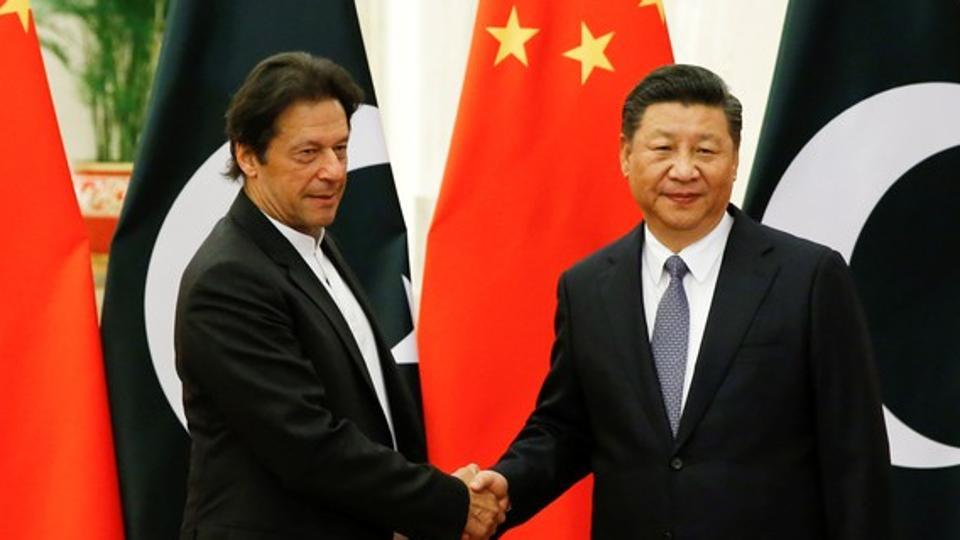
Islamabad is likely to file more requests for deletions so that these can be processed by the UNSC before the year-end.
Islamabad last month told a visiting UNSC sanctions monitoring team that it could not find most terrorists sanctioned by the security council over the years because the UNSC did not have complete and accurate information about them. The team subsequently told Pakistan to file requests for deletion of the names if the entry was “inappropriate”.
Already, Islamabad has only confirmed that 19 of the 130 terrorists sanctioned by the UNSC are in Pakistan. Of these 19, it has requested UNSC to remove names of 6 terrorists.
Diplomats in Delhi and New York told Hindustan Times that Pakistan’s hard push to improve its track record at the UNSC is grounded in the confidence that China will back its requests. “We have not been able to figure yet if the move is in consultation with Beijing but that would not be a surprise,” one of them said.
Beijing had blocked an Indian-led international effort to designate chief of the Jaish-e-Mohammad terror group Masood Azhar as a global terrorist for years. Beijing eventually had to give in last year after the Jaish was implicated in the Pulwama bombing of 40 CRPF troopers that provoked India to launch air strikes at a terror training camp in Pakistan’s Balakot.
China sought to make up to Pakistan for Masood Azhar’s terror tag by its support to Islamabad’s tit-for-tat effort to get four Indian professionals working in Afghanistan designated as terrorists under the UN Security Council’s 1267 Al Qaida sanctions. The four Indians were evacuated from Afghanistan by Indian security agencies over apprehensions that Pakistan could abduct them and claim to arrest them from its territory.
Just as Islamabad had done with ex-Navy officer Kulbhushan Jadhav who was abducted from Iran and turned up in custody of Pakistani security agencies, the counter-terror operative said. Sentenced to death in a secret trial that India called “premeditated murder”, Jadhav is still in a Pakistan jail despite the International Court of Justice verdict last year that asked Islamabad to have the sentence “effectively” reviewed by an independent body.
News of the attempt to prune the list of Pakistani terrorists sanctioned by the UNSC 1267 committee comes weeks after it emerged that Islamabad had been quietly removing names from its domestic terror watch list. On April 20, US tech firm Castellum.AI said Pakistan had removed nearly 3,800 names from the Proscribed Persons List that it had been maintaining. About 1,800 of these names were removed from the terror watch list after 9 March.
Indian diplomats are convinced that the Pakistani effort to reduce the terror watch list is linked to the meeting of the terror financing watchdog Financial Action Task Force that was scheduled for June. It has now been deferred.
At this meeting, the FATF had to assess the action taken by Pakistan to decide if it should continue to be in the grey list, be placed in the black list or be let off the hook. Islamabad has been in FATF’s grey list since 2018 for not doing enough to counter the raising of funds by al-Qaeda, Taliban, Lashkar-e-Taiba and Jaish-e-Mohammed.
Since then, it has missed several deadlines to implement the action plan that it had committed to deliver on but has successfully evaded blacklisting. Diplomats in Delhi believe this has a lot to do with Beijing’s influence. That the FATF presidency has been with China’s Xiangmin Liu since 1 July 2019 also helped get away by doing less, one of them said.
For instance, of the 19 names accepted by Pakistan to be on its soil, it has convicted only two - Lashkare-Taiba founder Hafiz Saeed and associate Malik Zafar Iqbal - ahead of the last FATF plenary in mid-March, an Indian official said. Besides, it has admitted that of the 222 cases filed in the country in such terror cases, only 60 were convicted and that too, for a few days each. Since the jail term is less than FATF’s prescribed minimum jail term (one year), it demonstrates a complete lack of seriousness to meet the FATF requirements, he added.


