
 E-Paper



Iran Takes Aim at the Industries Behind the Gulf’s Pivot From Oil
The region’s diversification into tourism, metals and banking is giving Tehran a wider range of targets to strike.


 Prefer HTon Google


The oil states of the Persian Gulf have made great strides to diversify their economies in recent years, but they have also created a new vulnerability: more strategic targets for Iran to hit.
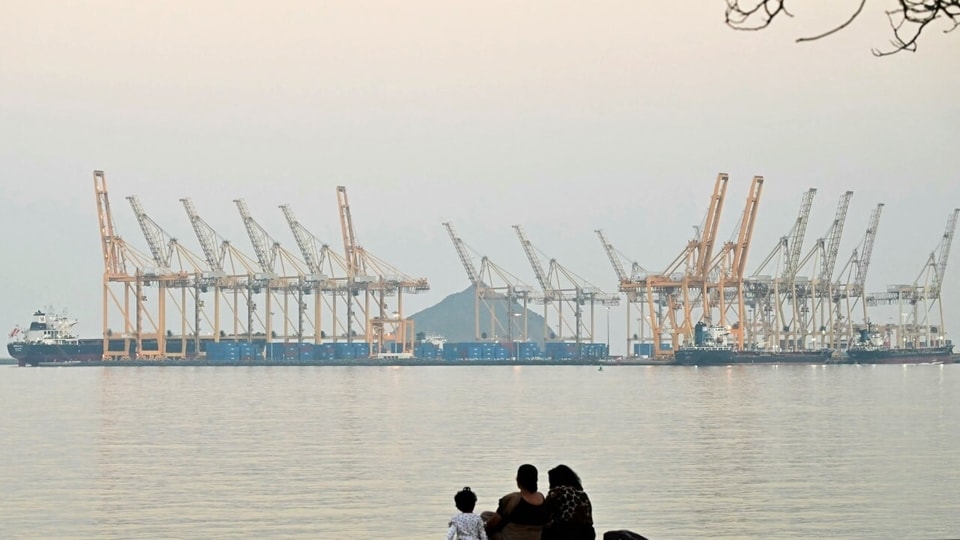
Outgunned militarily, Iran is wreaking economic havoc in the Middle East by attacking factories that produce aluminum and steel, targeting services such as banking and tourism, and disrupting the region’s trade in products like fruit.
Oil and gas production remains the Persian Gulf’s economic backbone, and Iran’s stranglehold on tanker transits through the Strait of Hormuz has caused the war’s biggest economic dislocations.
But the region’s abundance of cheap energy has also powered a determined pivot by Gulf states into a range of non-oil industries and services that are now also drawing Iran’s fire. And like oil, they resonate globally.
Over the weekend, Iranian drones damaged major aluminum smelting operations in the United Arab Emirates and Bahrain, while hitting port cranes in Oman. Iranian munitions have struck data centers and bank offices, as well as the region’s modern seaports and airports, neutralizing them as trade hubs. On Sunday, the Islamic Revolutionary Guard Corps took aim at education centers, with threats to attack regional campuses of American universities in a fresh escalation of the tit-for-tat attacks on civilian or economic targets that are beginning to characterize periods of the war.
The Gulf has long pursued industries that require loads of cheap energy—Aluminium Bahrain, a giant producer damaged over the weekend, dates to the 1970s. But metals businesses like it, along with fertilizer and chemical enterprises, are now competitive global players because Gulf governments invested in hard and soft infrastructure adjacent to the oil business.
The trend has been supercharged by national strategies such as Saudi Arabia’s Vision 2030 that are aimed at capitalizing on oil wealth—before the crude runs out—by building future-proof industries from finance to tourism.
The Gulf Cooperation Council boasts that over 70% of the gross domestic product of its six member economies comes from outside the oil sector.
“There’s been a concerted effort by these countries to diversify their income,” says Chris Lawson, an analyst at London-based business intelligence firm CRU that is tracking rising prices for numerous commodities stemming from the closure of Hormuz. “They are not just oil and gas based economies,” he says.
Gulf assets are an enticing target for Iran. With its much-depleted military unlikely to best the U.S. and Israel on the battlefield, Iran is directing firepower at targets that raise the economic costs of a sustained war, starting with choking its neighbors’ energy exports.
At times, Iran—the Gulf’s third largest economy after Saudi Arabia and the U.A.E.—has described its attacks as legitimate retaliation for U.S. and Israeli attacks on its manufacturing facilities, such as steelmakers.
In its most powerful economic strike, Iran has slowed transits through the Strait of Hormuz to a trickle, trapping millions of barrels of oil inside the Persian Gulf and “creating the largest supply disruption in the history of the global oil market,” according to the International Energy Agency. Similarly stranded are shipments of fertilizer, aluminum, steel and helium.
Also stuck: one container of sweeteners ordered by Date Lady, a Springfield, Mo.-based food company.
Dates, synonymous with the Middle East itself, are having a moment, as a trendy sweetener in energy bars, sodas, smoothies, and even dog food, a boon for the U.A.E. and Saudi Arabia as the U.S. grows only 1% of the world supply. Date Lady co-founder Colleen Sundlie is now wrestling with how to get her 40-foot container of organic date sugar and date paste from Dubai’s Jebel Ali Port to Missouri. The likeliest option may be an expensive truck route across Saudi Arabia to the Red Sea port of Jeddah and then on to New York.
“We have no idea until it’s on the sea what different fees we’re going to incur,” says Sundlie. “We definitely didn’t see this coming,” she said.

In many ways, the American economy is better insulated from the pinch in Persian Gulf exports than other parts of the world because the U.S. is less directly dependent on Mideast suppliers, notably in energy.
Yet, there’s a risk in viewing the Iran war too narrowly as an energy sector disruption, executives say. The longer Persian Gulf trade is constricted, the more likely rising prices of commodities like aluminum and fertilizer will also be felt by U.S. business and consumers, which CRU calls an underappreciated second order impact.
“Excluding energy imports, the U.S. brought in around $8.5 billion worth of goods from Gulf states in 2025,” according to William George, research director of Scottsdale, Ariz.-based ImportGenius. In an analysis of maritime records for The Wall Street Journal, ImportGenius tracked U.S. imports of aluminum, iron and steel, fertilizer and sulfur, as well as over $750 million in perfumes and $548 million in pearls.
One of the biggest hits to the Mideast export machine, and an upward spur for a range of commodity prices, was the closing early in the war of liquefied natural gas production at Ras Laffan Industrial City in Qatar—the result of a double whammy of the Hormuz closure and missile strikes from Iran. The outage at QatarEnergy, the world’s largest LNG exporter, has in turn knocked offline the No. 1 global supplier of helium, while blunting regional fertilizer exports and jolting aluminum production.
“You talk about the Middle East and everyone’s head goes to oil,” says Landrum Hughes, a metals trader at Baowin Steel in Houston who says steel-pipe prices are up 12% to 15%, which he said is a big jump for a basic commodity that will ultimately mean upward price pressure for all grades of steel. “I don’t think [people] realize the number of [Mideast] steel mills and other industries that are serving the U.S. market,” he says.
Due to the war, Mideast steelmakers have backed out of contracts to supply Canada-based Cascadia Metals with hundreds of containers of steel and aluminum, according to Jim Ritchie, its chief executive. His company supplies U.S. companies that build data centers, which he said will only get more expensive.
“Oil, gas, steel, aluminum—those four things are everything,” Ritchie says.
Write to James T. Areddy at James.Areddy@wsj.com


