E-Paper



Iranian oil tankers signal Pakistan as next stop in unusual move amid US blockade
Iranian crude tankers Rani and Amil altered their destination to Karachi. Pakistan hasn't imported Iranian oil for a decade.

 Prefer HTon Google


Two tankers carrying a combined one million barrels of Iranian crude have changed their destination signals to Karachi, Pakistan, an unusual move that may be an indication they are seeking a safe place to wait as the US blockade takes effect. The vessels — Rani and Amil — updated their destination on Tuesday after they had already exited the Persian Gulf.
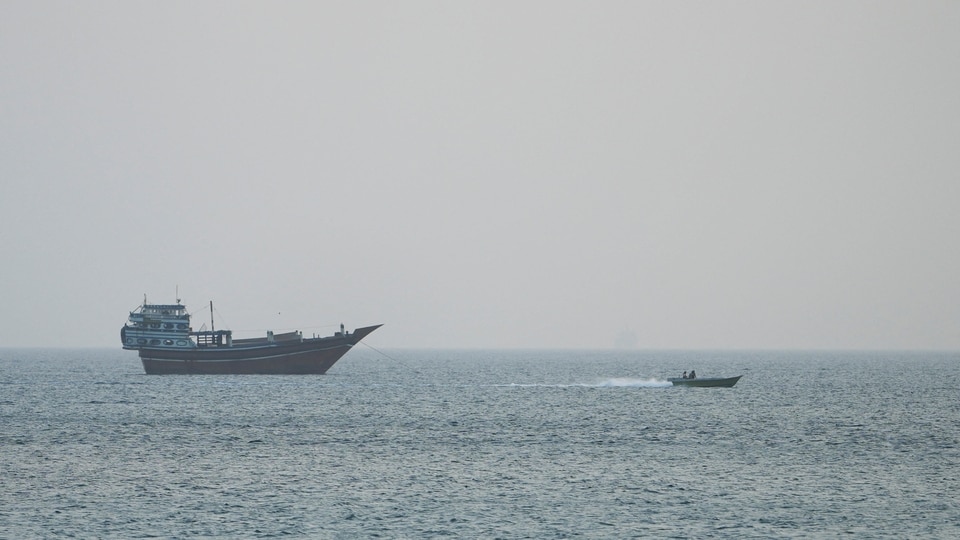
While the move has drawn attention, it is not expected to result in the oil being unloaded in Pakistan. Instead, analysts believe the ships could be using Pakistani waters as a temporary waiting point or for transferring cargo to other vessels.
Follow LIVE updates here
Destination change raises questions
Both tankers switched their destination signals to Karachi on Tuesday, as per ship-tracking data compiled by Bloomberg. The development comes after Washington reimposed its naval blockade targeting Iranian shipping.
Although the vessels are now indicating Pakistan as their destination, unloading the crude there is considered unlikely. Doing so could expose Pakistan to the risk of violating US sanctions.
Also read | Iran threatens to halt all Middle east energy exports after US reimposes blockade
Pakistan has not imported Iranian crude for at least a decade, according to data intelligence firm Kpler, cited by Bloomberg in a report.
Waiting offshore seen as more likely
Rather than delivering their cargoes, the tankers may be heading towards Pakistani waters to remain on standby or transfer the oil to other ships. The two vessels — a suezmax tanker and a medium-range tanker — are not the first Iran-linked ships to pause off the coast near Karachi.
Also read | Trump's ‘knock out’ warning to Iran, US bases targeted in the Gulf as war escalates: Top points
During an earlier period when the US blockade was in force, several empty Iran-linked tankers remained in the same area while waiting for an opportunity to return to the Persian Gulf and load more cargoes, according to nonprofit organisation United Against Nuclear Iran (UANI).
"If this trend is re-emerging, it may reflect operators’ assessment that remaining near Pakistan offers a relatively secure location from which to wait out developments, rather than any intention to discharge Iranian oil or cargo into Pakistan," said Charlie Brown, an adviser to UANI.
Alternative routes and transfer hubs
Waters off Malaysia's eastern coast continue to serve as one of the main holding areas for Iran-linked tankers. The area is frequently used for ship-to-ship transfers involving cargoes destined for China. Many vessels carrying Iranian crude carry out such transfers without broadcasting their location, either by operating in the dark or switching off their transponders to avoid scrutiny.
Also read | Iran threatens to halt all Middle east energy exports after US reimposes blockade
Most tankers that have departed the Persian Gulf in recent weeks have continued to signal Singapore as their next destination.
"The vessels 'could be sailing much closer to Pakistan to avoid US Navy vessels and signal Karachi as a waypoint instead,'" said Xavier Tang, a senior market analyst at Vortexa told Bloomberg.
Both vessels under US sanctions
Both Rani and Amil are sanctioned by the United States and are part of the fleet Iran uses to transport its oil.
According to maritime database Equasis, Panama-based Starboard Shipping Inc-Pan is listed as the owner and manager of Rani. Amil is owned by Malaysia-based Amelie Ltd., while Hong Kong-based Espoir Shipping Ltd. manages the vessel.
(With inputs from Bloomberg)