
 E-Paper



Is there anything left to say about Frida Kahlo?
The collection is small, but the insight it offers into Kahlo’s formative years is valuable


 Prefer HTon Google


ANYONE interested in art knows Frida Kahlo’s story: the polio; the terrible bus accident; the painting during convalescence; the raw self-portraits; the marriage to Diego Rivera, a fellow artist; the affairs. There have been many exhibitions and biographies of the Mexican painter (as well as picture-book versions for children). There was a biopic in 2002 and a documentary in 2024. Is there anything left to add?
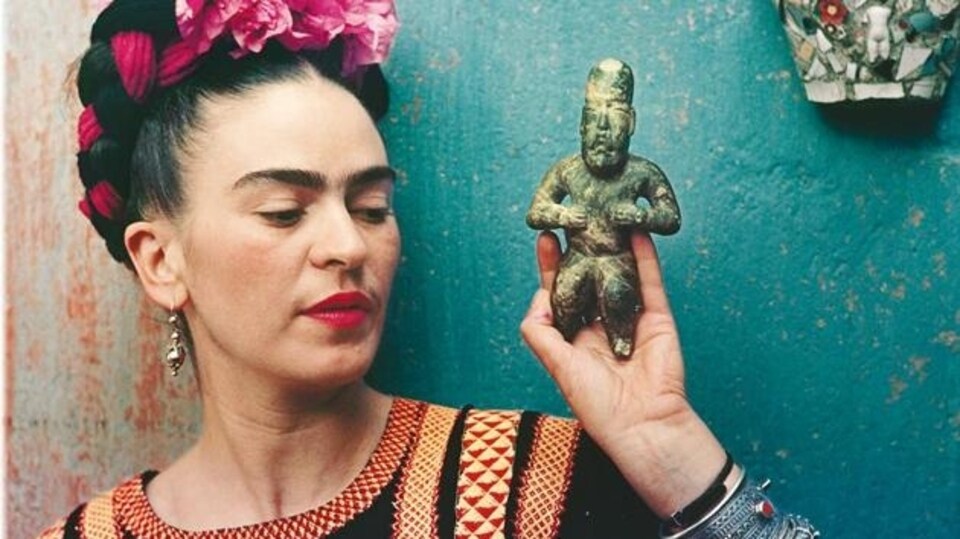
The team behind a new museum—the third dedicated to Kahlo in Mexico City—certainly thinks so. Museo Casa Kahlo has recently opened in Casa Roja, one of her family’s houses. (Not to be confused with Museo Frida Kahlo, in Casa Azul, where Kahlo grew up and later lived with Rivera.) The aim, says Adán García, the new museum’s director, is to show Kahlo as a daughter, sister and aunt: “To understand Frida, you need to understand her family.”
The collection is small, but the insight it offers into Kahlo’s formative years is valuable. Her clothing, a key part of her image, is on display. Kahlo’s mother was partly of indigenous descent and Kahlo wore a tehuana, a traditional Zapotec dress, as well as huipiles (embroidered tunics) and long skirts. In a period of cultural nationalism she sought to emphasise her Mexican heritage and distinguish herself from her male peers, says Circe Henestrosa, a fashion curator and academic.
Also on display are pictures taken by her father, Guillermo Kahlo, an important photographer in Mexico. He had an eye for symmetry and structure—sharpened by documenting the country’s churches and civic monuments—and he took theatrical portraits of figures such as President Porfirio Díaz. His work shaped Frida’s own instinct for composition and detail, traits that would later define her self-portraits.
He encouraged his daughter to express herself. In the mid-1920s he took a family portrait in which Frida, in her teens, wore a three-piece suit and had slicked-back hair. She continued to toy with different ways of presenting herself. In “The Wounded Deer” (1946) she appears as neither male nor female, but half-animal, half-human.
Her work was always intensely personal. In 1932 she painted “Henry Ford Hospital”, depicting her delivering a dead fetus. With it “she invented a visual vocabulary to express things never shown before—trauma, miscarriage, chronic pain, betrayal,” says Gannit Ankori of Brandeis University. “The emotions in her work are not bound by a specific historical era.”
Kahlo is now ubiquitous: her distinctive eyebrows adorn tote bags, phone cases and Barbie dolls. So it is easy to forget that her fame is relatively recent. When she died in 1954 Kahlo was little known outside modern-art circles and her reputation was overshadowed by Rivera’s. (He painted vast murals exploring Mexican history and was considered bolder and more accomplished.) Then, in the 1970s, art historians started to pay more attention to women artists. Feminist and Chicana activists adopted Kahlo as a symbol of female strength and Mexican pride.
In 1990 “Diego and I” became the first Latin American artwork to break $1m at auction, catching the attention of collectors. Kahlo’s work now rivals that of Georgia O’Keeffe and Louise Bourgeois in the prices it fetches. Her painting “The Dream (The Bed)” (1940) is expected to sell for as much as $60m at Sotheby’s in November. If it does, it will be the most expensive picture by a woman ever sold at auction.
For all her fame, Kahlo’s fans will learn something new at Museo Casa Kahlo—for instance that, during tiffs with Rivera, Kahlo would work in the basement at Casa Roja. Today the room displays her letters, which, among other things, reveal her relationship with her sister, Cristina. Kahlo’s relatives were among her earliest subjects. Without them, this new museum contends, Kahlo would not have produced the work that has made her name. As Mara Romeo, a great-niece, puts it, Kahlo was “hugely ahead of her time”. This house is a reminder of where she came from.


