
 E-Paper



Japan’s new security strategy is a game-changer in the Indo-Pacific
By clearly naming China and Russia as strategic threat to Japanese security and global rule based order, Tokyo has initiated re-balance of power in the Indo-Pacific and added weight to QUAD initiative.

 Prefer HTon Google


Although “Hai” in Japanese means “Yes” in English, but in Nihongo this does not mean that the person agrees with you. It only indicates that you are listening. The Japanese policy towards China was also as ambivalent as a “Hai” till Tokyo broke cover last Friday and declared China as an “unprecedented and greatest strategic challenge” to Japan and the global rule-based order in its national security strategy paper.
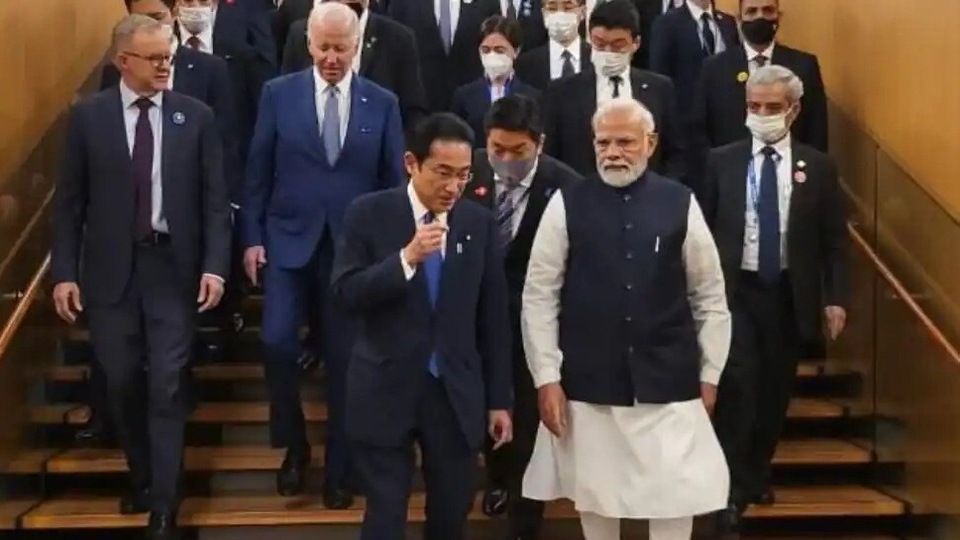
The NSS has called out both China and Russia separately as threat to global peace and security with Beijing making unilateral changes in status quo in the Indo-Pacific and Moscow shaking the foundation of rule of order by invading Ukraine. “The possibility cannot be precluded that a similar serious situation may arise in future in the Indo-Pacific region, especially in East Asia,” says the document alluding to the possibility of China invading Taiwan.
The unambiguous description of the threat posed by China and its “ no limits” ally Russia in the Japanese document clearly is the first step towards the re-balancing of power in the Indo-Pacific and push back by a erstwhile pacifist nation to wolf warriors of Middle Kingdom. Adopted by the Kishida government, the NSS recommends that Japan acquire counter-strike capability with long range missiles as well as double its defence budget.
The description of China as a serious threat to Japanese security has been penned in most unflattering terms in the document while noting Beijing’s strategic coordination with Russia.
“China’s current external stance, military activities, and other activities have become a matter of serious concern for Japan and the international community and present an unprecedented and the greatest strategic challenge in ensuring the peace and security of Japan……Japan should respond with its comprehensive national power and in cooperation with its ally, like minded countries and others,” says the document.
On Russia, the document notes the acceleration of Red Army’s activities in vicinity of Japan. “ Russia’s extern and military activities and others in the Indo-Pacific region, including Japan, together with its strategic coordination with China, are of strong security concern,” says the document, making its amply clear that Tokyo should be prepared for a China-Russia alliance on its western borders.
While China, predictably, has lashed out at the NSS document, the Xi Jinping regime should blame itself for provoking middle-powers in the Indo-Pacific by its belligerent actions against Japan, Taiwan, and India. The middle-kingdom concept that China is at the center of world and rest are tributary states has been challenged by for the first time by Japan. China has faced the brunt of Japanese military during World War II enough to understand that Tokyo cannot be taken lightly.
The acquisition of long range missiles like Tomahawk from US and building of long range nuclear attack submarines by Japan will change the strategic dimensions in East Asia with US further cementing defence alliance with Tokyo after AUKUS alliance with QUAD partner Australia.
This means that the PLA will now be stretched from Northern theatre command (against Japan), to eastern theatre command (against Taiwan backed by US) to western theatre command against India.
The revision in Japanese national security also is a welcome news for India as this might translate into closer defence cooperation between two very close allies as Tokyo will no longer be inhibited by its pacifists doctrine in sharing high end technology and intelligence. India and Japan have common threat in China with the PLA firing long range missiles into Japanese EEZ this August and escalating military friction with India all along the LAC.
While US, India and Australia were clear on the threat faced from China, Japan as QUAD member was the weakest link in the chain due to its pacifist strategy with PM Fumio Kishida himself representing Hiroshima. The NSS of Japan is a game-changer in Indo-Pacific.


