
Sign in

Myanmar junta executes democracy activists as it sinks into economic mess

The execution of the activists by the Myanmar's generals is likely to invite more sanctions from the West and force Naypyidaw to seek shelter under China. Myanmar is in chaos since last year's coup, with the military junta accused of widespread human rights violations amid economic turmoil.

Published on: Jul 25, 2022, 11:08:12 IST
Share
Share via
  • facebook
  • twitter
  • linkedin
  • whatsapp
Copy link
  • copy link

The Myanmar's military junta announced early morning that it executed two democracy activists.
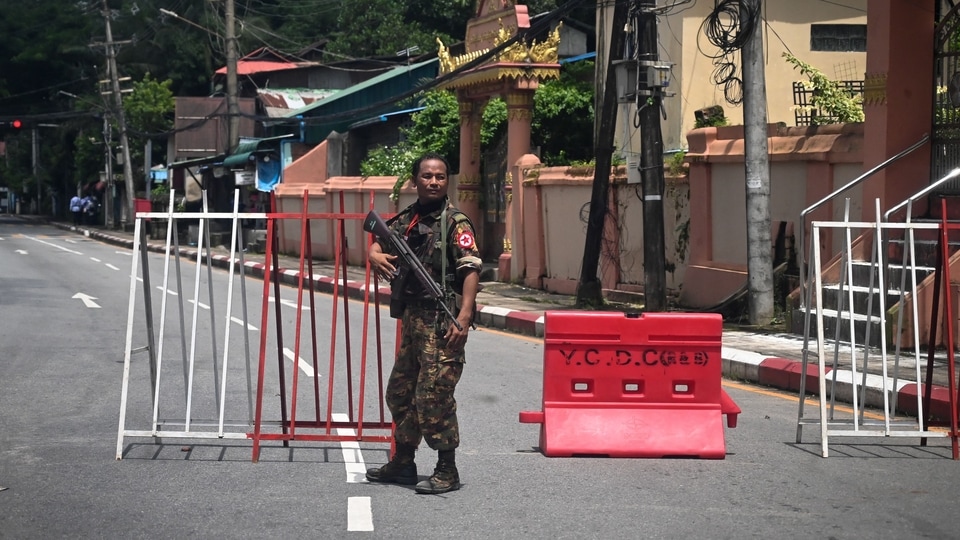
A member of the Myanmar security forces stands by a checkpoint in Yangon on on the 75th Martyrs' Day that marks the anniversary of the assassination of independence leaders including general Aung San, father of the currently deposed and imprisoned leader Aung San Suu Kyi.  (AFP)

Ko Jimmy (53), Ko Phyo Zeya Thaw (41) and two others were executed during the weekend by the military regime. Thaw was an ally of ousted leader Aung San Suu Kyi and had lost appeals against the death penalty in June. All the four activists were sentenced to death in January by a military tribunal of the junta for allegedly masterminding and being involved in anti-regime armed struggle.

According to reports, the four convicts were allowed to have an online meeting with their families on Friday.

The execution of the activists by the Myanmarese generals is likely to invite more sanctions from the West and force Naypyidaw to seek shelter under China. Myanmar is in chaos since last year's coup, with the military junta accused of widespread human rights violations amid economic turmoil.

The Myanmar currency has further depreciated and was selling at $2,400 last week, as compared to $2,000 a few days earlier. This despite the Central Bank of Myanmar making the companies with 35 per cent foreign investment convert their foreign currency holdings into local currency Kyat. The day before the 2021 coup, a US dollar was worth 1,340 Kyat.
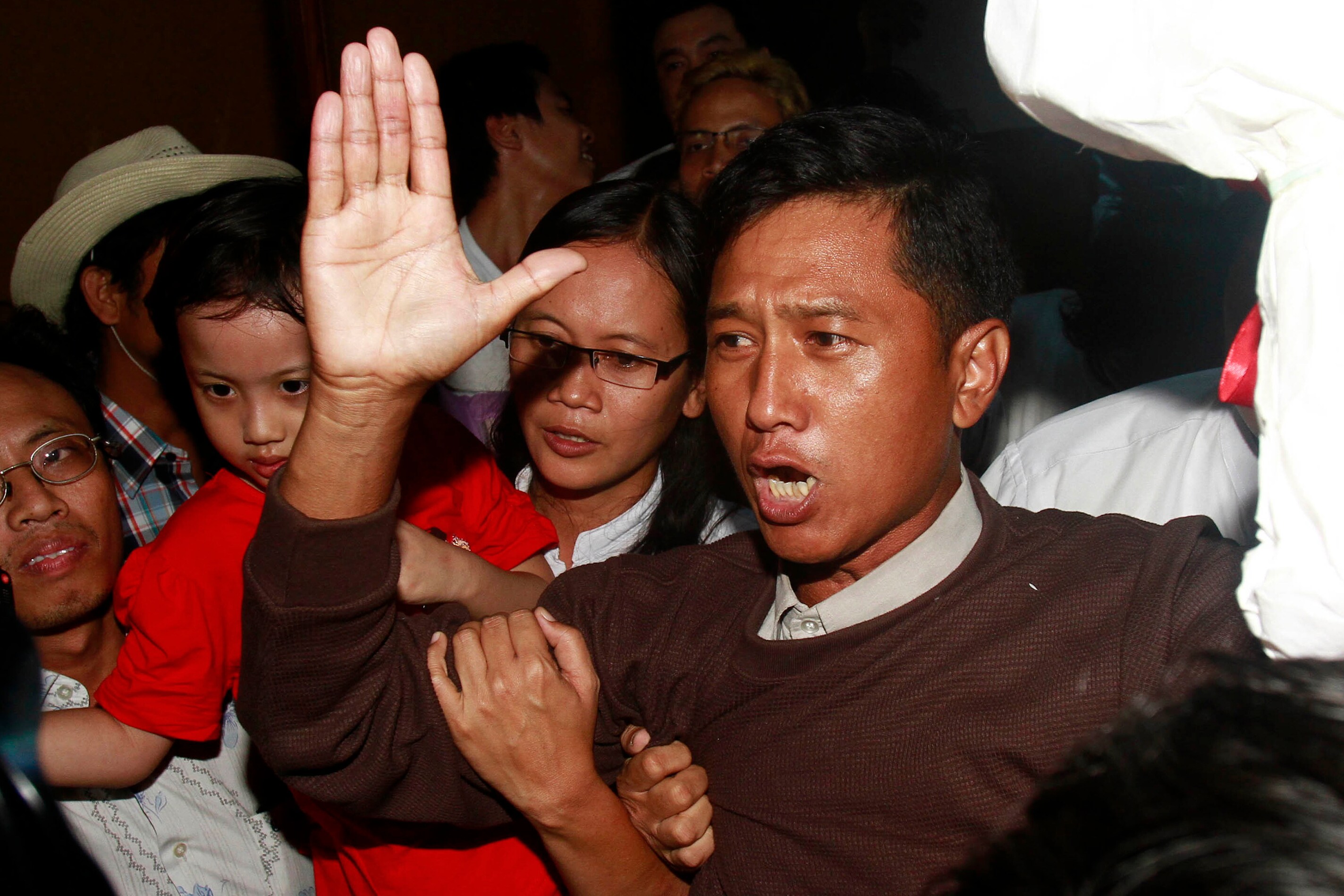
A file photo of Kyaw Min Yu, a pro-democracy activist who was executed. (AP)

The National Unity Government, the ousted regime, said despite spending 95 per cent of its budget on arming Myanmar's army PDF and manufacturing weapons, it is still unable to meet the firearms requirements of all the personnel and needs at least $10 million a month to fund the resistance movement against the junta. According to reports, there are 259 township PDF battalions comprising 80,000-1 lakh members. There are 400 guerilla forces and the ousted government claims that most of them are in touch with them.

The junta has been accused of brutally cracking down on dissenters. Scattered pro-democracy rallies were held on July 19 to mark the 75th anniversary of the assassination of General Aung San, the father of Aung San Suu Kyi. However, the protests dispersed within a short time to avoid confrontations with the security forces.

Kyaw Htwe, the spokesperson of National League for Democracy (NLD)'s human rights group claimed 48 people including three former members of parliament have been killed and more than 900 lawmakers have been arrested since the coup. Out of 48, 11 killed during detention, eight died in prison and 29 including the former MPs were killed 'for no reason'.

  • Shishir Gupta
    ABOUT THE AUTHOR
    Shishir Gupta

    Shishir Gupta is Executive Editor at Hindustan Times and one of India's top journalists covering national security, strategic affairs, foreign policy and geopolitics. Over the past three decades, he has extensively reported on India's military, diplomatic and security landscape, covering every major conflict and national security challenge, from the 1999 Kargil War and the 2020 East Ladakh standoff to Operation Sindoor in 2025. He has also covered major terror attacks, including the IC-814 hijacking, the 26/11 Mumbai attacks and the 2025 Pahalgam terror strike, along with numerous Pakistan-backed terrorist incidents in the Kashmir Valley and across India. He has reported on national and state elections for more than three decades. A recognised authority on strategic affairs, Gupta has covered India's nuclear programme since the Pokhran-II (Shakti series) tests in May 1998 and has written extensively on global nuclear issues, Indian diplomacy and the country's expanding global outreach. He has also reported widely on international conflicts and terrorism, with a special focus on the Indian subcontinent. Gupta has interviewed Prime Minister Narendra Modi more than four times, including Modi's first interview with the print media after becoming Prime Minister in May 2014. His other interviews include three with the Dalai Lama, as well as conversations with Benjamin Netanyahu, Amit Shah, Yogi Adityanath, S. Jaishankar, Nirmala Sitharaman and Piyush Goyal. He is the author of Indian Mujahideen: The Enemy Within (Hachette, 2011) and Himalayan Face-off: Chinese Assertion and Indian Riposte (Hachette, 2014). He was awarded the Chevening-Wolfson Joint Scholarship at Wolfson College, University of Cambridge, UK, in 1998 and participated in the International Visitor Leadership Program (IVLP) of the US State Department in 2006. He received the Ben Gurion Prize from Israel in 2011 and the K. Subrahmanyam Prize for Strategic Studies in 2015 from the Manohar Parrikar Institute for Defence Studies and Analyses (MP-IDSA). Since 2024, he has hosted Point Blank, Hindustan Times' weekly YouTube show on global geopolitics.Read More