
 E-Paper



Inside the U.S. Military’s Open-Ended Mission to Keep Gulf Oil Flowing
The near-daily missions to protect ships have allowed the U.S. to hold the line in a conflict that has dragged on since February


 Prefer HTon Google


ABOARD THE USS GEORGE WASHINGTON IN THE ARABIAN SEA—Under the cover of darkness, American jet fighters loaded with air-to-air missiles catapult off the deck of the aircraft carrier USS George Washington and make their way toward the Strait of Hormuz to shoot down Iranian cruise missiles and drones aimed at commercial ships.
With Smucker’s Uncrustable sandwiches, gum and bathroom bags to get through the night, F-35C and F/A-18 pilots sync up with electronic-warfare planes, flying radar systems and submarine-hunting helicopters to create an umbrella of protection over tankers transiting the waterway. Hours later, the pilots slam back onto the carrier traveling more than 100 miles an hour, a cable catching their tailhooks to bring the night’s work to an end in less than two seconds.
The near-daily missions to protect ships have helped the U.S. and its Gulf partners restore the flow of oil through the waterway despite a barrage of Iranian attacks, allowing the U.S. to hold the line in a conflict that has dragged on since February and threatened access to the world’s oil supplies.
The U.S. military says it has helped more than 3,000 commercial vessels transit the strait over the past six months, enabling Persian Gulf oil exports to surpass prewar levels in recent weeks. Adm. Brad Cooper, commander of U.S. forces in the Middle East, flew over the waterway last weekend as Central Command marked 1.5 billion barrels of oil exported since the summer.
But the unrelenting pace of flight operations—spread across two aircraft carriers, an amphibious assault ship and air bases across the Middle East—is putting a strain on aircraft and crew members, as well as on a vast network of mechanics and maintainers charged with ensuring the planes can fly day in and day out, according to U.S. officials familiar with the missions.


Carriers involved in the conflict have operated around the clock for months at a time with little rest, setting modern-day records for their length of deployment and consecutive days at sea without a port call. The deployments of guided-missile destroyers that accompany them and enforce the blockade also have been extended, taxing both the warships and their crews, according to officials familiar with the matter.
Adm. Daryl Caudle, chief of naval operations, said this week that the Navy is learning from the conflict and is taking the strain into account, setting up a ship maintenance hub on Diego Garcia, an island base in the Indian Ocean, and planning more port calls for sailors. He also said he is working with Pentagon leaders to smooth out deployment extensions and provide more certainty to sailors and their families.
“Sailors will do long deployments, but they need a port call,” Caudle said, adding that they need clarity about the length of their deployments.
The U.S. currently has 50,000 U.S. forces and 20 Navy ships operating across the Middle East, and the Congressional Budget Office estimates the conflict is costing the U.S. $2 billion to $3 billion a month as the Pentagon burns through munitions, jet fuel and supplies to sustain its operations.
The Pentagon is now surging more troops and ships to the region as President Trump considers a fresh round of attacks against Iran to break the logjam and push Tehran to surrender, The Wall Street Journal has reported. In a statement, the White House said that the blockade would remain in “full force and effect” and that the U.S. wouldn’t attack Iran before the midterm elections.
Military leaders say troops can sustain the naval blockade and protect commercial ships for as long as they are called upon to do so. But officials acknowledge that the resource-intensive effort is hampering the U.S.’s ability to counter Chinese influence and potentially respond to other crises around the world.
The situation in the strait is increasingly viewed as untenable without more international help, some U.S. officials say. But past efforts by the Trump administration to form a coalition to secure the strait have fallen flat.
In recent months, Iran has repeatedly tested the Trump administration’s claim of control over the waterway, setting ships ablaze and causing some to sink. October was a particularly violent month for commercial shipping since the war started, with more than 35 incidents logged by the U.K. Maritime Trade Operations Center, which is affiliated with the Royal Navy.
.
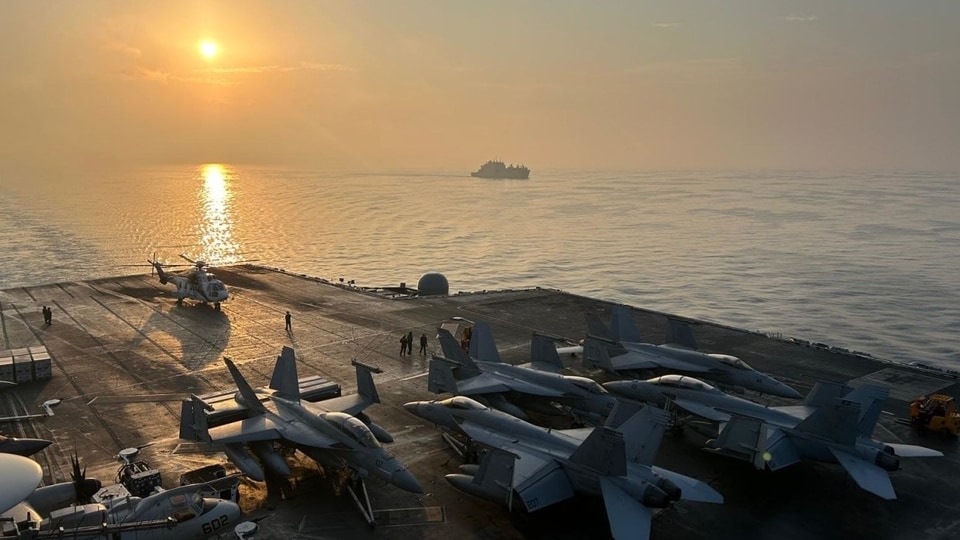
The deck of the USS George Washington in the Fifth Fleet area of operations. Eve Hartley/WSJ
For now, the conflict appears to hinge on which side can exert control over the waterway the longest, said Dana Stroul, former deputy assistant secretary of defense for the Middle East during the Biden administration.
So far, the U.S. pressure campaign, which includes economic sanctions and the naval blockade, is “insufficient to date for the Iranian regime to be willing to make concessions that the Trump administration wants to see,” Stroul said. “I think the question is over time, would that dynamic change?”
Tehran has largely relied on an arsenal of drones and large, subsonic cruise missiles—referred to as “flying school buses” by some U.S. officials—to attack ships, U.S. officials say. The U.S. says that it has largely degraded Iran’s ability to see and track ships and that 95% of traffic is flowing safely through the waterway.
The operations aboard the aircraft carrier, observed by Journal reporters this month, provided a glimpse into the expansive U.S. operation to protect ships in the Strait of Hormuz. A second aircraft carrier, an amphibious assault ship and more than a dozen guided-missile destroyers are also involved in the effort, as well as aircraft and drones staged across the Middle East, officials said.


On the USS George Washington, teams work around the clock to position aircraft for missions, shuttling them between the flight deck and the hangar bay using four giant elevators that move multiple planes at once. Maintainers constantly repair aircraft, ordnance handlers load and unload munitions, and specialized mechanics fix engines in the carrier’s jet shop.
“The more aircraft fly, the more they are prone to breaking, so we do pick up quite a bit out here during flight operations,” said Ensign Addie Schaefer, a division officer in the aircraft carrier’s Aircraft Intermediate Maintenance Department. “People watch ‘Top Gun’ and they’re not even thinking about the people who work behind the scenes, like there’s a reason why that aircraft is able to fly.”
For the pilots and aircrew, the nightly missions over the Strait of Hormuz can be intense. Stretching just 20 miles wide, the airspace above the narrow waterway is saturated with aerial objects, giving pilots mere seconds to react to projectiles that come flying off Iran’s coast, according to pilots and aircrew who spoke to the Journal.
One pilot said his squadron has a 100% success rate protecting ships when the jets are on station and have the ammunition to shoot down threats, though Iran sometimes fires at more vessels than the U.S. can protect.
“If there’s a threat that’s launched against those vessels, whether it’s an antiship cruise missile or a drone, those aircraft will go in and intercept it and shoot it down in a very short amount of time,” said Rear Adm. Jeffrey Heames, who commands the carrier strike group. “We’re doing that reliably.”
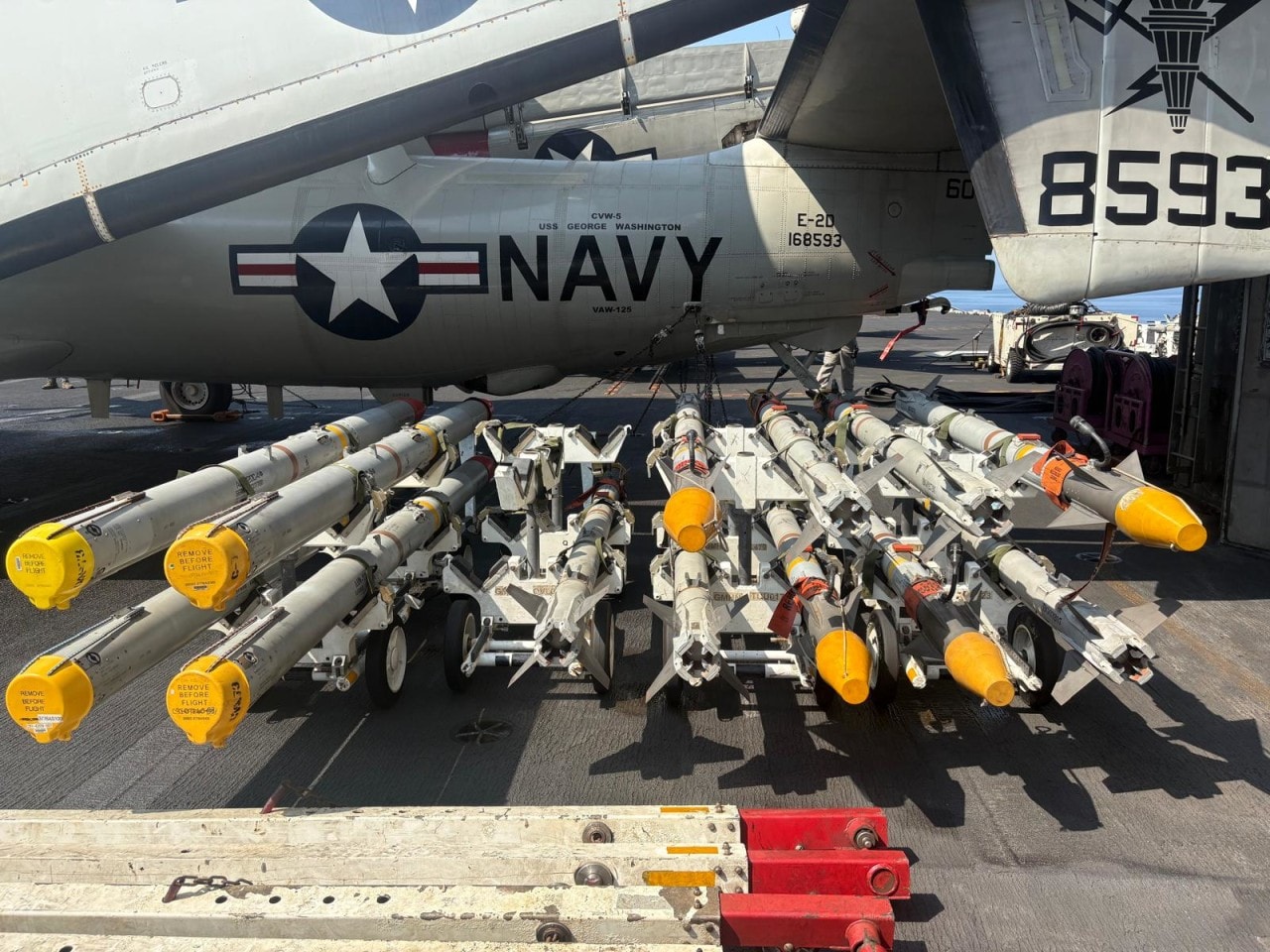
Heames told the Journal that the carrier is being supplied regularly and that the crew is motivated despite questions about its open-ended deployment. Based in Japan, the strike group was sent to relieve the USS Abraham Lincoln in August.
Some analysts argue that with oil flowing through the strait, Trump should allow time for the blockade to wear down the Iranian regime rather than seek a quick end to the conflict with strikes that could do little to change Tehran’s calculus.
“Time is on his side,” said Michael O’Hanlon, director of research for the Brookings Institution’s foreign-policy program. “I think you have to make it clear that you’re prepared to do this indefinitely.”
Write to Shelby Holliday at shelby.holliday@wsj.com


