
 E-Paper



Nepal sought China’s early warning months ago, got one less than 5 minutes before floods
Nepali officials stated that despite the meeting, Nepal did not receive the proper information from the Chinese side.

 Prefer HTon Google


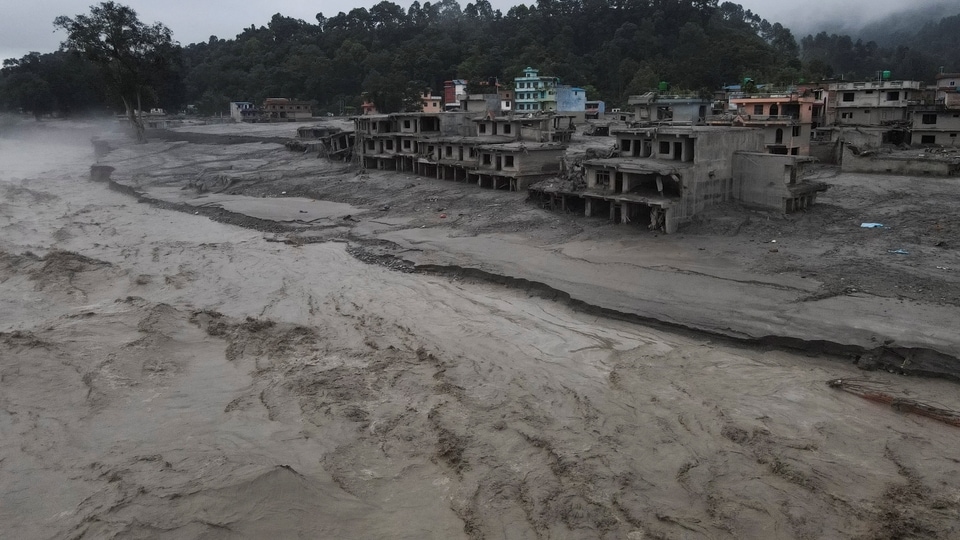
At least 800 people have been killed, and over 3,000 are missing along the Nepal-China border after devastating flash floods struck the region last week. However, as Nepal continues to reel in the aftermath of the devastating disaster, the incident has revealed the major gaps in China's early warning system and data sharing with the neighbouring country.
Also Read | Indian-origin woman finds missing mother's last known location via TikTok video amid Nepal floods
Nepal raised concern of exact incident a month ago and last year
A month before disaster struck, news agency Reuters reported that officials from both Beijing and Kathmandu met in the Nepalese capital to discuss cooperation to monitor and respond to floods, weather and glacier-related hazards.
Deep Dive

Speaking to Reuters, Nepali officials stated that despite the meeting, Nepal did not receive the proper information from the Chinese side.
"What we actually wanted from them, and still want, is if there are early movements of glaciers and early movements around that area, we would want to know a bit early," said Sauhardra Joshi, a hydrologist at Nepal's Flood Forecasting Division.
Meanwhile, speaking to Bloomberg, the chief executive of Nepal’s National Disaster Risk Reduction and Management Authority, Dharam Raj Uprety said people did not even get five minutes of lead time before disaster struck.
“We don’t have weather stations in high mountain areas because of the lack of trans-boundary data seeding mechanisms,” he said, adding there was limited sharing of weather and climate data across national borders.
Also Read | China censors Tibet flood reports, viral video pulled down, foreign media restricted
Furthermore, similar concerns were raised by Nepali officials in a meeting with the Chinese last year after a flash flood caused by the outburst of a supraglacial lake in the Tibet region of China killed nine people and left over a dozen missing in both countries.
China says data shared timely
China, however, claims that all data was shared in a timely manner with Nepal. In a statement on X, China's embassy in Nepal said both nations are in close contact on the issue and had made "substantial progress" at the meeting in May on promoting cross-border disaster information sharing.
"China has always made every effort, within the limits of existing technologies, to conduct monitoring, assessment and analysis and have shared important information with the Nepali side," wrote the embassy.
The embassy added that experts also faced several monitoring hazards in the Himalayan region, but data was “shared timely.”
Following the disaster, China’s President Xi Jinping has called for faster surveys of glaciers and glacial lakes across the Tibetan Plateau to prevent further disasters, as per state-run Xinhua News Agency.
The Communist Party has also ordered stronger monitoring and early-warning systems to improve the ability to identify linked disaster risks.
The flash floods of August 26 was triggered by a glacial collapse that sent ice, mud, rocks and fast-moving water surging through a valley in Nepal, wiping out entire settlements in their path. As of Monday, at least 800 people have been killed in Nepal and China's Tibet with more than 3,000 missing.
(With inputs from agencies)


