
 E-Paper



Sushila Karki is Nepal's first woman PM | All about her life, career, India link
She was first reported to be the top choice of the 'Gen Z' protest group to lead the country on Wednesday, but there were fresh negotiations thereafter

 Prefer HTon Google


Eminent jurist Sushila Karki, 73, took oath as interim prime minister of Nepal on Friday evening after Gen-Z groups chose her just days after overthrowing the coalition regime they saw as irrevocably corrupt.
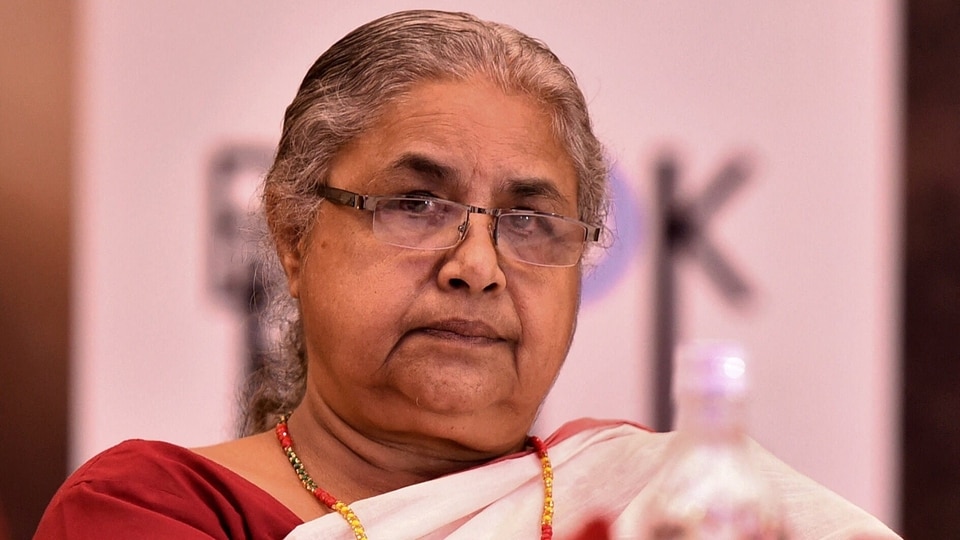
The first woman to hold the highest executive position in the Himalayan country, she primarily plans to guide the country into its next elections, which she has said she wants to conduct in six months to a year. She was also the first woman — so far the only one — to serve as chief justice of the Nepal.
Her tenure as CJ was marked by a strict anti-corruption stance, which made her popular among a young population frustrated with the old order, irrespective of herself being in the eighth decade of her life.
Karki was chosen after a meeting between President Ran Chandra Paudel, Nepal's top military brass, and Gen Z representatives.
The swearing-in was to be held around 9 pm, PTI reported.
How Gen Z reached consensus on Sushila Karki
She was first reported to be the top choice of the 'Gen Z' protest group on Wednesday, but there were fresh negotiations thereafter. The names also discussed were those of Kathmandu mayor Balendra Shah ‘Balen’, a 35-year-old rapper-turned-politician; and Kulman Ghising, 54, a former head of the Nepal Electricity Authority famous for his role in ending power cuts.
Karki succeeds KP Sharma Oli, who resigned on Tuesday after a youth-led siege that overthrew not just the ruling dispensation but most of the older, entrenched order of politicians.
Kathmandu and other areas were now peaceful after widespread protests triggered by a ban on social media sites widened, fueled by long-held public frustrations with corruption.
The violence resulted in the deaths of more than 30 people and injuries to over 1,000.
Since the movement was largely leaderless, and the groups had got together online first, they held long talks involving the President and the Nepali Army chief over at least three days.
Who is Sushila Karki?
Sushila Karki served as Nepal's first female chief justice from July 2016 to June 2017. She was known for a zero-tolerance policy against corruption — something that shot her into global spotlight when the then government tried to remove her.
- Born on June 7, 1952, in Biratnagar near the border with India, Sushila Karki is the eldest of seven children.
- Karki has a BA from Mahendra Morang Campus (1972) in Nepal, and MA in political science from Banaras Hindu University in India (1975). She did her bachelor of laws from Tribhuvan University in Nepal in in 1978.
- She began her career as a lawyer in 1979 and became a senior advocate in 2007.
- Karki was appointed as an ad-hoc judge of the Supreme Court in January 2009 and became a permanent judge in 2010.
- She was temporarily suspended as Chief Justice in April 2017 after lawmakers from the ruling Nepali Congress and CPN (Maoist Centre) filed an impeachment motion in the House of Representatives, accusing her of delivering a biased verdict. But she served her full tenure, and has since been active in civil society.


