
 E-Paper



Pakistan's Afghan plan goes awry, clashes erupt on Quetta border
The Afghan Taliban have serious differences with Pakistan over Durand Line as border and are upset that terror forces like so-called Islamic State Khorasan Province are being promoted by Rawalpindi to destabilize Kabul regime.

 Prefer HTon Google


New Delhi: On the day US Central Command Commander Gen Michael Kurilla came visiting Rawalpindi to meet new Pak Army Chief Gen Asim Munir, serious cross-border clashes erupted between Pakistan Army and Afghan Taliban-backed Tehreek-e-Taliban, Pakistan fighters at Chaman border crossing near Quetta this evening.
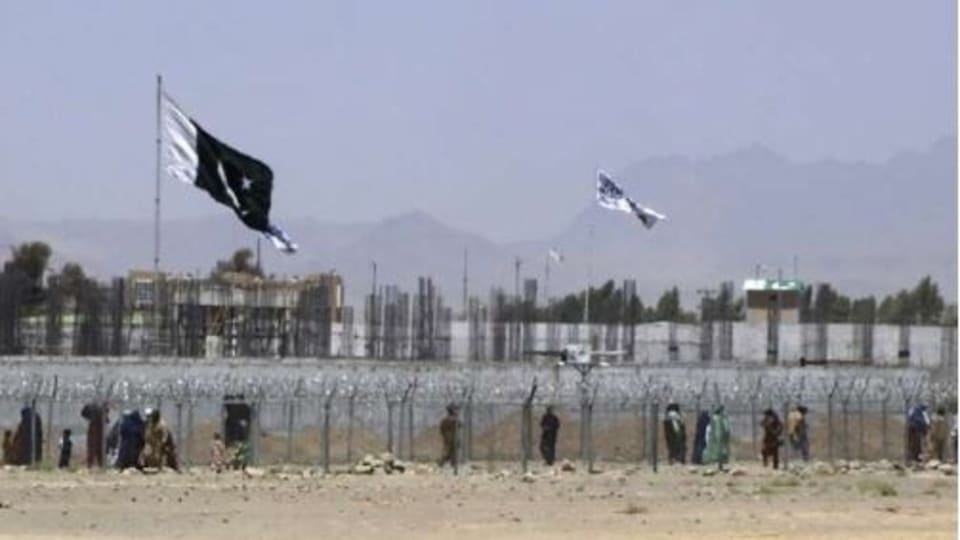
According to reports from Kabul, the Chaman border crossing was evacuated, and medical emergency declared as more than 15 civilians were injured in heavy machine gun and mortar firing by both TTP fighters and Afghanistan Taliban. The clashes erupted after Pakistan Army ostensibly tried to repair the border fence forcing both the TTP and the Afghan Taliban to retaliate. As many as seven Pak nationals were killed in cross-border shelling by the Taliban earlier this month.
With series of clashes erupting all along the Af-Pak border, the Taliban experiment is proving to be costly for the Pakistan government in Islamabad and its deep state in adjoining Rawalpindi. While the Taliban government occupied Kabul on August 15, 2021, with the help of then Pakistan ISI chief Gen Faiz Hameed, a protégé of then PM Imran Khan Niazi, the ultra-conservative Sunni Pashtun government has turned against its once upon a time handlers and started targeting the Republic.
The rise of Taliban in Afghanistan has taken Islamic radicalization in Pakistan to a different level with a large section of public wanting that Islamic Republic should be turned into Emirate with Sharia law akin to Afghanistan. Although Pakistani deep state thought that Taliban would push the TTP to compromise with Rawalpindi and lead to indefinite ceasefire, the radical extremist group broke the ceasefire on November 28 and asked its cadre to carry out attack in the entire Republic.
Even though then Pakistan PM Imran Khan Niazi praised the Taliban occupation of Kabul by calling it “throwing off their shackles of slavery” under two decades of US occupation, the Sunni Pashtun force is today totally at odds with Islamabad as it refuses to recognize the Durand Line as the border. The Taliban have made it amply clear that it does not recognize the British drawn Durand Line as it divides the Pashtun community and hence they want Pashtun dominated areas on Af-Pak border to be under control of Kabul.
With the Taliban government refusing to act as proxy of Rawalpindi, Pakistan is still to recognize the Emirate of Afghanistan despite Islamabad being the chief promoter of the Sunni group for the past three decades. Instead, it is using terror groups like so-called Islamic State of Khorasan Province (ISKP) and other terror groups to destabilize the Taliban government in Kabul. It is the same extremist forces which are also trying to spread instability and radicalization in the Central Asian Republics much to the chagrin of Russia.
While India has reached out to Taliban as part of its historic commitment to help the Afghan people notwithstanding the political regime in power, the strategic depth game of Pakistan against India has gone awry with the Sunni Pashtun not interested in fighting proxy wars for Rawalpindi headquarters. With Pakistan’s western borders heating up due to regular clashes with TTP and Afghan Taliban, Islamabad’s plan has gone all topsy-turvy.


