
 E-Paper



Pakistan wants to launch new regional bloc to replace SAARC, but will it find takers?
As per analysts, Pakistan's plan is unlikely to gain traction without India, whose economic and strategic weight continues to anchor the South Asian region.

 Prefer HTon Google


Pakistan has renewed efforts to reshape South Asian regional cooperation with a proposal that would expand its trilateral initiative with Bangladesh and China into a wider multilateral grouping. This grouping, could potentially function as an alternative to the South Asian Association for Regional Cooperation (SAARC), but without India.
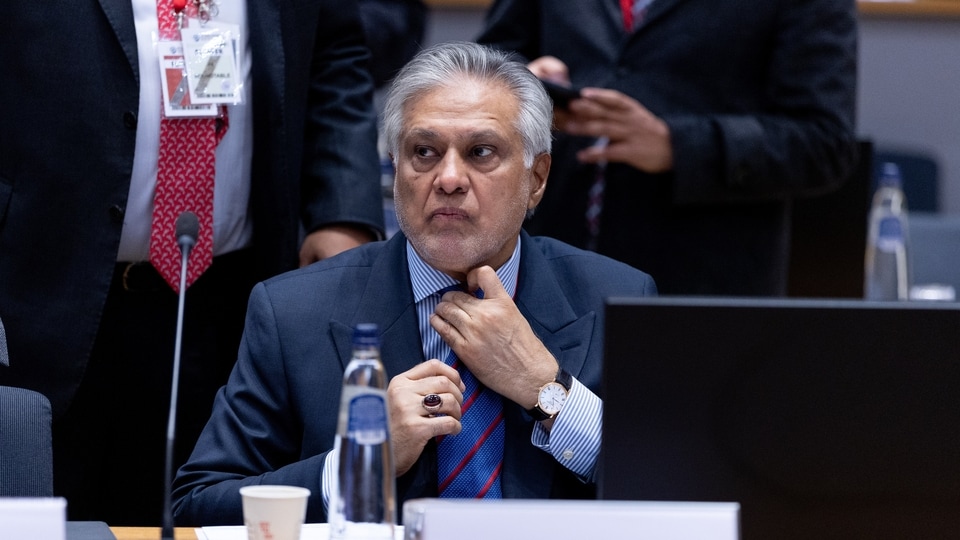
Pakistan's remarks comes amid heightened tensions between the neighbours.
However, as per analysts, Islamabad's plan is unlikely to gain traction without India, whose economic and strategic weight continues to anchor the South Asian region.
Deputy prime minister and foreign minister Ishaq Dar said last week that Islamabad aims to “expand and replicate” the trilateral mechanism launched earlier this year with Dhaka and Beijing. The three countries held their first meeting in Kunming in June.
Dar pitched the idea as a pathway to “open and inclusive regionalism,” arguing that South Asia can no longer remain trapped in “zero-sum mindsets, political fragmentation and dysfunctional regional architecture”.
His comments come amid sharply deteriorating ties with India following a four-day military conflict in May.
New bloc to replace SAARC?
Dar’s remarks signalled Pakistan’s support for emerging platforms outside SAARC, which has been largely inactive for a decade.
Established in 1985, SAARC includes India, Pakistan, Bangladesh, Sri Lanka, Nepal, Bhutan, Maldives and Afghanistan. Its last summit was held in 2014; the next, scheduled in Islamabad in 2016, was cancelled after the Uri terror attack, which India blamed on Pakistan.
With India refusing to return to the table unless Islamabad acts against cross-border terrorism, SAARC has effectively stalled. New Delhi has since shifted focus to BIMSTEC, the Bay of Bengal grouping that excludes Pakistan.
Pakistan now sees an opportunity to fill that vacuum. The proposed bloc, Dar suggested, would allow flexible “variable geometry” cooperation in areas such as connectivity, technology and economic development - without being constrained by India’s objections.
Will other countries join?
Experts say Pakistan's idea may struggle to find takers.
“At this stage, the proposal is more aspirational than operational,” Rabia Akhtar, director of the Centre for Security, Strategy and Policy Research at the University of Lahore told Al Jazeera.
She added that participation will depend on whether states perceive practical value in smaller, issue-focused groupings - and whether joining such a platform risks political fallout with India.
India's influence remains formidable. JNU professor Swaran Singh, speaking to Al Jazeera, pointed out that India’s population is seven times Pakistan’s, its economy 12 times larger, and its defence spending five times higher. Smaller states like Nepal and Bhutan also rely on access to the Indian market and on New Delhi's crisis-response capacity, from disaster relief to vaccine diplomacy.
“India must continue to be a responsible and collaborative leader,” said Shantesh Kumar Singh of JNU, warning that any regional cooperation structure that sidelines New Delhi risks fragmentation and limited funding.
Why regional cooperation matters
South Asia is home to over two billion people, yet intra-regional trade remains just around 5 per cent of total commerce, roughly $23 billion, according to the World Bank. The institution estimates that regional trade could rise to $67 billion if barriers were lowered and connectivity improved.
SAARC previously attempted to negotiate transport and railway agreements, but they collapsed due to India–Pakistan disagreements. Analysts believe that unless the two largest members find ways to cooperate on narrow issues, meaningful multilateralism in South Asia will remain out of reach.


