
 E-Paper





Shishir Gupta is Executive Editor at Hindustan Times and one of India's top journalists covering national security, strategic affairs, foreign policy and geopolitics. Over the past three decades, he has extensively reported on India's military, diplomatic and security landscape, covering every major conflict and national security challenge, from the 1999 Kargil War and the 2020 East Ladakh standoff to Operation Sindoor in 2025. He has also covered major terror attacks, including the IC-814 hijacking, the 26/11 Mumbai attacks and the 2025 Pahalgam terror strike, along with numerous Pakistan-backed terrorist incidents in the Kashmir Valley and across India. He has reported on national and state elections for more than three decades. A recognised authority on strategic affairs, Gupta has covered India's nuclear programme since the Pokhran-II (Shakti series) tests in May 1998 and has written extensively on global nuclear issues, Indian diplomacy and the country's expanding global outreach. He has also reported widely on international conflicts and terrorism, with a special focus on the Indian subcontinent. Gupta has interviewed Prime Minister Narendra Modi more than four times, including Modi's first interview with the print media after becoming Prime Minister in May 2014. His other interviews include three with the Dalai Lama, as well as conversations with Benjamin Netanyahu, Amit Shah, Yogi Adityanath, S. Jaishankar, Nirmala Sitharaman and Piyush Goyal. He is the author of Indian Mujahideen: The Enemy Within (Hachette, 2011) and Himalayan Face-off: Chinese Assertion and Indian Riposte (Hachette, 2014). He was awarded the Chevening-Wolfson Joint Scholarship at Wolfson College, University of Cambridge, UK, in 1998 and participated in the International Visitor Leadership Program (IVLP) of the US State Department in 2006. He received the Ben Gurion Prize from Israel in 2011 and the K. Subrahmanyam Prize for Strategic Studies in 2015 from the Manohar Parrikar Institute for Defence Studies and Analyses (MP-IDSA). Since 2024, he has hosted Point Blank, Hindustan Times' weekly YouTube show on global geopolitics.
 Trending News
Situation critical in Myanmar with mounting resistance to military junta
The mounting anti-military junta resistance in Myanmar is accompanied by rising anti-China sentiment in the country.


Situation has gone critical behind the Bamboo Curtain in Myanmar with anti-military junta forces intensifying their operations across the country and sentiments against China running high for exploiting mineral reserves and supporting the military dictatorship.
Last month, Myanmar recorded 647 conflict linked fatalities including 34 civilians, 581 security forces, three militants and 32 in fighting between pro-government and resistance forces. In April, there were 379 conflict linked fatalities including 17 civilians, 338 security force personnel, 11 militants and 13 members of resistance forces. The overall fatalities in May registered a one-and-a-half-fold increase as compared to April with security force fatalities increasing by 71.89 per cent.
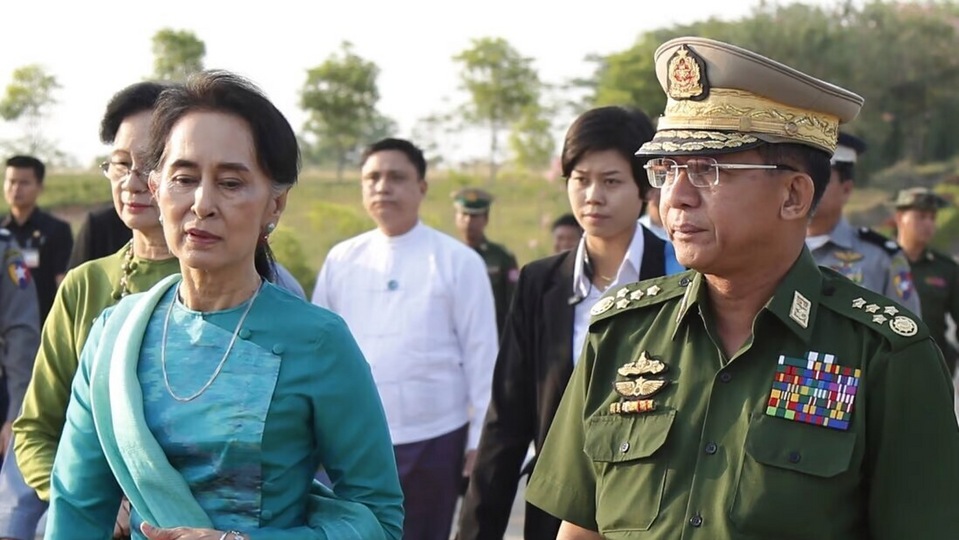
The May fatalities are the highest recorded in a month since December 2021 figure of 654 after the military junta headed by Senior General Min Aung Hliang overturned the democratic mandate in favour of National League for Democracy leader Aung San Suu Kyi in February 2021 military coup. Suu Kyi is presently under house arrest after being convicted by military court on various charges.
The mounting anti-military junta resistance in Myanmar is accompanied by rising anti-China sentiment in the country with Hong Kong listed private security contractors hired by Chinese company Wanbao Mining in Salingyi township in Sagaing Region. This company is in a joint venture with Myanmar’s Economic Holdings Ltd to extract copper from the Letpadaung mines in the region.
The local militia opposed to the military junta attacked a military ship carrying reinforcements and rations for the Chinese company on Chindwin River on May 1. The resistance forces along with Burmese expats have urged Beijing not to supply arms and ammunition to the military junta and clashes between the local militia and the Myanmar security forces have taken place in the copper mines of Sagaing Region.
The ongoing political crisis in Myanmar was also discussed by Quad leaders at the Tokyo summit last month. The leaders of the four member countries – India, US, Australia, and Japan – expressed concern over the crisis and called for the swift restoration of democracy with the urgent implementation of the ASEAN Five Point Consensus.
To exert pressure on the junta regime, the French Embassy in Myanmar announced that the European Union and its Member States had renewed their restrictive measures on several individuals and entities “involved in the military takeover, responsible for undermining democracy and rule of law in Myanmar, and contributing directly or indirectly to military regime's revenues/activities.”
Reports from Myanmar suggest a strong likelihood of anti-resistance forces gaining further ground, with a significant risk of resumption of fighting in the Rakhine State. The region in Myanmar’s western coast has remained largely quiet since last year’s coup. But the Arakan Army, an ethnic armed organisation based in Rakhine State, has gradually walked away from its compact with the junta, in a setback to the regime’s efforts to lure other groups to the peace table.
Tun Myat Naing, the commander in chief of the Arakan Army, warned about a possible attack against the Western Regional Military Command if the military activities continued to expand in Rakhine, the region which saw large scale exodus of Rohingya Muslims. The spokesperson of State Administration Council chairman Min Aung Hlaing, however, said that the regime has no intention to fight with the Arakanese group.
Meanwhile, a US-based representative of a Rohingya insurgent group active in northern Rakhine announced that the outfit has planned to start fighting against the junta within two years, appealing the refugees to donate funds to support their cause.
While the possibility of conflict between the warring parties is likely to escalate further, the anti-China sentiments are creating new crises for the junta. With deepening domestic crises and lingering uncertainty over the international recognition of the military regime is set to exert more pressure on the government.


