
 E-Paper



The Silicon Valley Campaign to Win Trump Over on AI Regulation
The debate marks a major flashpoint in Republican politics, stoking tension that could shape the party’s approach to AI in next year’s midterm elections.


 Prefer HTon Google


WASHINGTON—At a November meeting in the Oval Office, Nvidia Chief Executive Jensen Huang gave President Trump an ominous message: A patchwork of artificial-intelligence laws in states such as California threatened technology development in the U.S.
Huang said a flurry of state laws could cause the U.S. to lose the AI race, people familiar with the meeting said, echoing a message presented in the discussion from White House AI czar David Sacks and senior White House policy adviser for AI Sriram Krishnan. Both have close ties to Silicon Valley.
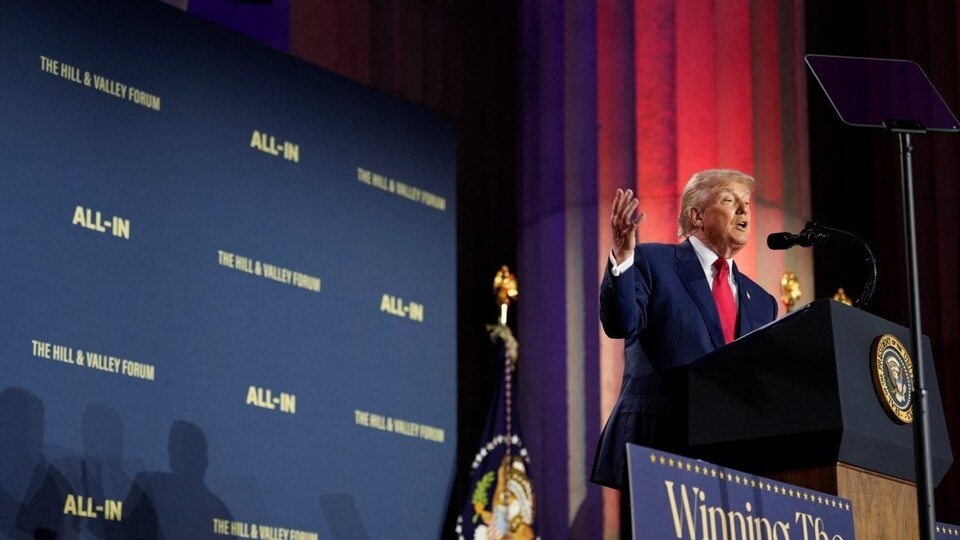
Trump told the group and chief of staff Susie Wiles that the administration should address the issue with an executive order, the people said. Shortly after the meeting, he posted on Truth Social that the U.S. needs to avoid a collection of disparate state rules for AI, setting off a monthlong frenzy that is expected to culminate in the signing of an executive order later this week. The measure could anger some Republicans while giving tech companies a win.
“You can’t expect a company to get 50 Approvals every time they want to do something,” Trump posted Monday on Truth Social. “THAT WILL NEVER WORK!”
The action coming out of the Oval Office meeting has led to a major flashpoint in Republican politics, stoking tension that could shape the party’s approach to AI in next year’s midterm elections.
If the final order poses a real threat to state AI laws, Trump will test the loyalty of MAGA conservatives including former strategist Steve Bannon and Sen. Josh Hawley (R., Mo.). They opposed the concept of banning state AI laws in Congress, calling such a move a giveaway to tech companies that would undermine states’ ability to install guardrails for consumer protection and regulate potential harms from AI.
“David Sacks has epically failed twice to jam thru AI Amnesty into must-pass legislation—he has made the very concept toxic,” Bannon said in a text message. “The EO will carry that stench.”

Some of the critics are skeptical of an executive order. “An executive order doesn’t/can’t preempt state legislative action,” Florida Gov. Ron DeSantis said on X Monday. Others seem open to supporting Trump’s approach despite their opposition to a moratorium on state AI laws. A spokesman for Arkansas Gov. Sarah Huckabee Sanders, who like DeSantis has criticized state pre-emption efforts, said she backs Trump’s AI strategy and looks forward to working with him to win the AI race while protecting Americans.
In a move to build support for the order, Sacks held a call with Republican governors recently during which he told them that the executive order wouldn’t interfere with their ability to protect children online or fight the construction of data centers, people familiar with the discussion said. Sacks mentioned those points as compromises the order would make in an X post Monday. The longtime venture investor has warned about the dangers of Democratic states controlling AI rules and so-called woke AI that expresses liberal bias.
The White House has been weighing language in an executive order to target states with AI laws deemed to be onerous through a legal task force convened by the Justice Department and by withholding federal funding. That approach could put the administration in direct conflict with Republican states.
Trump’s desire to take executive action kicked off a frenzied round of lobbying on both sides of the issue—with some draft proposals circulating in Washington that included softer language more favorable to the states, according to people familiar with the matter.
It couldn’t be determined what language, if any, Trump had agreed to sign.
Asked for comment, White House spokeswoman Taylor Rogers said: “President Trump is the final decision maker and determines all policies based on what is best for the American people. Nothing is final until announced by the president.”
The order is the latest instance of the president putting the AI industry at the center of his agenda, a strategy that tech executives cheer but some analysts say could backfire if the technology proves unpopular with voters.
“The base has been pretty clear that MAGA is not a fan of this approach,” said Joel Thayer, a Republican lawyer who works on tech issues including state bills aimed at protecting children online. “You’re going to see a backlash from states and their respective attorney general offices, red and blue, over this.”
Republicans have been promoting the pre-empting of state AI rules for years. The idea gained momentum in the last 18 months, when Democratic states such as Colorado, California and New York signed laws imposing guardrails on tech companies.
Tech figures close to Trump including Huang, Sacks and venture capitalist Marc Andreessen have been adamant about the need to avoid a state patchwork. Andreessen’s venture firm is backing an AI-focused political-action committee network to fight strict regulations.
Early this past summer, Sacks and other officials pushed for a 10-year moratorium on state rules to be included in Trump’s tax-and-spending megabill. That effort would have essentially withheld federal funding for states to expand internet access if they had AI regulations.
It failed after Bannon and other opponents flooded congressional offices with phone calls. At the time, Trump didn’t support the measure publicly and staffers in Vice President JD Vance’s office opposed it, creating uncertainty about the White House’s stance, The Wall Street Journal previously reported.
The issue came into focus again in late September, when California Gov. Gavin Newsom signed an AI bill into law that imposed guardrails on companies developing the top models. Trump urged Congress to put a measure banning state rules in its military-spending package or pass a stand-alone bill.
Even with his public support, the effort flopped because of opposition from Democrats and many Republicans. Many lawmakers have said targeting states doesn’t make sense unless there is a federal law in place or in the works.
While it could mark a temporary win for tech companies, analysts caution that the order stands to face legal challenges. And punishing states doesn’t resolve the challenge of developing federal rules.
“An executive order is a clear signal of the administration’s robust commitment to a federal AI governance framework,” said Dean Ball, a former White House AI policy adviser and senior fellow at the Foundation for American Innovation think tank. “The question now is what that framework will be.”
Write to Amrith Ramkumar at amrith.ramkumar@wsj.com, Natalie Andrews at natalie.andrews@wsj.com and Annie Linskey at annie.linskey@wsj.com


