
 E-Paper





For much of the war in Gaza, Israel’s military has argued that Prime Minister Benjamin Netanyahu’s goal of destroying Hamas can only be achieved with a political solution.
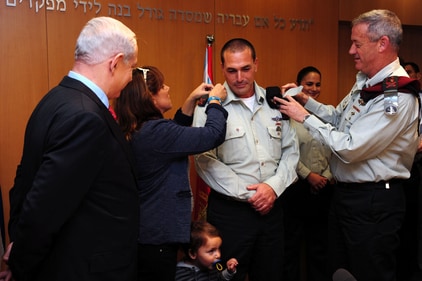
The Tank Commander Now Running Israel’s Military Sees a Year of War
Eyal Zamir, who has taken charge following a long line of paratroopers at the helm, promises a new and more aggressive approach to Gaza.
Updated on: Apr 4, 2025, 11:39:25 IST

WSJ

Share via
Copy link
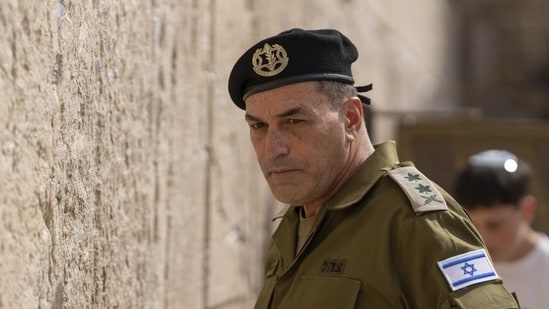
Now, the military has a new chief, and he has a different idea.
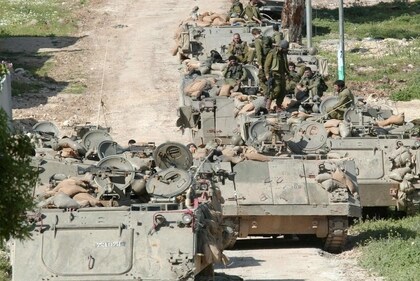
Eyal Zamir, a 59-year-old former tank commander, is leading Israel’s renewed push into Gaza to free hostages and force Hamas to surrender. He is preparing to deploy tens of thousands of soldiers across the enclave in a major ground offensive to occupy land and root out remaining Hamas militants—a plan backed by Netanyahu’s government.
It is a risky shift in tactics in the now 18-month war and reflects the new culture Zamir wants to promote inside the military, according to people aware of his plans.
In recent years, Israel’s military chiefs have largely come from special forces units and leaned on the country’s technological prowess to carry out targeted operations, according to former Israeli military officials and people who study the Israeli army.
That culture was reflected in Israel’s approach in the first 15 months of war. The military moved systematically through the Gaza Strip. But the army didn’t hold territory beyond two strategic corridors and repeatedly had to return to areas where militants had regrouped. Once a two-month cease-fire took hold in January, Hamas re-emerged and staged elaborate spectacles asserting its control.
Zamir wants to decisively take out Hamas with a large-scale, monthslong ground offensive before any political solution for Gaza gets decided, according to people familiar with his thinking.
In a major shift, he is prepared to deploy enough troops to occupy the enclave indefinitely and control the distribution of humanitarian aid, something Israel has avoided thus far.
“The new chief of staff comes from a different military culture than our recent chiefs of staff,” said Ehud Yaari, a fellow with the Washington Institute for Near East Policy who worked with Zamir on a paper at the think tank. “A culture of massive deployment.”
Zamir is Israel’s first chief of staff to be forged inside a tank. Tall and muscular with a shaven head, he has complained that Israel has too much faith in technology and not enough boots on the ground.
In many ways, Zamir encapsulates the broader global debate around how wars are fought and won. New technology has been central to the war in Ukraine, as Kyiv has successfully used cheaply-made drones to neuter Russia’s military might. But Ukraine also has ultimately lost major battles because Moscow has deployed thousands of soldiers in conventional warfare, demonstrating that boots on the ground are still required to take and hold territory.
Some Israeli military analysts have labeled Israel’s recent chiefs of staff the “paratrooper dynasty” and argued their overconfidence from belonging to elite units as well as their focus on offense likely contributed to the defensive failure on Oct. 7, 2023.
Gershon Hacohen, a former general and commander of the 7th Brigade, Israel’s first and arguably most prestigious armored formation, believes the focus on the paratrooper chiefs illustrates a deeper class problem in Israeli society, which in his view has become too focused on the achievements of relatively few exceptional people, like celebrated tech entrepreneurs.
“What about all the rest?” he asked. “What can they do in life?”
One of Zamir’s first decisions when he was appointed military chief last month was to form a new tank brigade. He has elevated officials with experience commanding infantry to the military’s most senior positions.
While the year began with a new cease-fire deal that stopped the fighting for two months and promised talks toward a permanent halt, Zamir warned as he started in early March that 2025 would be a year of war.
Since then, the Israeli military has started to deploy troops to Gaza to clear areas of Hamas fighters and hold territory indefinitely. “This will continue at a deliberate and determined pace,” Zamir said on a visit to Gaza this week.
Zamir has spent almost his entire life in the army. At 14, he left his home in the southern Israeli port city of Eilat to join a military boarding school in Tel Aviv.
In the mornings, students took a bus to a regular school for academic lessons before returning to the academy to study military history and the tactics of warfare, according to Sharon Govrin, a childhood friend from Eilat who attended the academy with Zamir.
The students learned navigation, fired live ammunition and parachuted out of planes. On vacations, they joined regular infantry units for drills.
Friends said Zamir took the training as seriously as a veteran soldier. When he graduated in 1984, a teacher predicted in the student yearbook that he would be “a chief of staff at the very least,” according to an alumni page for the academy.
At the time, most academy cadets wanted to become paratroopers and enter special-forces units, Govrin said. Netanyahu served as a commando, and his brother had been immortalized when he died leading the 1976 hostage rescue in Entebbe, Uganda.
Zamir, though, had grown up admiring the gritty tank commanders who against all odds repelled the Syrian and Egyptian armies in the 1973 Arab-Israeli war, Govrin said.
“Eyal thought that if you want to be a good officer in the big army, you have to start in the regiments and not in some kind of commando unit,” Govrin said.
Zamir spent time as a tank commander in Lebanon, where Israel used its armored corps to occupy the southern part of the country following its invasion in 1982.
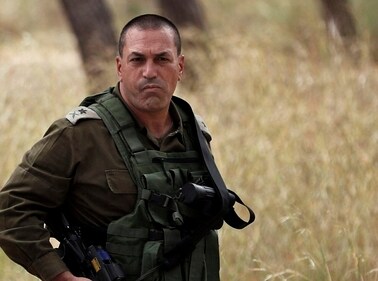
During the Palestinian uprising of the early 2000s, known as “the second intifada,” Zamir led a brigade of 90 tanks during an operation to besiege the West Bank city of Jenin, fighting against Palestinian militants.
“We are not coming for a visit, throwing a bomb and going back,” said Ronen Itzik, a former Israeli tank commander who served under Zamir. “We are there in the field all the time.”
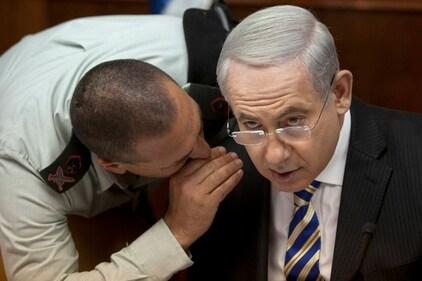
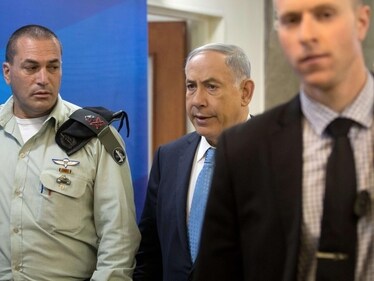
By 2012, Zamir had risen through the ranks to become military secretary to the prime minister, a role that acts as a liaison with the top level of government and a steppingstone to senior leadership. Netanyahu was prime minister, and the two developed a solid professional relationship though not a close personal bond, people close to Zamir said.
In 2015, Zamir became responsible for Gaza as head of Israel’s southern command. His first major test came in 2018, when Hamas encouraged Palestinians to protest at the border fence between Israel and Gaza. Over nine months of demonstrations, Israeli soldiers shot and wounded thousands of Palestinians, some of whom Israel said rushed the fence. The Israeli response drew an outcry from the international community, and according to the United Nations, left 183 Palestinians dead.
Later that year, Zamir was considered for the top job in the military, but lost out to Aviv Kochavi, a former paratrooper. He missed out on the top job again in 2022, when Defense Minister Benny Gantz, a former paratrooper, recommended Herzi Halevi, another special-forces commando.
On leaving the military, Zamir made a point of warning in a parting speech that the institution had become too reliant on technology and didn’t have enough soldiers to fight a prolonged, multifront war.
Many Israeli military analysts argue Zamir’s plan to use thousands of soldiers to occupy Gaza risks trapping Israel in a prolonged insurgency that causes even greater devastation, kills more Palestinian civilians and puts more Israeli soldiers’ lives at risk.
The country’s reservists, which make up most of its ground forces, are exhausted, and the economy has suffered. The Israeli public is more focused on returning hostages still held in Gaza and fears they will be killed if military operations continue.
“The war goal of eliminating Hamas doesn’t connect to the fact that Hamas is holding the hostages that we want freed,” said Israel Ziv, a retired Israeli general. “To go back to war for the sake of the fighting or just to squeeze Hamas, it is a very big strategic mistake.”
Zamir has Netanyahu’s backing for a new ground offensive. Netanyahu has consistently called for the total destruction of Hamas as a military and civilian power.
He also has the support of the U.S. While unpredictable, the Trump White House has ended the Biden administration’s pressure on Israel to moderate its attacks and has kept the ammunition flowing. President Trump has repeatedly said Israel will be unrestrained if Hamas doesn’t return the hostages and step down.
Zamir’s thinking already appears to be rubbing off. At the start of the war, Netanyahu visited his own old special forces unit, known as Seyerat Matkal, for a photo op. As fighting between Israel and Hamas renewed, the Israeli prime minister recently welcomed new military recruits on a visit to the armored corps.
Write to Rory Jones at Rory.Jones@wsj.com and Dov Lieber at dov.lieber@wsj.com

Get the latest headlines from US news and global updates from Pakistan, Nepal, UK, Bangladesh, Russia and US Iran war Live, get all the latest headlines in one place on Hindustan Times.


