
 E-Paper



Trump gives sleepless nights to clean energy scientists in US
Millions of dollars invested in clean energy projects may go down the drain if Donald Trump keeps his promise of withdrawing from the Paris climate deal, say scientists.


American scientific institutions are uncertain about the continuation of high funding for climate change projects, which got a push under President Barack Obama, when his successor Donald Trump takes over at the White House in January.
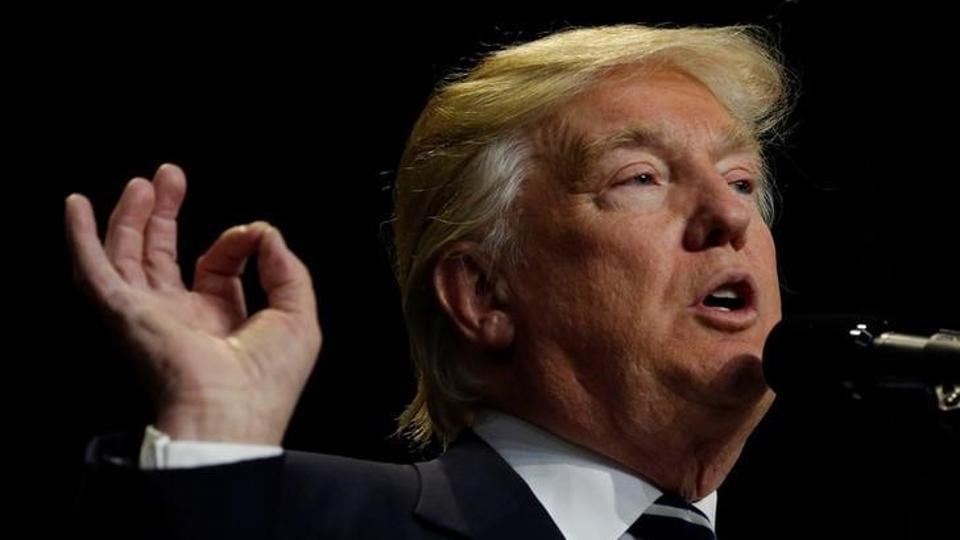
Heads of at least four scientific departments in the United States told Hindustan Times in unequivocal terms that they were jittery about future funding for clean energy projects as Trump has declared there is “nothing like climate change” and made it clear he will withdraw from the Paris climate deal.
After his election, Trump softened his stand on the Paris deal and said he was open to reviewing his earlier stand of withdrawing from the accord.
However, the scientists did not rule out the possibility of the federal government under Trump downsizing funding as the president-elect has not done much to allay the fears of the world community, which believes that the US withdrawing from the Paris Accord would be the biggest setback to plans for a zero net emission world by 2100.
If the US withdraws, it will impact the work of scientific institutions engaged in solar power, offshore wind energy, hydrogen fuel cells and next generation high storage ion-lithium batteries, and scientists believe Trump’s pro-fossil fuel stand will also hit funding from the private sector.
In the US, the federal or state governments provide base funding for clean energy projects to institutions which are required to arrange the rest of the funds from the private sector. The deal is that once the innovation is marketable, the private player will have sole propriety over it. These institutions are also engaged in research and testing super energy efficient appliances for homes and high energy intensive sectors for companies.
“To be candid enough, I am getting goose bumps as years of our research and work is at stake,” said Habib Joseph Dagher, executive director of the Advanced Structures and Composites Center at the University of Maine, the northern state with a vast coastline and with 90% of its land under forest cover.
For Dagher, the worry is greater as his center developed the US’s first floating offshore wind turbine, for which the two Obama administrations provided $40 million, with another $250 million expected in the coming years to upscale the innovation in which US faces competition from France, Norway and Japan.
In the clean energy space, offshore wind farms with the capacity to generate up to 500 MW are said to be next big thing. The US has made huge strides in a short duration in this sector. In 2015, the US became the world leader with the highest wind energy generation, leaving behind European countries that led the race for decades.
Professor Hemant Pendse of the university’s Forest Research Center, which has developed crude oil from forest waste, hoped politics would not mire ongoing research by the university and other scientific institutions across the US.
“Politics should not take over the scientific work of years,” he told Hindustan Times, while showing a 2,000 square feet waste-to-oil laboratory in the freezing temperatures of Maine last week. Dagher hoped his work would continue as he took journalists around a laboratory where a floating offshore wind turbine was being tested for 50 years of high waves.
At the National Renewable Energy Lab at Denver in Colorado in the mid-west, scientists were unwilling to speak on record about Trump’s denial of climate change. But, off the record, they said industry was developing cold feet over new clean energy research projects as there may not be many takers for such innovations within the US, the first market place before clean technologies can be marketed across the world.
The laboratory funded by the federal department of energy has a big basket of clean energy projects, ranging from hydrogen fuel cars that can run up to 500 km with one fill, batteries that run high data use mobile phones for days, heat capture and heating system for buildings, and highly efficient solar panels for which it gets millions of dollars from the federal government.
“Let’s wait and watch,” a top scientist at the laboratory said, two days after the Nobel Prize winner for climate change and former vice-president Al Gore met Trump in New York. “The feelers from Trump’s camp so far have not been good but I think there will be no cuts. But the sector will not get the boost as Obama gave it,” he said, adding that the fossil fuel lobby is still very strong in the US.
Obama started the Asia-Pacific clean energy forum, stationed in the department of energy, to sell US clean energy innovations across the world, including India and China, and ensured world leaders agreed to the comprehensive Paris climate deal in 2015.
Within the US, he introduced new emission norms for energy intensive sectors such as power and cement and enhanced funding for clean energy projects. With Trump set to take over in less than a month, all that can soon be history.
The US state department spokesperson refused to comment on Trump’s climate stand.
(The author’s trip to America was sponsored by the US foreign office)


