E-Paper



Trump, Putin Head to High-Stakes Alaska Summit With Clashing Objectives
The two leaders are meeting in-person for the first time since the start of Russia’s full-scale invasion of Ukraine.


 Prefer HTon Google


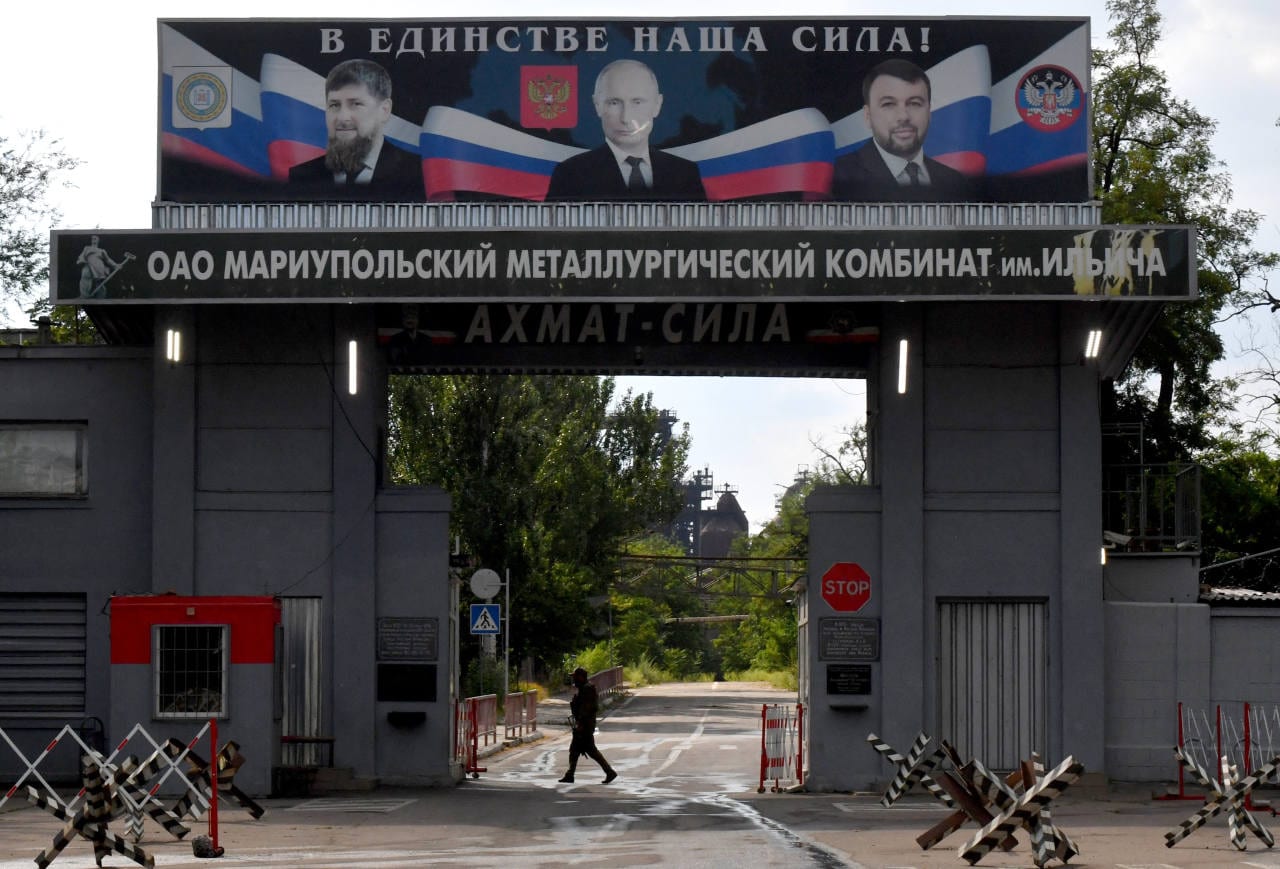
ANCHORAGE, Alaska—By meeting Russian President Vladimir Putin on Friday, President Trump is hoping to forge in person what he hasn’t been able to accomplish by phone—a partnership with the Kremlin leader to end the Ukraine war.
Putin is coming to Alaska with a very different goal: keeping in Trump’s good graces while pursuing his longer-term ambition of reasserting Moscow’s dominance over Kyiv.
Their high-stakes talks at a military base on the outskirts of Anchorage will prove a revealing test of wills over which of the two presidents will back down, even if only temporarily, in order to avoid a breakdown in relations that neither seems to want.
After initially playing down the summit as a “feel-out meeting,” Trump in recent days has said he would urge Putin to accept a cease-fire in Ukraine, seeking to jump-start long-stalled negotiations.
If Putin agrees, Trump says he will bring Ukrainian President Volodymyr Zelensky into the talks, potentially flying him to Alaska for in-depth conversations about a longer term peace agreement involving territorial concessions, security guarantees for Ukraine, and U.S. arm sales to Kyiv.
Should Putin balk, Trump is threatening Moscow with “very severe consequences,” possibly including sanctions on major buyers of Russian oil, such as China. The U.S. could also decide to withdraw from the peace process altogether, he said, leaving Moscow and Kyiv to continue the conflict that has killed hundreds of thousands of people.
Trump has made such threats before and backed away from them, leaving Putin an opening he can try to exploit in their discussions.
If Trump tries to achieve a peace deal acceptable to Kyiv and Europe while continuing to seek a closer relationship with Putin, “he’ll get neither,” warned Kurt Volker, a former U.S. ambassador to the North Atlantic Treaty Organization who was Trump’s Ukraine envoy during his first term.
Trump will fly to Anchorage early Friday morning and is scheduled to return to Washington the same day. He is spending part of Thursday preparing for the talks with his national security team, U.S. officials said.
Putin and his top aides Thursday said that they planned to discuss trade and arms-control issues, giving Trump added incentive not to let Ukraine interfere with the larger U.S.-Russia relationship.
The U.S. was making “fairly vigorous and sincere efforts to halt hostilities, resolve the crisis, and reach agreements that serve the interests of all parties involved in this conflict,” Putin said during a meeting with aides at the Kremlin on Thursday.
While Trump has called on Russia to stop bombarding Ukrainian cities and end its foot-dragging in peace talks, Moscow has sought to decouple the issue of a peace deal in Ukraine from the prospect of striking economic deals with the U.S.—something Trump has signaled is contingent on an end to the war.
Joint Base Elmendorf-Richardson, where the meeting will be held, was used by the U.S. military to keep watch on the Soviet Union during the Cold War. It currently hosts jet fighters that monitor Russian military patrols near U.S. airspace.
While Trump and Putin are scheduled to hold a joint press conference at the end of the summit, Trump said Thursday he would speak to the press alone if diplomacy fails, and might not brief allies.
“We’re going to be calling President Zelensky, if it is a good meeting,” he told Fox News Radio. “If it is a bad meeting, I’m not calling anybody. I’m going home.”
Since Russia started its full-scale invasion of Ukraine in 2022, Putin has been consistent in his demands that Russia keep the land it controls—almost 20% of Ukraine—and that Kyiv agree to abandon its military support from the West and proclaim neutrality.
Even Trump and his aides acknowledge the difficulties.
“We haven’t gotten to where we want to be,” Secretary of State Marco Rubio said Tuesday, referring to the months of calls between the two presidents and by intermediaries. “So the president feels like, ‘Look, I’ve got to look at this guy across the table. I need to see him face to face.’”
Torrey Taussig, who worked in the Biden White House on European affairs, said the Trump-Putin meeting risked being seen as “Yalta 2.0,” referring to the 1945 summit in which leaders of the U.S., U.K. and Soviet Union carved up postwar spheres of influence.
Without a summit strategy carefully coordinated with Kyiv and European officials, Taussig added, Trump’s talks with Putin in Anchorage “won’t bring the war any closer to an end.”
Their approaches couldn’t be more at odds. Trump sees himself as a dealmaker who uses unpredictability and gut instinct to try to cut through some of the tightest geopolitical knots.
Putin postures himself as a master strategist who makes tactical adjustments but never wavers from his long-term goal of subjugating Ukraine. He prepares methodically for such encounters and has honed during 25 years in power various strategies to unsettle his adversaries.
Trump’s strategy after returning to the White House was to woo Putin and pressure Zelensky to end the war, berating the Ukrainian president during a meeting February in the Oval Office.
It took months and several unproductive phone calls with Putin for Trump to shift course. Trump gave Putin a deadline, which expired last Friday, to make a peace deal or face new sanctions on its oil exports and trading partners.
Ever since the U.S. held high-level talks with Russia in Saudi Arabia in February, Moscow has touted lucrative potential deals with the U.S. in energy, critical minerals and space exploration, and even sent officials to Washington to lobby for them.
“The more Putin can expand the conversation to develop in Trump the feeling that the old magic with Vladimir is back, the better off he is,” said John Bolton, who served as Trump’s third national security adviser but is now a staunch critic.
Trump imposed 50% tariffs on India this month for purchasing Russian oil, but his deadline for a deal by last Friday passed without applying secondary sanctions on other customers of Russian energy, as Trump repeatedly threatened.
Hosting the Russian leader on U.S. soil in what is their first face-to-face meeting since Putin launched the all-out attack on Ukraine is a major concession by Trump, according to former officials and analysts, helping Putin shed the label of international pariah while giving little in return.
“He’s already won before the meeting gets started,” said Heather Conley, a senior fellow at the American Enterprise Institute and a former top State Department official on European affairs.
Putin is prone to extended monologues about the history of Russia-Ukraine relations, arguing that the two countries are essentially one but have been cleaved apart with Western connivance, and often insisting he is fully heard out.
At one of their last meetings, in 2018, Trump said he believed Putin’s denials that Russia had interfered in the U.S. presidential election, contradicting a U.S. intelligence community assessment that he still disputes.
Later, Trump authorized transfers of antitank weapons to Ukraine, the first lethal arms shipments by the U.S. after Russia invaded Crimea in 2014. He also approved sanctions on Russia in response to the invasion and the near-deadly poisoning of a Russian defector and his daughter in the U.K.
“Trump always knew Putin was a killer,” said Robert O’Brien, Trump’s fourth and final national security adviser during his first term, adding that Putin oversees the world’s largest nuclear arsenal. “You want to be careful with a leader like that.”
Write to Alexander Ward at alex.ward@wsj.com, Matthew Luxmoore at matthew.luxmoore@wsj.com and Lara Seligman at lara.seligman@wsj.com