E-Paper



UK election: An unnecessary June poll may spell the end of May
Anything less than the Conservatives winning a large majority will be seen as a personal defeat for May, and if Labour were to emerge as the single largest party, it will be seen as May’s historic blunder .


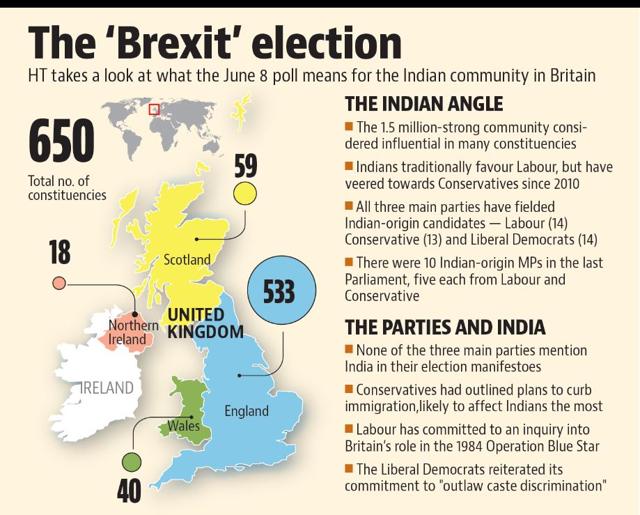
British politics looks very different before the June 8 mid-term election after Prime Minister Theresa May spread shock and awe in April by the surprise announcement of the polls —from brazen confidence about winning a massive majority to gnawing uneasiness now.
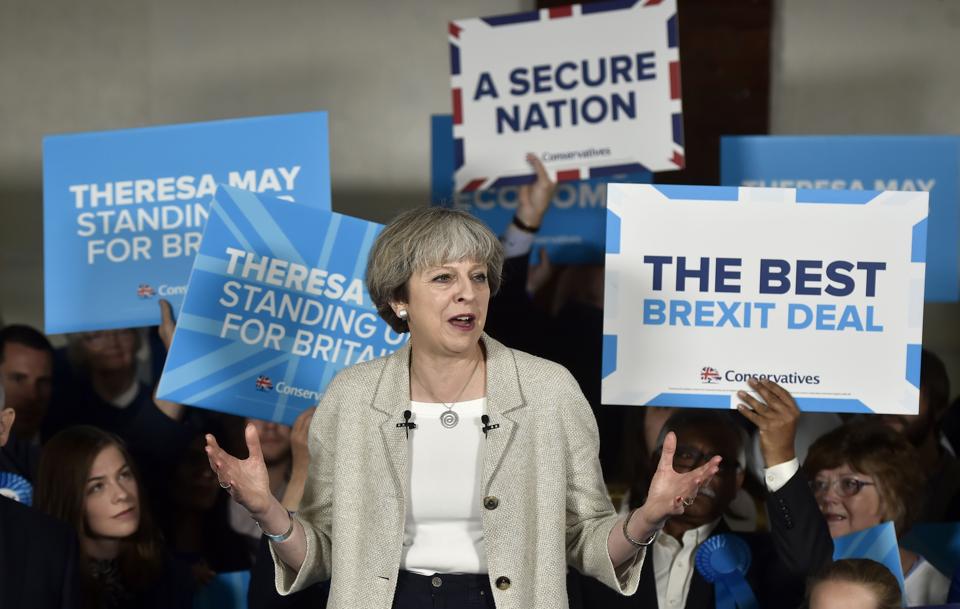
May had previously consistently ruled out a mid-term election — there was no demand for it from the opposition or the people, the next election was in 2020 and there was no economic or other crisis.
Her reasons for holding the election — to sort out Brexit-related opposition from parties in Westminster — has still not convinced many. It was clearly intended to win a large majority by exploiting Labour’s weak position, and thus steamroll opposition to her vision of Britain’s exit from the EU.
Many have called it an unnecessary election. On Friday, May was again asked on live television what exactly was the opposition she faced that prompted her to go for the election, and when she gave the same answer, she was met with more shaking of heads.
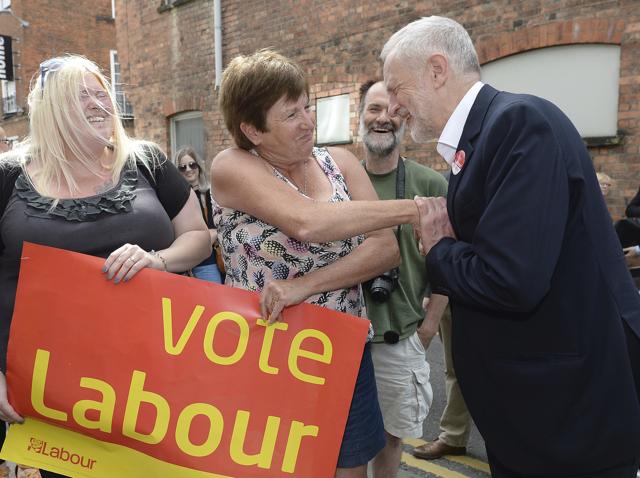
Now, the brazen confidence is less visible, thanks to Labour’s popular manifesto and its leader Jeremy Corbyn — who was supposed to be unfit for politics in the age of television — growing in stature and popularity by the hour. A meme soon spread on social media: “June will be the end of May”.
But the real story is not the Conservative Party winning – that is the most expected outcome, despite Labour’s resurgence. The key point is the margin of majority. The gamble was on winning a large enough majority to overcome Brexit-related opposition --- anything less will be seen as May’s personal defeat and the gamble backfiring.
But if Labour emerges as the single largest party and goes on to form a minority government with support from the Scottish National Party, Liberal Democrats and others, it will spell nothing less than a historic blunder for May.
She is already having a hard time explaining to voters what she really means by “Brexit means Brexit” and “no deal is better than a bad deal”. Selling the “making a success of Brexit” line has also been hard work when nearly half of UK did not want it.
On the other hand, Corbyn, free of any such pressures, has been happily punching holes in her party’s policies on sensitive issues such as health, education and social care, when she would rather the focus remained on Brexit.
But an oft-ignored fact in the cut-and-thrust of campaigning is the ennui across the United Kingdom over yet another election.
June 8 is the fourth major round (not counting local elections) in four years, after the Scotland independence referendum in 2014, the general election in 2015 and the EU referendum in 2016.
This year’s election has already seen the consolidation of a new facet to British politics. It was something of a novelty when a US-style live television debate was held before the 2010 elections – many enjoyed it, while others carped at the Americanisation of British politics.
The year 2015 saw more leaders appearing on live television. From three in 2010 – David Cameron, Gordon Brown and Nick Clegg – the camera struggled to pan across as many as seven leaders. Last week, May’s absence in a live debate made more news than its contents, and on Friday May and Corbyn got a roasting from a live television audience.
People with long memories say such live debates are a natural denouement of the culture of spin introduced along with the New Labour project since the mid-1990s, when a particular teflon style of communication was personified by Tony Blair and his adviser, Alistair Campbell. The growing number of live debates in 2017 only takes the trend forward.