E-Paper


Lindsay Clancy verdict: Jurors break silence on tense jury room drama that led to mistrial verdict
Three jurors from Lindsay Clancy's murder trial have spoken out for the first time, blaming one holdout juror for the mistrial.

 Prefer HTon Google


After weeks of testimony and seven days of tense jury deliberations, the Lindsay Clancy murder trial ended without a verdict. Now, three jurors are speaking out for the first time, revealing what happened inside the jury room, including the disagreements that ultimately led to a mistrial.
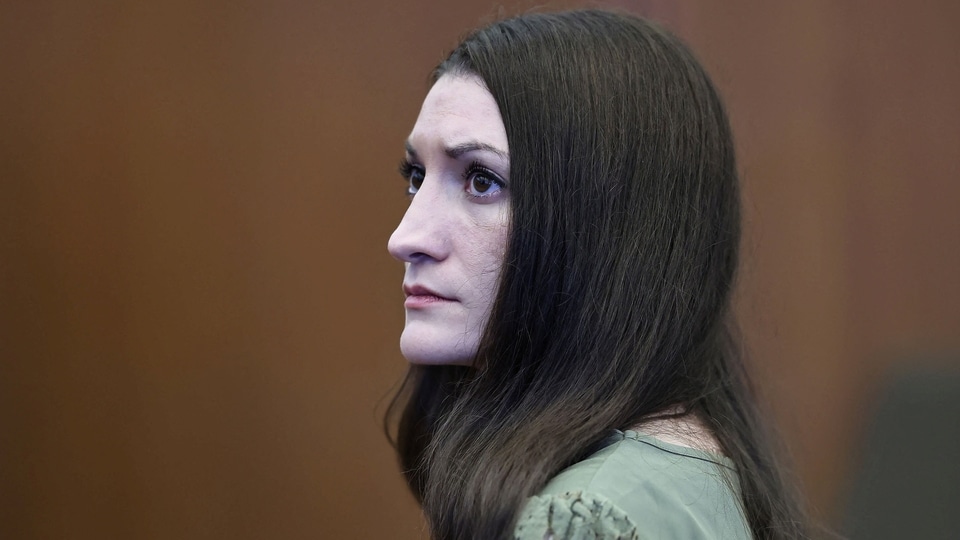
Jurors reveal what happened inside the room
Three jurors from Lindsay Clancy's murder trial spoke to NBC10 Boston's Sue O'Connell on Tuesday, in an interview that lasted over an hour. The jurors have been identified as Kelly, a retired chef; Ronnie, a fifth grade special needs teacher; and Paula, who worked for government contractors.
The jurors said they believed Clancy was not criminally responsible for killing her children. They also praised her defense lawyer, Kevin Reddington. One juror said she would hire him herself if she ever needed a lawyer, as per TMZ. The jurors were more critical of the prosecutors, saying they felt the prosecution showed no compassion.
Ronnie, the jury's foreperson, was the juror who wrote a note to the judge raising concerns about another juror's ability to reach a verdict while accepting the definition of reasonable doubt, as per NBC News.
Why the jury could not reach a verdict
The jurors said their biggest issue was with the lone holdout juror. They described him as arrogant, unwilling to listen, and dismissive of information during deliberations, as per TMZ.
"He was very arrogant," one juror told NBC10 Boston. "He really did not take anything that anybody said. He tried to ask a question about the medications, and we went back to the report from South Shore Hospital." She explained that there were nurses on the jury who explained the toxicology report, but “he just completely disregarded the information that they gave”
Ronnie, the foreperson, recalled a moment when the holdout juror appeared close to agreeing. "He had reasonable doubt. He admitted he had reasonable doubt after we watched that video of the interview- I think that's when it was," she said. "I started filling out the forms. I was so excited."
She had even begun completing the paperwork and added her signature. However, “then he said, 'But I'm still not going to say that she's not guilty by reason of insanity.'”
Another juror explained how the man separated himself from the rest of the panel. “I'm not sure if rogue is the right word."
“But every one of us, in the hours of frustration, would get up and walk the room because you just couldn't sit anymore, and we'd all go into the cart with the exhibits. He got up to the cart once, very briefly, and went back to his seat. He would not interact with us and try to understand.”
The jurors said they read him the definition of reasonable doubt "numerous times." She continued, “He actually said one day in the end, 'Well, why don't we have the judge come in and read it again?' And we were like, 'No, we have it in front of us. We don't need that,' and we would highlight it. But he had the hardest time getting off the fact that Lindsay viciously killed her children.”
The jury was reportedly split 11-1.
Also read: Why Patrick Clancy’s testimony was crucial in the Lindsay Clancy mistrial outcome
How the case reached a mistrial
The final days of the trial became more tense after the jury's foreperson told the judge that one juror was not following the court's instructions about reasonable doubt. Clancy's defense team then made several attempts to have that juror replaced with an alternate juror.
The judge later spoke to each juror separately and repeated his instructions about reasonable doubt. He did not remove any jurors and sent them back to continue deliberating.
After seven days of deliberations, the jury told the judge on Friday that they could not reach a unanimous verdict. Since this was the third time the jury had failed to agree, Judge William Sullivan declared a mistrial.
After the mistrial, the district attorney said his office was still deciding whether to retry the case. A hearing on a possible retrial is scheduled for September 29.
Clancy, a 36-year-old former labor and delivery nurse, was charged with three counts of first-degree murder after killing her children Cora, Dawson and Callan Clancy, ages 5, 3 and 8 months.
Clancy and her defense team don't deny that she strangled her children in 2023 before trying to take her own life. Her attorney argued that postpartum psychosis led to her actions, while prosecutors say she knew what she was doing when she killed them.