E-Paper


On D.C. Streets, Feds Make a Show of Force
President Trump’s deployment leaves some residents questioning why high-crime neighborhoods aren’t getting as much attention.


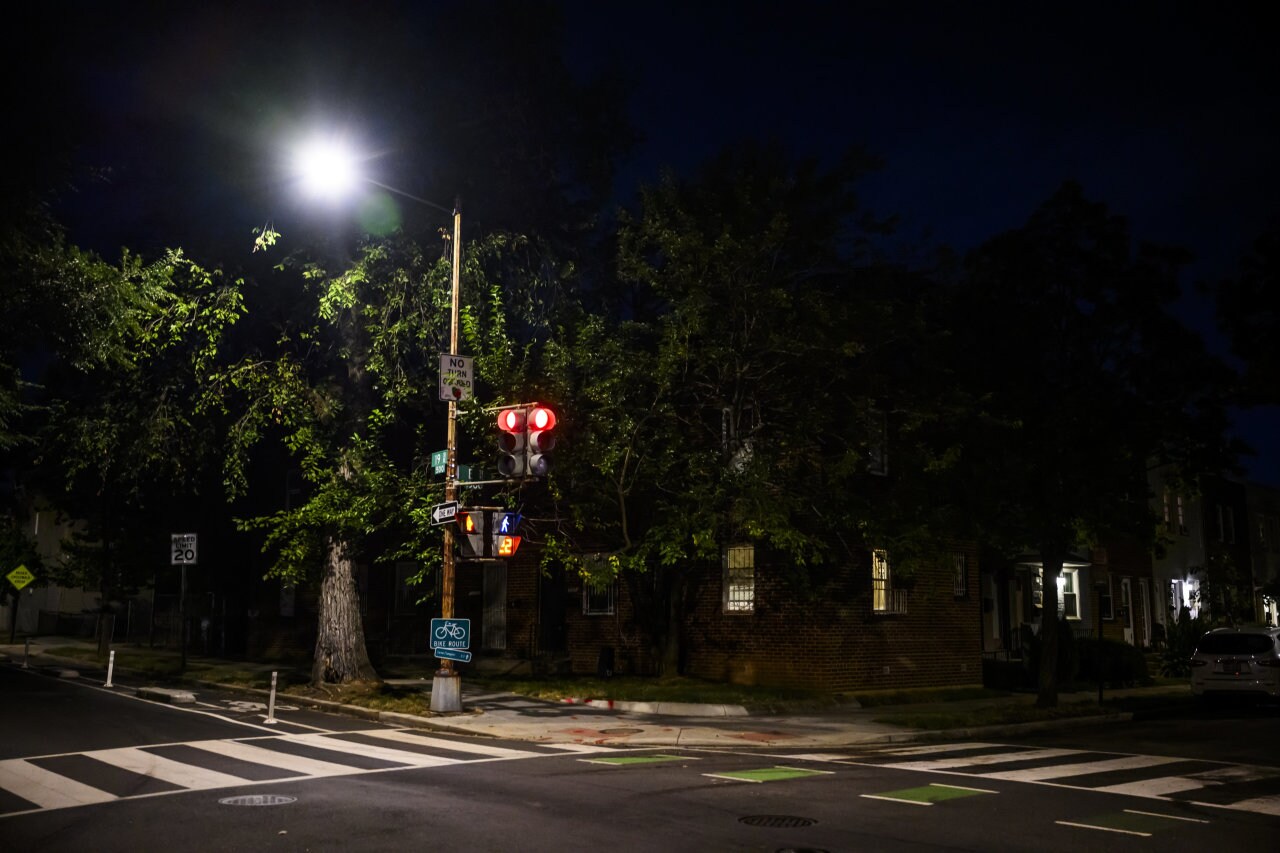
WASHINGTON—Ebony Payne often has to spend much of her evening sorting through messages from her Kingman Park neighbors in the northeast part of the city, reporting assaults, smashed car windows, break-ins, shootings and teenagers threatening children or even dogs.
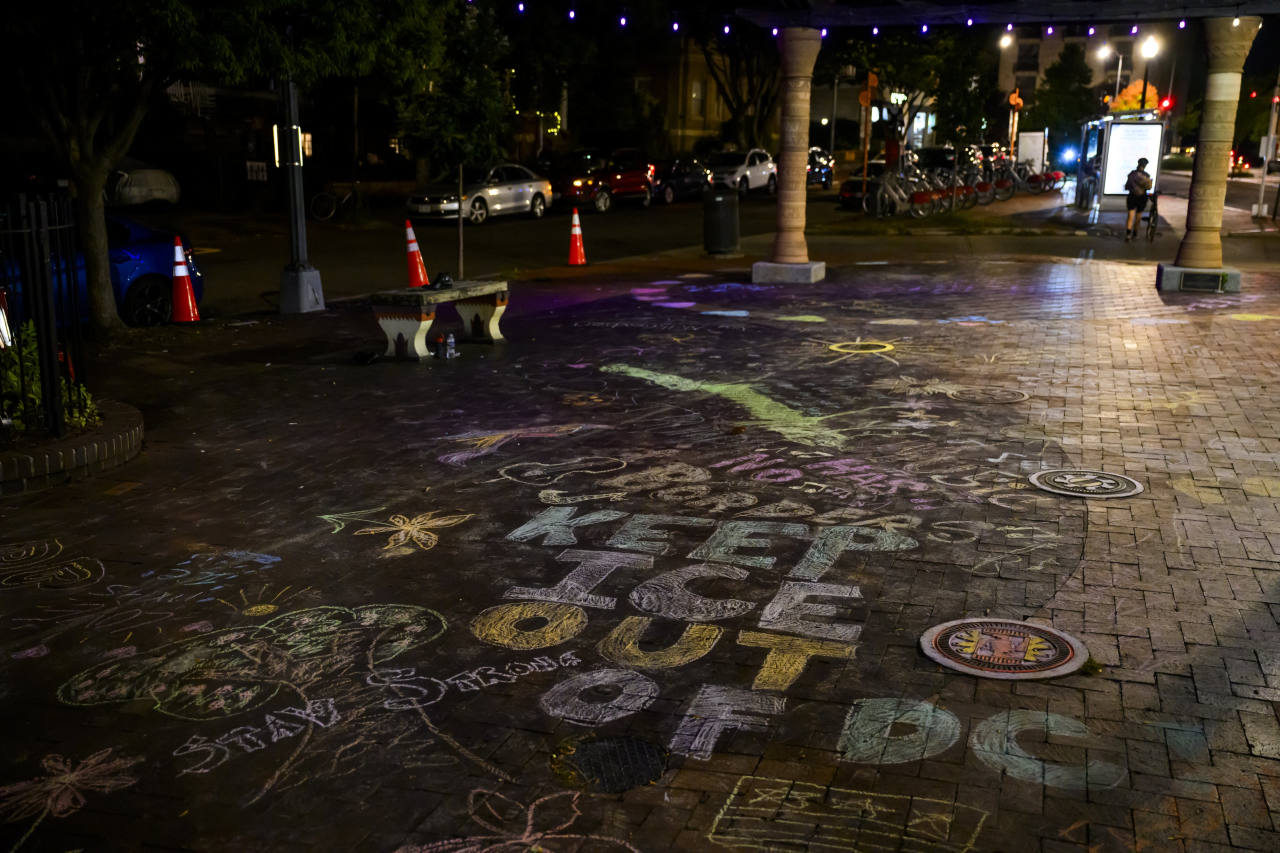
The 34-year-old neighborhood commissioner said she and her community are frustrated by the city’s inability to respond to “out of control” crime. When they heard President Trump was federalizing District of Columbia police and sending in hundreds of National Guard troops, some residents’ first reaction was relief, she said.
“We all wanted something to be done,” said Payne. “It’s just really unfortunate that we are in this situation where there’s a sledgehammer on our city, because we couldn’t get a handle on our crime problem.”
Yet so far, Trump’s security surge hasn’t materialized in Kingman Park. “I was really expecting to see more,” she said, noting the D.C. armory where the National Guard is stationed is only minutes away.
Payne’s experience underscores the disconnect felt across parts of the city since Trump announced the security surge on Aug. 11, framing the federal takeover as a campaign to “rescue our nation’s capital from crime, bloodshed, bedlam and squalor and worse.”
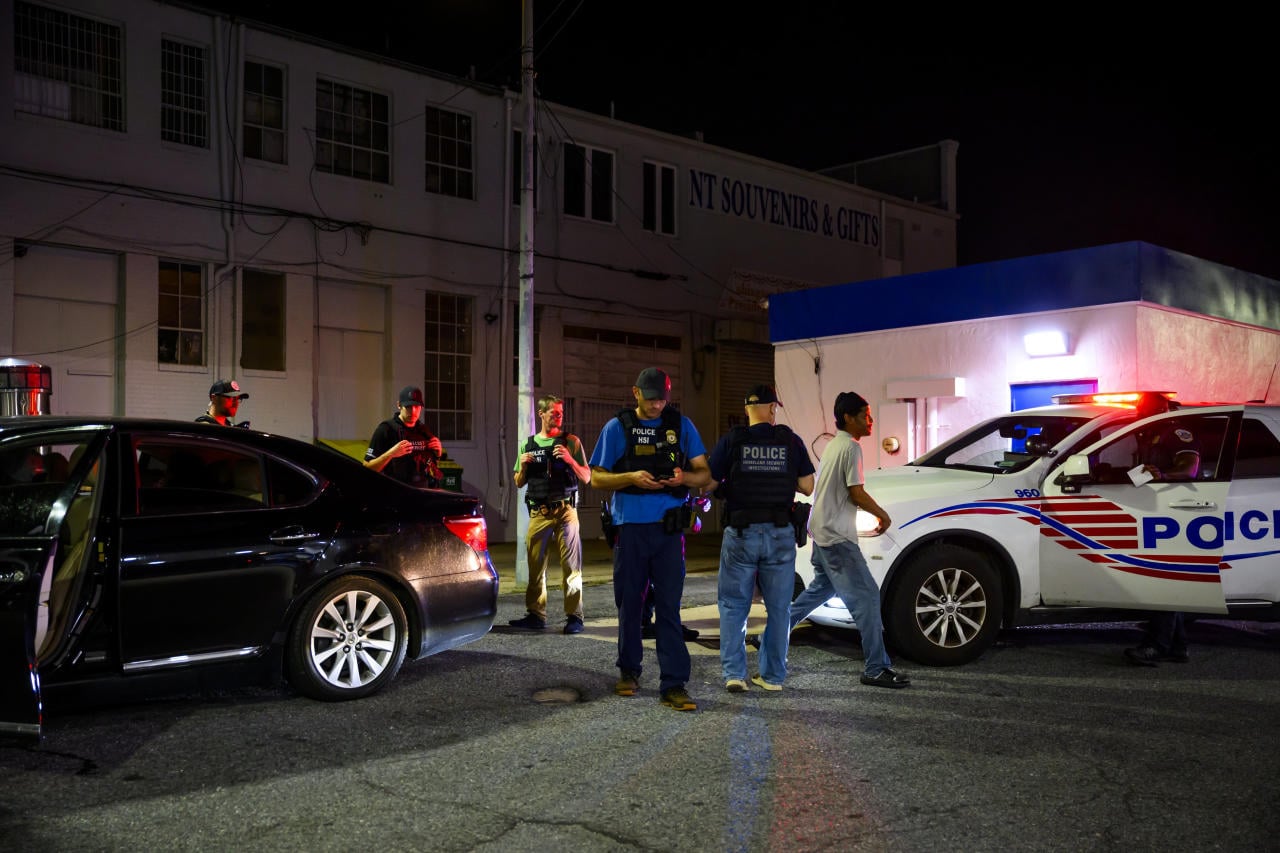
Hundreds of federal agents—from drug- and gun-enforcement teams to immigration officers—set up traffic checkpoints, arrested delivery drivers and restaurant workers over immigration violations, and carried out street patrols. But the most visible show of force has centered on the city’s downtown, upscale corridors and tourist hubs.
The result has been a split screen as Trump’s promise to save the capital from “crime and chaos” has often veered from dramatic showdowns to more mundane encounters. Trump’s allies and some residents have praised the security sweep as long-overdue, but critics say its most visible impact has been on issues that dovetail with the administration’s broader agenda, such as immigration arrests, rather than the city’s most pressing public-safety problems.
Federal officers have stopped residents for seat-belt violations, put drunk revelers in Ubers, served as impromptu medics, and cleared homeless encampments as part of what Trump calls a beautification drive.
In an incident heavily publicized by the White House, a highly produced video showed a late night SWAT-style raid to arrest a 37-year-old man accused of throwing a submarine sandwich at a U.S. Customs and Border Protection agent and shouting, “I don’t want you in my city!”
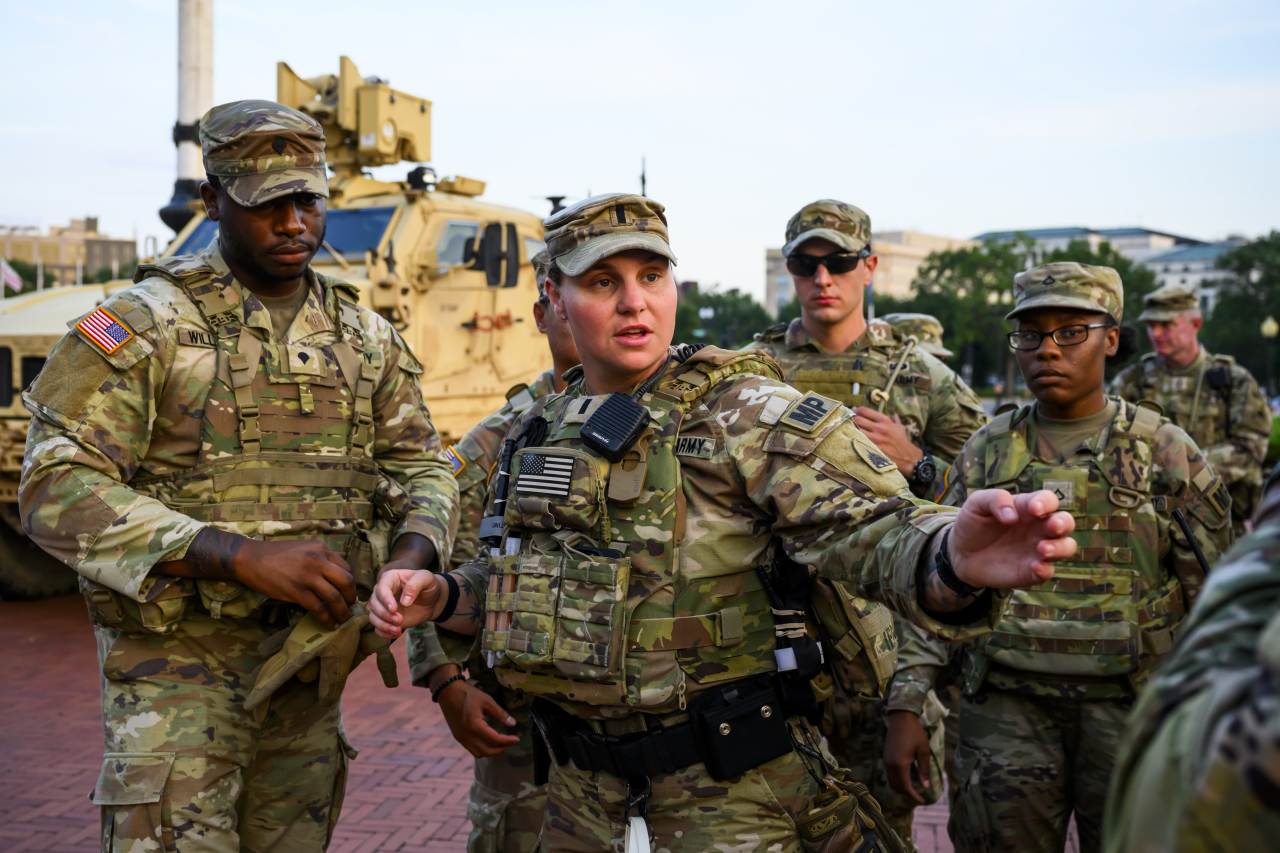
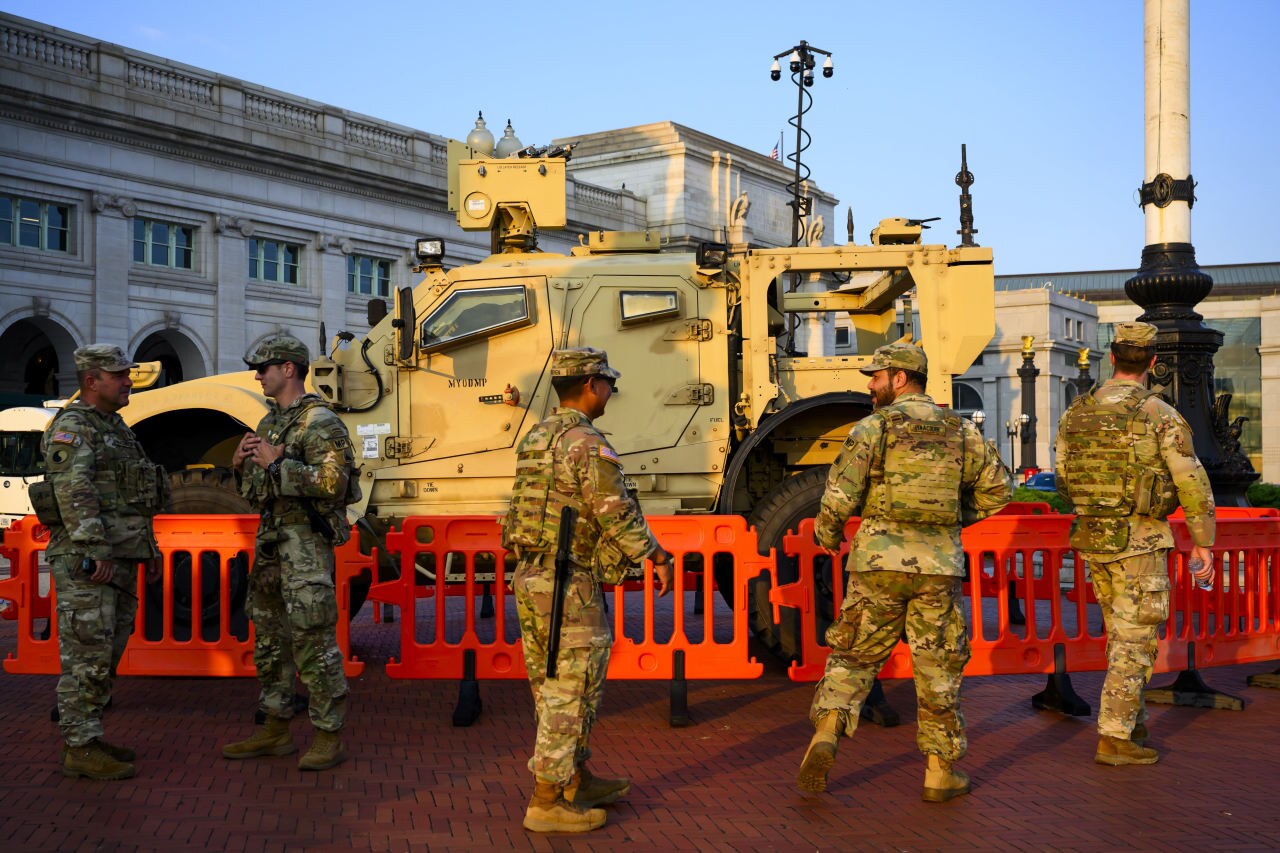
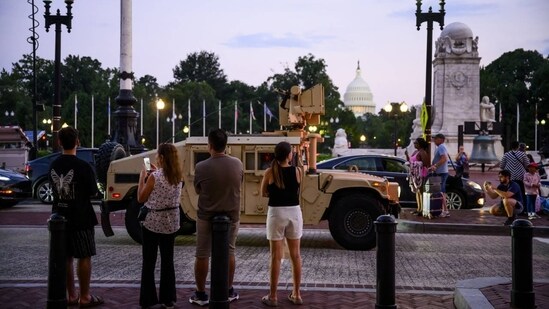
National Guard troops parked military vehicles at Union Station and on the National Mall, where they have served as a curiosity for tourists who stop to snap pictures. Defense officials say their role is to serve as a visible deterrent in public areas, and perform administrative and logistical duties.
Despite this limited role, National Guard troops will soon be armed, according to people familiar with the planning. Additional units from West Virginia, South Carolina and Ohio are also being dispatched to reinforce them, a move that will almost double the size of the deployment.
“American soldiers and airmen policing American citizens on American soil is #UnAmerican,” D.C. Mayor Muriel Bowser posted on X on Saturday.
Critics have called the move an abuse of power, citing data that show violent crime in D.C. has plummeted. And in parts of Washington—which overwhelmingly votes Democratic—federal law enforcement has been met by outraged locals.
Even among residents who say they are concerned about the severity of the city’s crime problem, and welcome the resources from the federal government to address it, several questioned in interviews with The Wall Street Journal whether the surge will have a lasting impact on safety.
“The federal presence is not focused on what they said they were focused on,” said Ashley Ruff, 39, who lives in northeast D.C. “It feels like smoke and mirrors because in my neighborhood, they’re going after the Hispanic population, towing cars, rounding people up.”
By mid-Friday, the surge of officers appeared scant in areas that had among the highest concentrations of crime in the last month, data show.
Attorney General Pam Bondi said Sunday that the multiagency effort had yielded more than 300 arrests, including for homicide, gun, drug and other offenses. More than 75 people were arrested by Immigration and Customs Enforcement agents on immigration violations. Officers seized 15 guns on Saturday night alone, Bondi said.
Trump officials and Republican staffers quickly hailed the president’s security surge as a success. “Went on a run through D.C. tonight,” wrote James Laverty, a staffer for Rep. Richard Hudson (R, N.C.), posting a photo of the National Mall, which has long been among the safest areas of the city. “Cops everywhere but the vibe was different. People feel safe again.”
Defense Secretary Pete Hegseth posted a photo of his family surrounded by armed Drug Enforcement Administration agents in tactical gear, who he praised for “securing the city & keeping us safe.” It was taken by the Wharf, a gleaming upscale waterfront of luxury condos and high-end restaurants.
The crackdown’s focus on immigration enforcement has sparked some of the fiercest backlash. Arrests by ICE agents, who have pulled people they say are in the country illegally off mopeds and out of food trucks, have drawn small crowds of people demanding to see their badges. Usually bustling areas of immigrant-heavy Mount Pleasant and Columbia Heights were noticeably emptier on Sunday morning.
Many officers have worn face coverings, which appear to have escalated some confrontations. In one video posted by the news outlet the Handbasket, a group of masked ICE agents arrested a man who officials said entered the U.S. illegally. Bystanders asked the officers to identify themselves before one yelled, “You guys are ruining this country—you know that, right?”
“Liberals already ruined it,” retorted one of the officers.
Department of Homeland Security spokeswoman Tricia McLaughlin defended the officer’s actions, saying: “In the face of menacing taunts and harassment, this law enforcement officer conducted himself with dignity and did not violate DHS policy.” She said his colleague was on the ground with a bloodied head and concussion due to resistance from the suspect.
While face coverings are optional, an ICE spokesperson said more agents are opting to wear them due to the “demonization of ICE by hostile groups and irresponsible elected officials.”
The deployment has drawn in an unusually wide array of federal forces, including ICE, Customs and Border Protection, the Secret Service, FBI, the Drug Enforcement Administration, the Bureau of Alcohol, Tobacco, Firearms and Explosives, and the U.S. Marshals Service, as well as smaller agencies such as the Park Police.
Of some 500 federal agents Trump tapped to join the local enforcement effort, more than 100 are FBI agents who were pulled from their normal duties, such as counterintelligence and counterterrorism, to help with local crime, according to officials familiar with the plans. Some of those deployed on the streets said they worried they were neglecting larger national security threats or their own cases while they pursued local priorities, like drunken-driving arrests and ticketing unlicensed food vendors.
Trump’s order says the mobilization will remain in place “until I determine that conditions of law and order have been restored in the District of Columbia.”
Payne, whose part of the city has recorded some of the city’s highest levels of gunfire, called repeated references to declining crime rates “tone deaf and quite frankly insulting.”
“I can tell you, as somebody who grew up here, it’s not down at all. It’s out of control,” she said. But at the same time, “I don’t think this was the response that anybody would have necessarily chosen.”
Write to Vera Bergengruen at vera.bergengruen@wsj.com, Jack Gillum at jack.gillum@wsj.com and Sadie Gurman at sadie.gurman@wsj.com