
 E-Paper


What is a KC-135 Stratotanker? 5 points on the US Air Force's aircraft crash in Iraq
A KC-135 Stratotanker of the US Air Force crashed in western Iraq on Thursday. Here's what we know about the refueling aircraft

 Prefer HTon Google


A US Air Force KC-135 Stratotanker, a military aircraft designed to refuel other planes mid-air, crashed in western Iraq on Thursday, in an incident U.S. Central Command said involved another aircraft but was not the result of hostile or friendly fire.
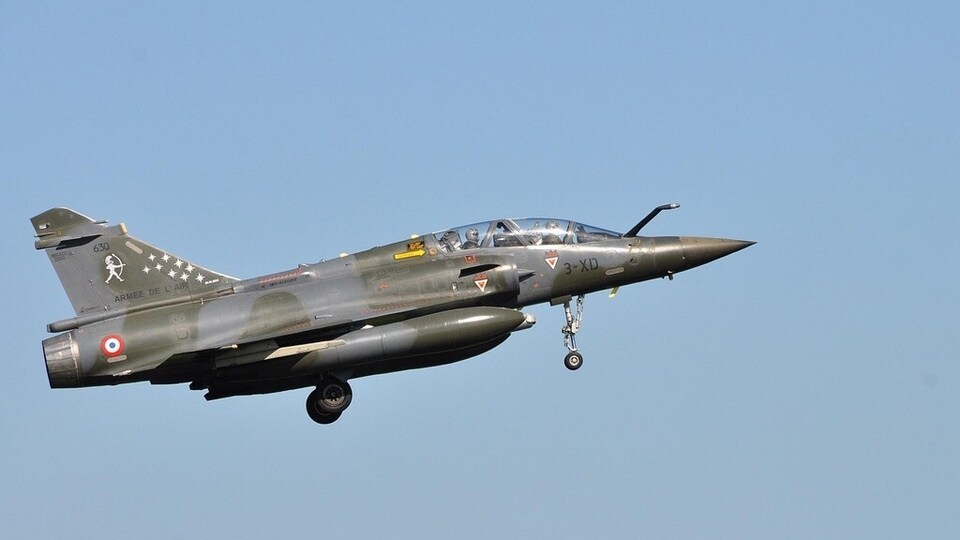
The United States Air Force's primary aerial refueling capability is provided by the KC-135 Stratotanker, which has performed admirably in this capacity for over 60 years, according to the Air Force website.
The plane acts as a “flying gas station,” allowing fighter jets, bombers and surveillance aircraft to remain airborne longer and travel much greater distances.
The aircraft went down while operating alongside another plane involved in the same mission; the second aircraft landed safely. Officials have not yet confirmed the cause of the crash or whether there were casualties, and investigations are continuing.
Read more: US Iran war news LIVE: US military plane crashes in Iraq; Fresh explosions rock Tehran
What is the KC-135 Stratotanker?
The KC-135 Stratotanker is a long-range aerial refueling aircraft operated primarily by the US Air Force, designed to transfer fuel to other aircraft while both are in the air.
The United States' first jet-powered refueling tanker, the KC-135, was originally introduced in the late 1950s and replaced earlier propeller-driven tankers from the early Cold War era.
The KC-135 is a Boeing design
The aircraft is based on Boeing’s early jet airliner design and has served for more than six decades, supporting operations ranging from the Vietnam War to modern conflicts and global military deployments.
The commercial 707 passenger jet and the KC-135A Stratotanker were based on the Boeing Company's model 367-80.
How many crew members onboard?
Three crew members operate:
- the boom,
- co-pilot, and
- pilot.
A navigator must be included for certain KC-135 missions. There are only so many navigator suites available to the Air Force for special missions.
An aeromedical Evacuation Crew for aeromedical evacuation missions may also be onboard. It is a basic crew consisting of three medical technicians and two flight nurses. Depending on the needs of the patients, the medical staff may change.
Read more: US KC-135 military plane crashes in Iraq amid Iran war, CENTCOM responds
How does the fuel transfer happen with the KC-135 Stratotanker?
The KC-135 has a fuel-transferring telescoping boom. An enlisted crew member completes the procedure by physically guiding and pairing the KC-135's nozzle into a receptacle on the receiving aircraft using the boom's ruddervators, which are tiny control surfaces that resemble wings. Both planes must fly precisely and steadily for the operation to be successful.
KC-135 can carry fuel, passengers, and cargo
A single KC-135 can carry roughly 200,000 pounds of fuel, enabling it to refuel multiple aircraft during a single mission.
Additionally, a mixed load of people and cargo can be accommodated in a cargo deck located above the refueling system. The KC-135 can transport up to 83,000 pounds of cargo, depending on how its fuel storage is configured.


