
 E-Paper



US signal to China: Stay away from Taiwan during Ukraine crisis
Since the US-Russia escalation over Ukraine has started, many believed that this would give President Xi Jinping a free pass to aggressively pursue what China calls its core interests.

 Prefer HTon Google


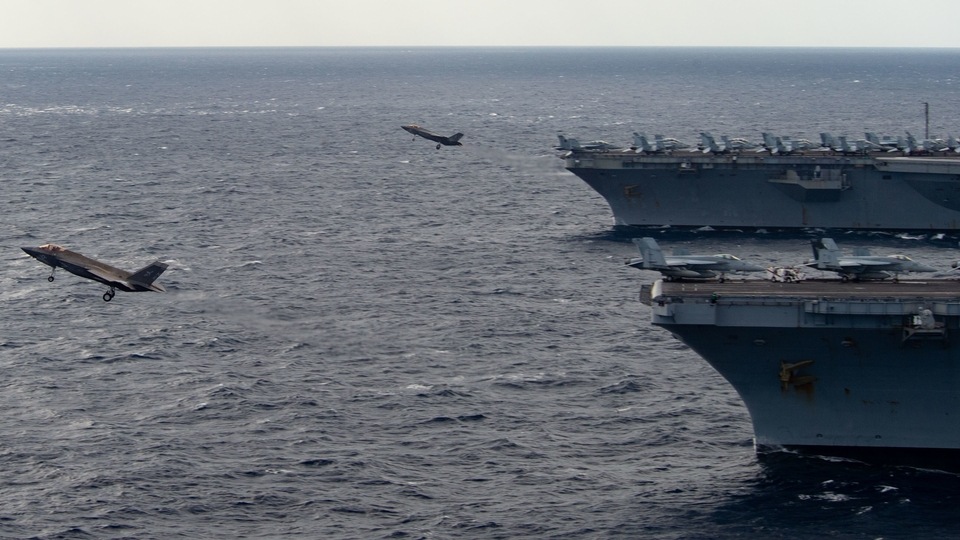
With two nuclear powered aircraft carrier strike groups patrolling the Philippines Sea and another one forwardly deployed to Yokosuka, Japan, the US has sent a strong message to China to stay away from Taiwan while the former is locked with Russia over Ukraine.
The PLA on Sunday responded to the massive US naval drills by sending as many as 39 warplanes, largely fighters like J-10 and J-16, into Taiwan’s south-western air defense identification zone (ADIZ) as tensions escalated over the breakaway island country. The Taiwan air force resumed combat air patrol and activated surface to air missile systems to deter the aggressive PLA Air Force. This is the first time after October 2021 that the PLA has responded to US drills with so many fighters.
This large-scale Taiwan airspace transgression by Chinese fighter took place when the US Navy has three aircraft carrier strike groups in support of Taipei and freedom of navigation operations in Philippines Sea. While USS Carl Vinson and Abraham Lincoln are patrolling near Taiwan, the USS Ronald Reagan is on standby near Yokosuka in Japan. The US has also large scale marine presence with presence of USS Essex amphibious ready group and USS America expeditionary strike group joining the aircraft carriers. Patrolling with the massive carrier force is Japanese Hyuga class helicopter destroyer with USS strike groups deploying as many as 26 F-35 fifth generation fighters.
The US Navy build-up near Taiwan is a clear message to China that it cannot have a free pass to Taipei while Washington is locked up in a confrontation with Russia over Ukraine. “The message to China is that US has not taken off its eyes from Beijing and wants PLA to stay away from Taiwan till such time the Ukraine crisis gets resolved,” said a former Indian ambassador to US.
Since the US-Russia escalation over Ukraine has started, many believed that this would give President Xi Jinping a free pass to aggressively pursue what China calls its core interests. The Biden administration has this month already conveyed to China that it is watching PLA build-up in Ladakh as the India-China stand-off on the Line of Actual Control (LAC) completes second winter on Tibetan plateau.


