
 E-Paper



US to pull out of historic arms control treaty today
US President Donald Trump pulled the US out of the 1987 INF (Intermediate-Range Nuclear Forces) Treaty in February, accusing Russia of violating its terms. The US is also keen on a new treaty, if and when possible, to include China, which has shown no interest, though.


A historic treaty that had been hailed as a pillar of the structure that saw the world through the Cold War is set to expire on Friday with the US - one of its two signatories apart from Russia - ready to also drop another arms control pact amid rising fears of a renewed arms race.
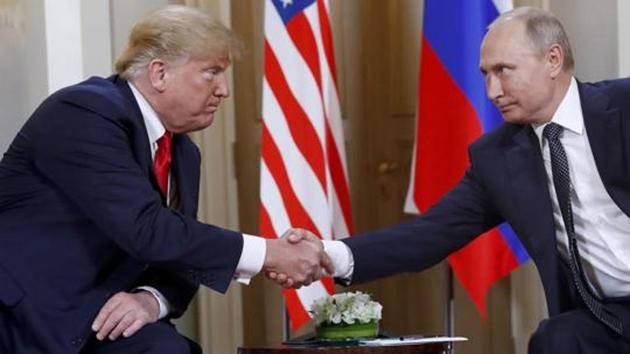
US President Donald Trump pulled the US out of the 1987 INF (Intermediate-Range Nuclear Forces) Treaty in February, accusing Russia of violating its terms.
The pact required the US and Russia to give up their nuclear and conventional missiles with a range of 500km to 5,000km.
“We can no longer be restricted by the treaty while Russia shamelessly violates it,” US secretary of state Mike Pompeo had said back then, and had given Russia six months to destroy their intermediate range missiles and launchers.
Moscow had protested the suggestion and ignored the deadline.
The US is also keen on a new treaty, if and when possible, to include China, which has shown no interest, though.
Since the February announcement, the Trump administration has also indicated a willingness to also kill the New START (New Strategic Arms Reduction Treaty), signed by the US and Russia in 2010. It prevents them from deploying more than 1,550 nuclear warheads or 700 launchers.
“There’s no decision, but I think it’s unlikely,” US National Security Adviser John Bolton, a Russia hawk, said about extending the treaty, which comes up for renewal in February 2021, in an interview to Washington Free Beacon in June.
He said it does not include smaller tactical nuclear weapons and a new Russian system. “So to extend for five years and not take these new delivery system threats into account would be malpractice.”
Yet another treaty has seemed to be in jeopardy after a top US intelligence official accused Russia earlier this year of violating the 1996 CTBT (Comprehensive Test Ban Treaty). “Russia probably is not adhering to its nuclear testing moratorium in a manner consistent with the ‘zero-yield’ standard” under the CTBT, said Robert Ashley, director of the Defense Intelligence Agency (DIA), in May. CTBT has been signed so far by 184 countries.
Moscow to deploy new weapons
Moscow is set to deploy new weapons, analysts say, raising the spectre of another arms race.
Russian President Vladimir Putin first discussed the new weapons late last year in front of high-ranking officers and he gave further details in February - just as the US launched the procedure to ditch the INF deal.
In addition to the creation of a medium-range land-based missile, Moscow plans to develop a land-based version of the Kalibr missiles that have already successfully been used by the navy and tested in Syria.
(With inputs from agencies)


