
 E-Paper



US-China summit: Biden raises China’s Tibet, Hong Kong and Xinjiang policies
US President Joe Biden had his first bilateral meeting with Chinese President Xi Jinping. Biden reiterated US support for Taiwan while remaining committed to the “One China” policy

 Prefer HTon Google


US President Joe Biden raised China’s policies in Tibet, Hong Kong and Xinjiang and unfair trade actions in his first bilateral meeting - held virtually with President Xi Jinping on Monday. He also reiterated US support for Taiwan while remaining committed to the “One China” policy.
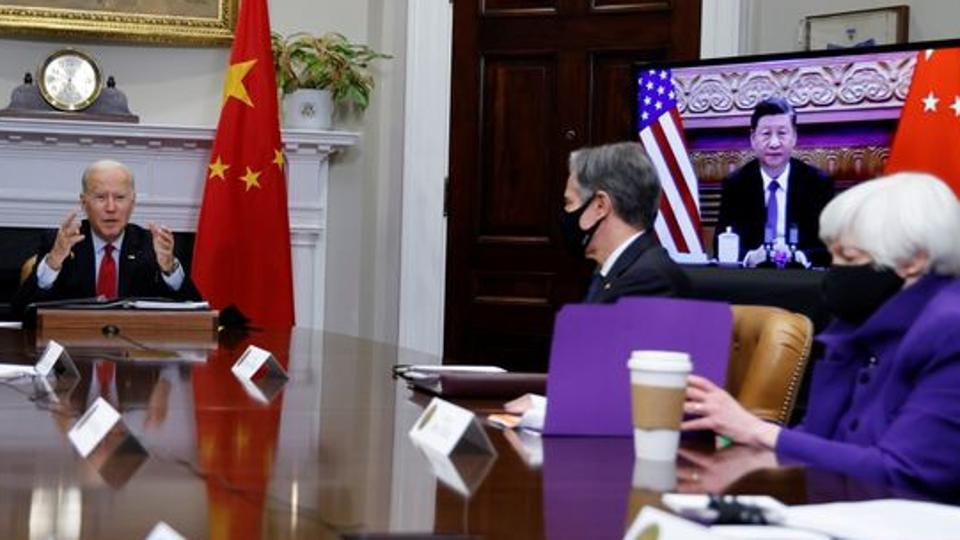
The American president stressed on the need for “commonsense guardrails to ensure that competition does not veer into conflict”, according to a readout of their three-hour meeting issued by the White House.
There were no major outcomes or deliverables from the meeting, as had been warned by US officials. “Our responsibility as leaders of China and the United States is to ensure that the competition between our countries does not veer into conflict, whether intended or unintended,” said President Biden in his opening remarks. “Just simple, straightforward competition.”
President Xi said, “A sound and steady China-US relationship is required for advancing our two countries’ respective development and for safeguarding a peaceful and stable international environment, including finding effective responses to global challenges such as climate change, which you referenced, and the Covid pandemic.”
He added: “China and the United States should respect each other, coexist in peace, and pursue win-win cooperation.”
Although held virtually, this was the first bilateral meeting of the two leaders who have had extensive phone conversations on two occasions previously. They had met once long before either of them ascended to their present positions - they were both vice-presidents at the time. That was in 2012.
President Biden has sought to frame the bilateral relationship as an intense competition between the world’s two largest economies and has called for guardrails to prevent it from escalating into conflict, and stressed on the need to keep communications open between the two sides.
The senior Biden administration official who previewed the meeting for reporters had said the two nations were “in fundamentally different place with each other than we have been in the past” and described this meeting as a part of ongoing efforts to responsibly manage the competition not about agreeing to a specific deliverable or outcome”.
Biden raised “concerns about the PRC’s [People’s Republic of China] practices in Xinjiang, Tibet, and Hong Kong, as well as human rights more broadly. He was clear about the need to protect American workers and industries from PRC’s unfair trade and economic practices”, the White House said in the readout.
The American president also discussed the “the importance of a free and open Indo-Pacific, and communicated the continued determination of the United States to uphold our commitments in the region”. And he reiterated the importance of freedom of navigation and safe overflight to the region’s prosperity.
On Taiwan, President Biden underscored US commitment to “One China” policy but said ties will be guided by the Taiwan Relations Act, the three joint communiques, and the six assurances, under which the US supplies military hardware to Taiwan. He added that the United States “strongly opposes unilateral efforts to change the status quo or undermine peace and stability across the Taiwan Strait”.


