
 E-Paper



Goyal to soon hold talks with US counterpart, focus on trade ties
Tai and Goyal are expected to talk for the first time in a few days now, according to people familiar with these trade discussions.


India could soon get a response to commerce minister Piyush Goya’s offer to reboot trade negotiations with the US when he speaks for the first time with his counterpart Katherine Tai, who was confirmed on Wednesday in a unanimous vote, which is a first for any of President Joe Biden’s nominees, according to people familiar with the matter.
Tai was approved 98-0 (of the 100 senators present and voting, including all Republicans) as Biden’s US trade representative, the top American trade negotiator and enforcer. It was an unambiguous testimony to the broad and bipartisan support enjoyed by the former lead trade lawyer of the House of Representatives’ ways and means committee.
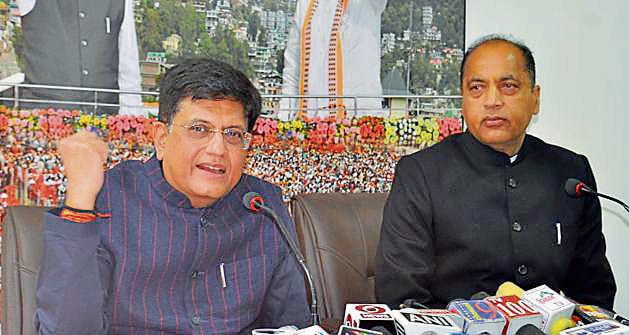
Tai and Goyal are expected to talk for the first time in a few days now, according to people familiar with these trade discussions. And India would be eager to hear her response to Goyal’s offer of a “fresh” start of trade talks between the two countries after the failure of the last round, conducted with her predecessor Robert Lighthizer, in the previous US administration headed by Donald Trump.
Goyal called for a “fresh package” for India-US trade negotiations in February, accusing the Trump administration of bogging down the talks with “nitpicking” and constantly shifting the goalpost with new demands.
Tai had offered no clues to her thinking on tied with India at her hours-long confirmation hearing, even though she had plenty of opportunities. Senators had quizzed her about several trade issues with India but none of them had directly addressed the elephant in the room — the trade negotiations with India.
Tai was asked about “subsidised” shrimp imports from India that were “refused (entry) elsewhere because of phytosanitary concern”; and why India, a large buyer of pulses, was not buying from the United States.
One senator, John Cornyn, who co-chairs the India Caucus in the upper chamber, had urged Tai to include India in the Trans-Pacific Partnership, an Obama-era initiative to counter China that was abandoned by Trump in his obsession to undo his predecessor’s legacy, large and small.
But Cornyn was not really looking for an answer. “I guess that’s not so much a question as a comment,” he had said.
And Tai did not offer a response.
Tai, who is of Taiwanese descent, is a veteran of trade negotiations. She understands US congress as a former congressional aide and, as her confirmation vote proved, she enjoys bipartisan support. And, as it was clear from her that hearing, she is well liked, by both sides.
Lighthizer, on the other hand, built himself and his department in the image of his boss, Trump, as an apologetically America First trade negotiator. He was abrasive, uncompromising and, as Goyal told top US and Indian business leaders in his remarks at a USIBC (US-India Business Council) event in February, he sought unreasonably to ratchet up US demands.
Trade differences between India and the US have been the single largest drag on bilateral ties that have otherwise been on an upswing in recent years — in strategic and commercial spheres chiefly, with plenty of side actions in health and pharmaceuticals, education, space and other spheres.
The Trump administration terminated India’s special benefits under a US trade promotion programme to coerce India to give American companies access to its dairy sector and free medical devices from price regulations. Other elements got added on as the US side tried to maximise its gains


