
 E-Paper



Vladimir Putin denies he tried to frighten Germany's Angela Merkel with dog Koni
Asked about the incident on Thursday, Russia's Vladimir Putin denied knowing about Angela Merkel’s fear of dogs and said he had later apologised to her.

 Prefer HTon Google


Russian President Vladimir Putin on Thursday denied “intentionally using his black Labrador, Koni”, to intimidate German Chancellor Angela Merkel during a meeting in 2007, which became a famous diplomatic incident.
In her new memoir Freedom, Merkel shared that, knowing Putin occasionally brought his dog to meetings with foreign leaders, she had asked an aide the previous year to request that Koni not be present during her encounters with him, as she had a fear of dogs.
Instances when Merkel had to face Putin's dog
When they met in Moscow in 2006, Merkel said Putin honoured her request but gave her a large stuffed dog, joking that it didn’t bite. However, during their encounter in Sochi the following year, the large dog roamed the room and approached Merkel, who appeared visibly uncomfortable as she sat next to Putin in front of photographers and TV cameras.
Asked about the incident on Thursday, Putin denied knowing about Merkel’s fear of dogs and said he had later apologised to her.
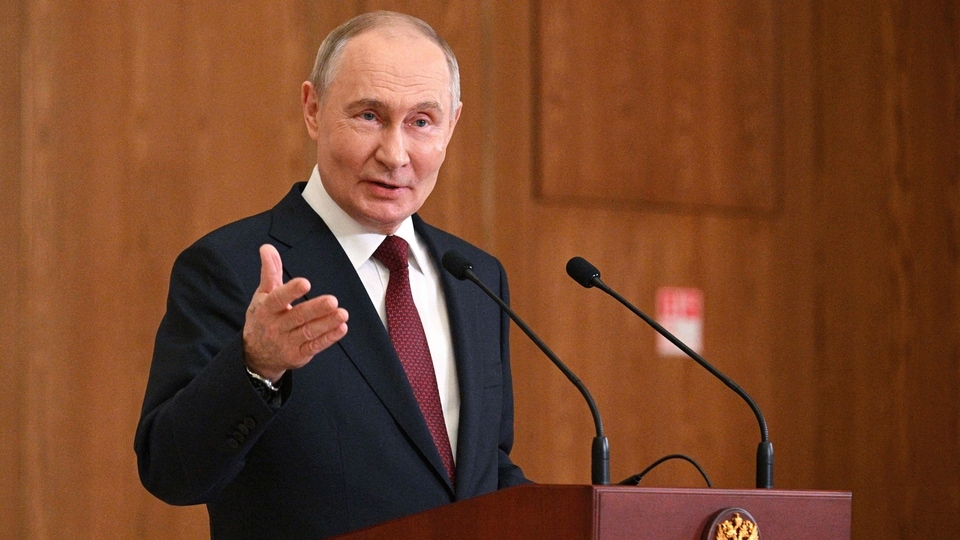
"Frankly - I've already told Merkel, I didn't know she was afraid of dogs. If I'd known, I would never have done it. On the contrary, I wanted to create a relaxed, pleasant atmosphere," he told a press conference.
Russian reporters smirked as Putin issued a heartfelt apology to Merkel, adding that, if she were to visit again, he "absolutely won't do it again."
"I appeal to her again and say: Angela, please forgive me. I didn't want to cause you any distress," Putin said.
In her book, the former chancellor described the incident as a difficult experience.
"I tried to ignore the dog, even though he was moving more or less right next to me. I interpreted Putin's facial expressions as him enjoying the situation," she wrote.
"Did he just want to see how a person reacts in distress? Was it a small demonstration of power? I just thought: stay calm, concentrate on the photographers, it will pass."
She also recalled Putin pointing to wooden houses in Siberia during their 2006 meeting, saying that poor people lived there who "could be easily seduced," adding that similar groups had been funded by the U.S. to participate in Ukraine’s 2004 "Orange Revolution" against election fraud. Putin, she said, remarked: "I will never allow something like that in Russia."
Merkel expressed frustration over Putin’s "self-righteousness" during a 2007 speech in Munich, in which he distanced himself from previous efforts to improve relations with the U.S. She noted that this appearance revealed the Putin she knew: "someone who was always on guard against being treated badly and ready to give out at any time, including power games with a dog and making other people wait for him."
(With inputs from Reuters, Associated Press)


