
 E-Paper



WHO’s draft recommendation on Wuhan Covid-19 probe triggers disbelief: Report
A team of experts sent by the UN health agency returned from China’s Wuhan earlier this month after a four-week trip to investigate the origin of the novel coronavirus.


The two key lines of inquiry recommended in the World Health Organisation’s preliminary report on the origin of coronavirus disease (Covid-19) has caused surprise and disbelief among independent experts, according to a CNN report. A team of experts sent by the UN health agency returned from China’s Wuhan earlier this month after a four-week trip to investigate the origin of novel coronavirus SARS-CoV-2.
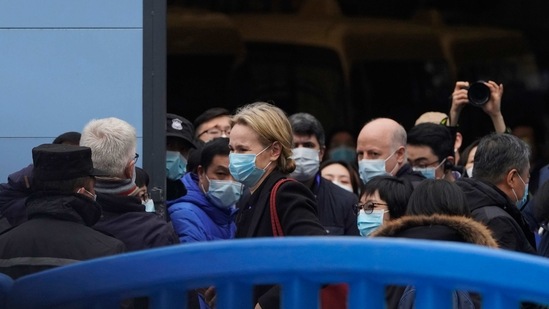
The WHO panel is set to recommend further contact tracing of the first known Covid-19 patient, also known as “patient zero”, and an immediate investigation into the supply chain of the Huanan seafood market. Peter Daszak, a member of the WHO team that visited Wuhan, reportedly said that the first known patient had no connection to the Huanan seafood market, a place initially believed to be connected to the early virus outbreak.
Maureen Miller, an epidemiologist at Columbia University, told CNN it was implausible that such rudimentary investigative work wasn’t already done by Chinese scientists while looking for the origin of the virus months ago. "It's not realistic, given they have world-class scientists there, and the technology invested in over the last 20 years. They are sophisticated, they understand transmission pathways, and have been working on them for years," Miller was quoted by the US media network as saying.
The team also discovered several signs of a much wider outbreak in December 2019 than it was reported earlier. WHO expert Peter Ben Embarek, who led the team in Wuhan, had earlier said in an interview that the investigators are seeking access to hundreds of thousands of blood samples from the Chinese city that Beijing has not allowed them to examine.
The Chinese scientists presented the visiting WHO team with 174 Covid-19 cases detected from in and around Wuhan in December 2019, which, according to Embarek, suggested the virus could have infected more than 1,000 people in the Chinese city in that month, given the “vast majority are mild cases” that are not noticed by doctors.


