E-Paper



Number theory: Why July 2023 is a watershed for global warming
While the period between January and July this year is the third hottest, there is a good chance 2023 might end up as the warmest recorded year.
Updated on: Aug 21, 2023, 02:12:35 IST

 Prefer HTon Google
Share via


Copy link

More than one data source on global temperatures shows that this July 2023 was the warmest July on the planet. While the period between January and July this year is the third hottest, there is a good chance 2023 might end up as the warmest recorded year. While such records are increasingly being broken since the 2010s, there is one reason that makes July 2023 a watershed month in the history of global warming. Here are four charts to explain this in detail.

The charts that matter
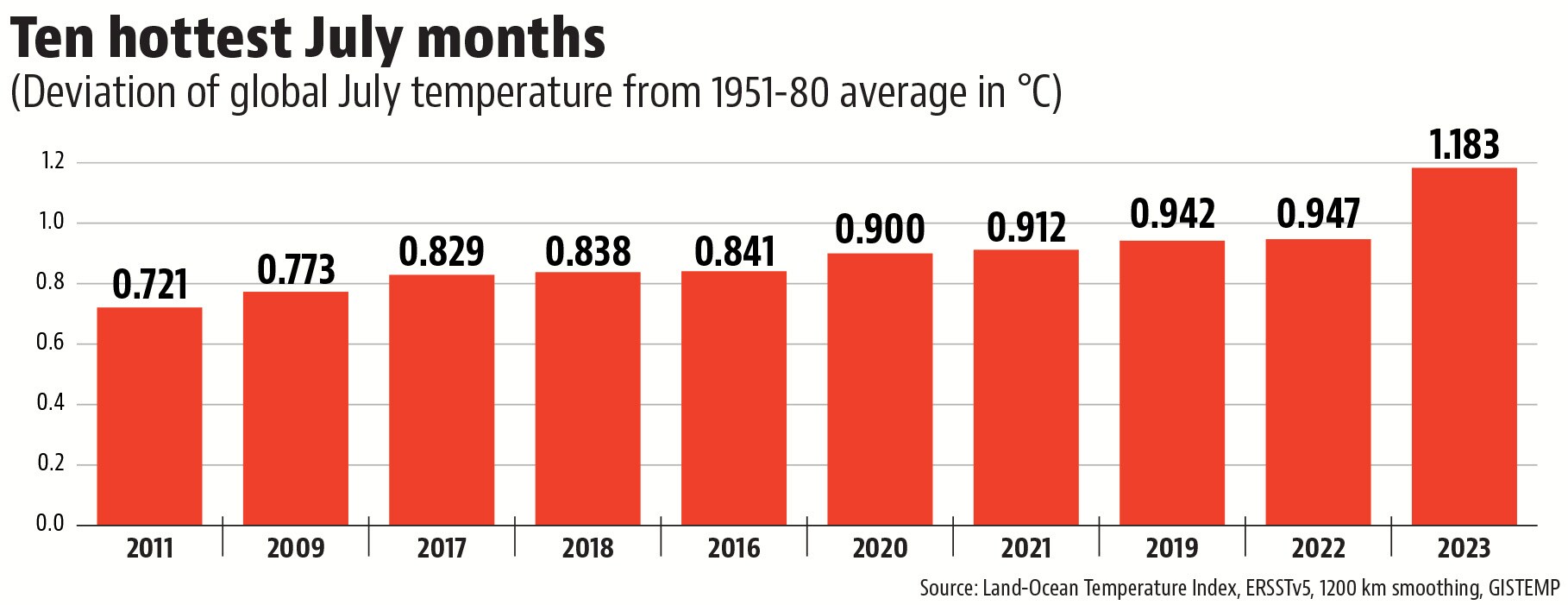
 Hottest ever JulyNASA data shows that July 2023 was 1.18 °C warmer than normal (average temperature during 1951-80 in the NASA dataset) on average for the world, making it the hottest July since 1880, the year when NASA’s records begin. A separate analysis by Berkeley Earth, a US-based non-profit working on environmental data, showed July 2023 was the hottest ever July since 1850, the earliest year in the Berkeley Earth dataset. The July 2023 temperature peak is 0.26 °C higher than the deviation in July 2019 in the Berkeley dataset and 0.24 °C higher than the deviation in July 2022, which were the warmest ever July months in the respective datasets.
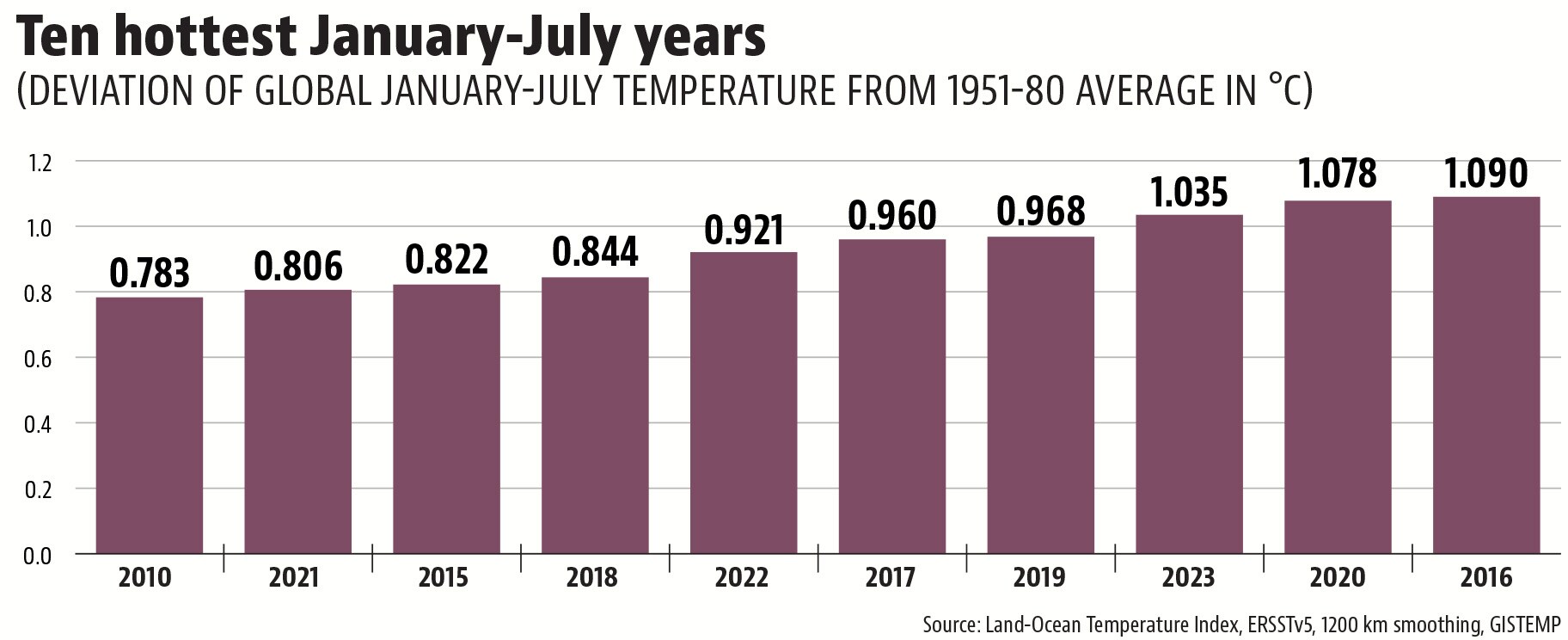
- Third hottest January-July periodJuly was not the only month that is the hottest ever this year. June temperatures also made that same record. Similarly, March was the second hottest, May the third hottest, April and February the fourth hottest, and January the seventh hottest ever this year. On average, the temperature deviation in the January-July period was 1.035 °C this year, the third highest warming after 2016 and 2020. To be sure, the hottest year ever overall (2016) turned out only 1.029 degrees warmer than normal by December. The rest of 2023 (August to December) has to be only 1.021 degrees warmer than normal on average to become the warmest ever. This highest deviation for August-December so far in the NASA dataset was only 1.01 degrees, which took place in 2019.
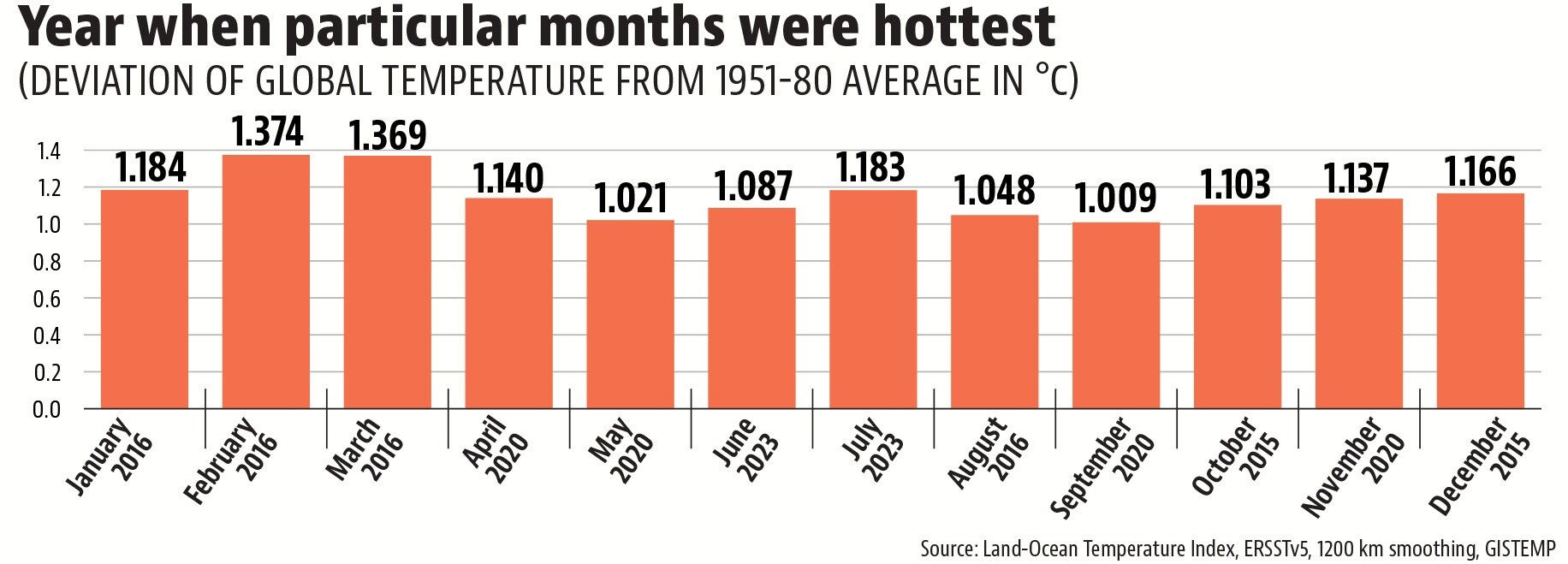
- The hottest years of all months are from 2015 onward, hottest years from 2010Are these extreme temperature events related to global warming? Data do not leave any room for doubt. Warmest individual months are all from 2015 onwards. Similarly, the top 10 warmest years are from 2010 onwards. In fact, if 2023 does turn out to be the hottest ever year (both NASA and Berkeley Earth have given 2023 a 99% chance of becoming the hottest year), the 10 hottest year will start only from 2014, currently the ninth hottest year.
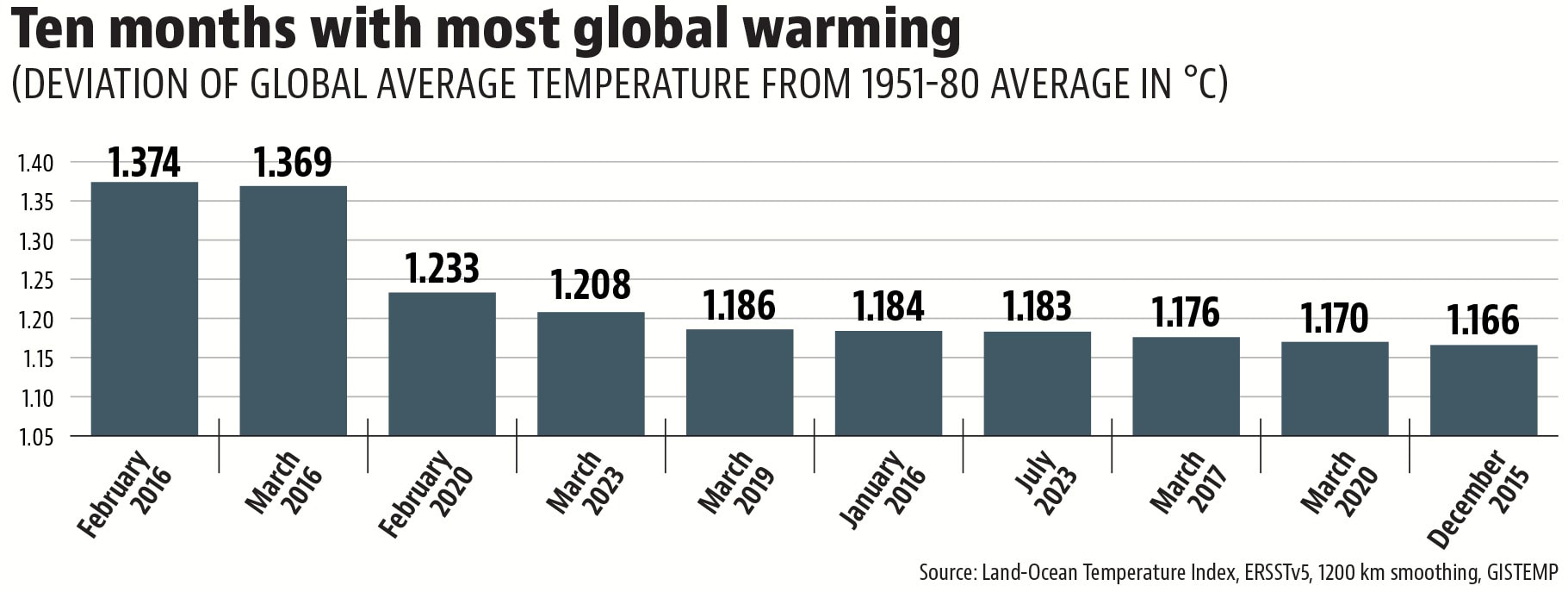
- What makes 2023 particularly scary?Berkeley Earth reported that July 2023 temperature was 1.54 ± 0.09 °C above the pre-industrial average (1850-1900), the benchmark against which climate targets are set. The target of 1.5 °C that the Paris Agreement talks about is for average temperature over many years and not the deviation in a month. However, the breach of this threshold in July is not common. “This is the 11th time in the Berkeley Earth analysis that an individual month has exceed 1.5 °C (2.7 °F) over the preindustrial benchmark. All other such occurrences have happened during December to April, i.e. during the traditionally more variable months of Northern Hemisphere winter and spring. This is the first time that a 1.5 °C anomaly has occurred during Northern Hemisphere summer. Such a temperature excess coming during the already hot summer months is more likely to lead to extreme temperatures and all-time records than if it had occurred at other times of the year,” Robert Rohde, lead scientist at Berkeley Earth, wrote in a post for its website. This aspect of July 2023 can also be seen in the NASA dataset. July 2023 recorded the seven highest warming for any month since January 1880. The six months of higher warming than July 2023 are all months from January to March. Raging wildfires in parts of Europe and North America are one of the most macabre manifestations of what hotter than normal summers can do to local habitats.