
 E-Paper



Will Taliban hand over Bagram airbase for CT ops to China or US?
The Taliban cabinet is slated to discuss the vital issue on Friday. The Sunni Pashtun group is considering handing over the Bagram airbase for counter-terrorism operations inside Afghanistan to a third power for air dominance against groups like ISKP.

 Prefer HTon Google


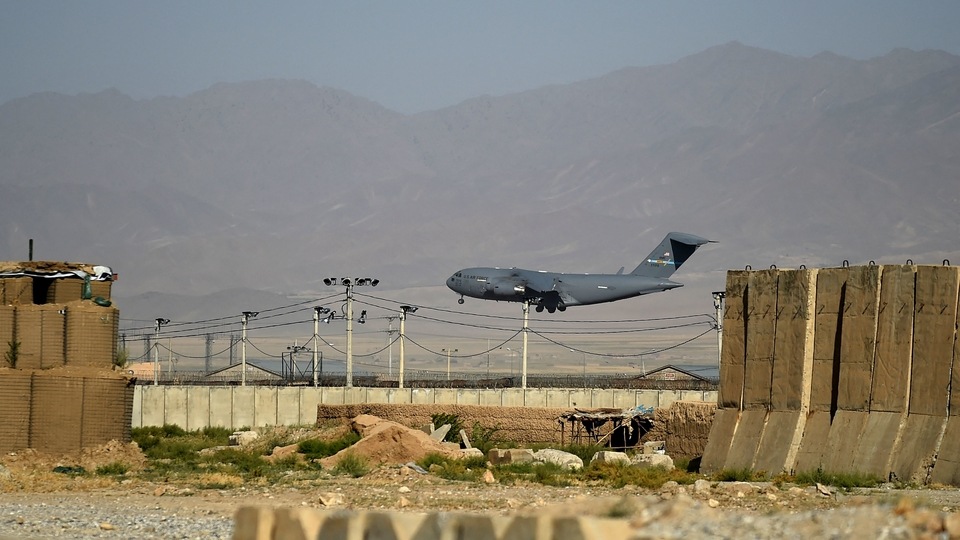
With a number of international terrorist groups now operating from Afghanistan rising, the Taliban cabinet is convening on Friday to examine if Bagram airbase, north of Kabul, could be handed over to a third country for helping the Sunni Pashtun Islamists to launch counter-terror operations in the country. The two countries in reckoning are Pakistan backed China and the US, which left the airbase on July 5, 2021, after two decades of operations.
The jostling of power within the Taliban government with defence minister Mullah Yaqoob on one side and Pakistan ISI backed interior minister and global terrorist Sirajuddin Haqqani on the other side has led to total chaos in governance as a consequence of which terrorist groups have homed in Afghanistan as a base for operations. It is precisely because of this unfolding scenario that Pakistan army chief Gen Qamar Javed Bajwa differed with outgoing ISI chief Lt Gen Faiz Hameed as the former felt that there would be a huge Islamic fall-out on Pakistan. While both Pakistan PM Imran Khan and DG ISI gloated over the Taliban occupation of Kabul, army chief Bajwa differed from them as the fear was that Pakistan would turn into a rabid Islamic state like Afghanistan under the Taliban.
At present, the US is worried about al Qaeda, the Haqqani Network whose boss runs the Taliban government, and the so-called Islamic State of Khorasan Province growing in numbers in Afghanistan and exporting terror to the west, China is worried about three terrorist groups operating in Af-Pak region that have taken explicitly anti-Beijing positions and followed through violence. India specific groups like Jaish-e-Mohammed and Lashkar-e-Taiba who have ideological affiliations with the Taliban vis Deobandi and Ahle-Hadith platforms have also started using Afghanistan for launching operations across the Radcliffe Line.
While China has decided to open another military base in Tajikistan to monitor the Wakhan corridor that juts into highly restive Xinjiang province, it is courting the Taliban regime via Pakistan to ensure that Uighur terrorists do not start launching operations against the Xi Jinping regime from Afghanistan. Even for the safety of its Belt and Road Initiative, China is worried about three terrorist groups. They are:
· Balochistan Liberation Army: They attacked the Chinese consulate In Karachi with three suicide bombers in 2018/
· Tehreek-e-Taliban, Pakistan: An offshoot of Taliban, they claimed responsibility for the April 2021 car bomb explosion next to a hotel in Balochistan’s capital city where the Chinese ambassador to Pakistan was due to stay. The bomb exploded just minutes before the ambassador arrived.
· ISKP: An off-shoot of ISIS, the rabid Sunni force has started targeting the Chinese through propaganda if not bombs.
It is not only China that is worried about the security situation in Afghanistan but also Central Asian Republics as terrorist groups like the Islamic Movement of Uzbekistan and theEast Turkestan Independence Movement have taken base in Afghanistan.
With the Biden administration now openly acknowledging the presence of Al Qaeda in Afghanistan, the Taliban regime does not have the much-required air power to fight these terrorist groups as none can afford a prolonged battle on land again.
Under the circumstances, the Taliban is considering handing over Bagram airbase for counter-terrorism operations in Afghanistan to a third power. While Pakistan wants the Taliban to hand over the strategic base in Parwan province to China for monitoring, a section of the Taliban group is opposed to Beijing and would rather hand it over to the US again. As Central Asian Republics have denied base facilities to the US for over the horizon capabilities and Pakistan is still trying to cut out a deal with the Biden administration on this issue, the option of theUS conducting CT operations from the Bagram base is not ruled out. The benefit of the Bagram base being handed over to the US is that Washington will accompany this Taliban gesture with much required humanitarian and development aid for a country that is facing a severe drought situation. The great game is still not over in Afghanistan.


