
 E-Paper



Few heirs apparent to Nelson Mandela's symbol of freedom
The passing of Nelson Mandela leaves a waning number of global figures representing freedom and resilience against oppression - and a changing world that makes it harder for anyone to approach Mandela's iconic power.


The passing of Nelson Mandela leaves a waning number of global figures representing freedom and resilience against oppression - and a changing world that makes it harder for anyone to approach Mandela's iconic power.

There are a few whose trials have made them symbols of freedom, including the former political prisoner Aung San Suu Kyi of Myanmar, the Dalai Lama and, more recently, Malala Yousafzai, the Pakistani schoolgirl turned women's rights activist .
But Mandela, the black revolutionary who emerged from 27 years in prison to embrace his white oppressors and lead a new South Africa, may be one of the last of a breed for all sorts of reasons - including the circumstances of his heroism, his extraordinary success and the onset of an age when heroes' foibles are often exposed.
"He lived and worked in a context and historical period where his extraordinary individual qualities could help make change in his country and ripple throughout the world," said Daniel Calengaret, executive vice president of the Freedom House, a watchdog group working to expand freedom around the world.
"It's hard to think of someone who was both an iconic dissident figure and was actually central to building a new system," Calengaret said.
Mandela is often mentioned in the same breath as Mahatma Gandhi and Martin Luther King Jr., who also changed nations through nonviolence. Yet Gandhi and King were killed before their dreams were realized.
Suu Kyi, the Myanmar pro-democracy leader, was imprisoned by the military regime for 15 years before she was released and won a parliamentary seat. Yet she battles in a political arena lacking the stark racism of South African apartheid, which deprived the black majority of equal rights.
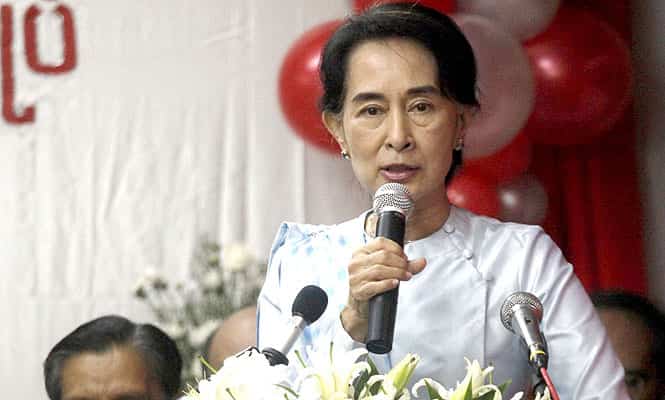
"She stands for the end of a dictatorship, not the end of a racial system," said Dores Cruz, a University of Denver anthropology professor.
Cruz said that the dismantling of communism by the Soviet leader Mikhail Gorbachev is comparable to Mandela ending apartheid. But Gorbachev did not suffer personal persecution to do it.
She noted that Mandela's image was carefully constructed for political purposes in pre-Internet South Africa, then burnished over the years by international media, musicians and Hollywood.
"The impact that has had on the historical imagination, you probably won't find that in anybody," Cruz said. "No one has the same iconic image or same historical status."
The Dalai Lama, a Buddhist figure seeking the nonviolent restoration of Tibet's independence from China, has lived in exile for more than 60 years. And there is an ethnic or racial aspect to the Tibetan struggle, as China seeks to wipe out its traditional culture and replace it with that of the Han Chinese.
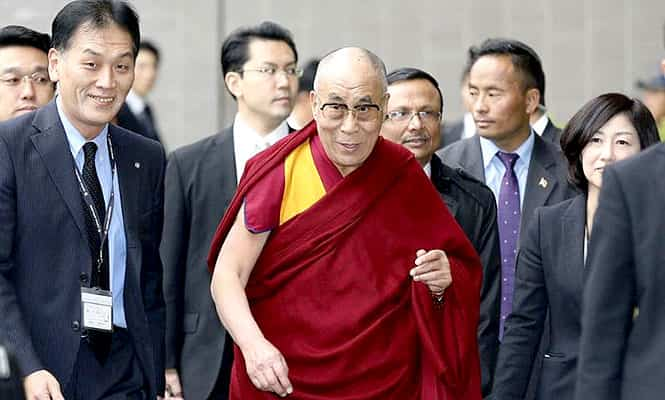
"Like Mandela, the Dalai Lama represents the decades-long suffering of his people. And he articulates a peaceful possibility in response to violence and aggression," said William Edelglass, a Marlboro College philosophy professor.
"Like Mandela, he inspires us to the better angels of our nature," Edelglass said. "He reminds us of how we really want to be."
But at age 78, with China firmly in control, the Dalai Lama is unlikely to see a free Tibet. And his Buddhist religion sets him apart from Mandela, who enjoyed a type of secular sainthood that transcended religious divides.
Malala, the 16-year-old Pakistani girl, achieved global prominence last year when the Taliban tried to kill her for advocating the equality and education of women. After Mandela's death, she called him "my leader."
In the past, other politicians suffered to reform oppressive regimes - Lech Walesa in Poland or Vaclav Havel in Czechoslovakia. But the peak of their careers came at the moment when the old regime crumbled, Calingaret observed.
"In a sense Mandela's greatest achievements were as president," he said. "He was on top, he could do anything he wanted, and he chose to push for reconciliation and inclusiveness."
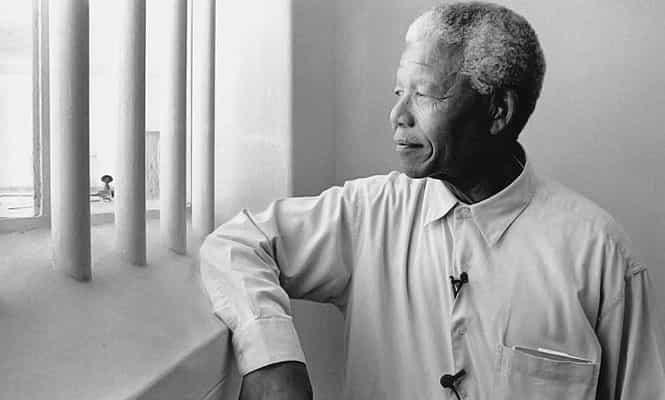
Mandela's rise might have been complicated had it happened during the Internet age. Mandela had his share of flaws, including infidelity and a past embrace of violence, but they were overlooked. The volume and speed of the information traveling around the world today makes it impossible for a leader to climb without his or her every weakness being magnified.
"One of the things about Mandela that makes him unique, all those years in prison, he couldn't be really doing bad things during that time. And he lived prior to universal access," said Edelglass.
He sees the potential for another Mandela in the fight for democracy in China, "but we would know everything about that person, everything they had ever done wrong."
"I wouldn't want to say there are no more (figures like Mandela) coming. I hope there are more coming," Edelglass said. "But it's a much more complicated world."
Roger Levine, who grew up in South Africa and now teaches courses on it as a history professor at the Sewanee: The University of the South, said Mandela became such a potent symbol because he experienced all the tribulations of South Africa itself. But the world no longer builds up politicians as the very embodiments of their nations' struggles, he said.
Mandela was a product of a Cold War world: good vs. evil, us vs. them, black vs. white. "Now," Levine said, "it's a whole lot harder to say who is the us and who is the them."
"No one is going to suggest that there aren't instances around the world where we have conflict between good and evil," Levine said. "But there are fewer opportunities to say you're on the right side, because it's a little bit less obvious what the right side of something might be."


