
 E-Paper



Major parties in Nepal end stalemate over constitution with new deal
The major ruling and opposition parties in Nepal have inked an agreement to divide the country into eight federal states and end the dispute over the electoral system, form of government and type of judiciary.


Ending years of uncertainty over a new constitution, four major ruling and opposition parties in Nepal have inked an agreement to divide the country into eight federal states.
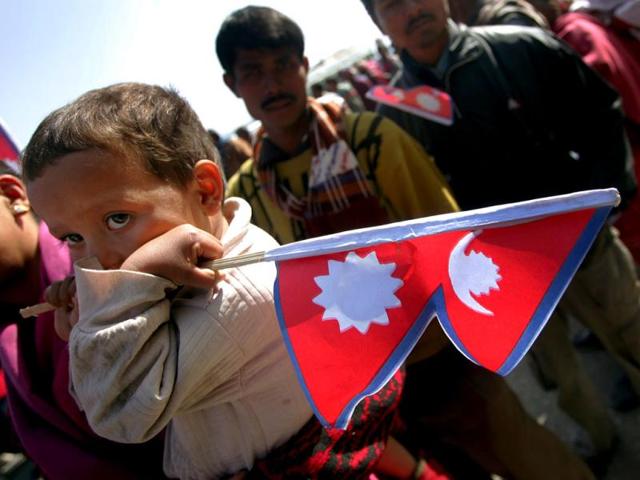
The 16-point agreement, signed late on Monday night, ended a dispute over the electoral system, form of government and type of judiciary. It was finalised more than a month after a devastating quake killed almost 9000 across the country.
The parties, however, didn't reach any agreement on the boundaries and names of the new states.
"The name of the states would be decided by a two-third majority vote of the state assemblies," said the agreement signed by ruling Nepali Congress and Communist Party of Nepal (Unified Marxist Leninist) and opposition Maoists and Madhesi Jan Adhikar Forum (Loktantrik).
The boundaries of the states would be decided on basis of ethnicity and economic viability by a federal commission within six months. Its recommendations would be endorsed by two-third majority vote in the constituent assembly.
The agreement is expected to fast-track drafting of the constitution, which has failed to materialize despite two constituent assembly elections since 2008.
But it is being opposed by over two dozen smaller parties belonging to an opposition alliance. "The agreement doesn't resolve important issues related to federalism. We will not support it," said Hridayesh Tripathi of Terai Madhesh Loktantrik Party.
Drafting of a new constitution was part of a peace deal, which ended a 10-year-civil war waged by Maoists and led to abolishing of monarchy. But differences among parties, especially over federalism, affected the constitution drafting process for years.
As per Monday's agreement, Nepal would have a bicameral parliament, with the lower house having 275 members--60% of them would be filled through direct elections and the rest by proportional representation. The upper house will have 45 seats.
The parties have also agreed to have a parliamentary form of government with executive powers vested on the prime minister chosen from the biggest party or coalition in parliament.
There would be a ceremonial president elected through parliament and a constitutional court will be set up for a period of 10 years to resolve disputes between governments at the centre and the states.
Once the new constitution is drafted, Prime Minister Sushil Koirala of Nepali Congress is expected to resign and a new government led by the second biggest party in the ruling coalition, CPN (UML), will be formed.
Read:
Nepal constitution: Breakthrough or abdication of responsibility?
Nepal’s struggle for a constitution – A primer



