
 E-Paper



Draft climate change pact hammered out after Paris talks
A landmark climate agreement aimed at slowing down global warming appeared poised for approval on Saturday with key players like India, US and China approving the final draft of what is being described as a “historic” measure to save the world from a climate catastrophe.


A landmark climate agreement aimed at slowing down global warming appeared poised for approval on Saturday with key players like India, US and China approving the final draft of what is being described as a “historic” measure to save the world from a climate catastrophe.

Negotiators from 195 nations gathered at the UN summit hours after an emotional French foreign minister presented the draft of the Paris Agreement after a month of hard bargaining by rich and developing nations.
The 31-page draft -- delivered to negotiators of 196 nations who must now decide whether to approve it -- aims to limit the planet’s warming “well below” two degree Celsius with an endeavour to limit it to 1.5 degrees, though countries like India and China are seeking to burn fossil fuels for longer.
India’s environment minister Prakash Javadekar, who had championed the need for rich nations to step up financing for the developing world, said he was happy with the deal.
The US too said it will back the agreement.
“It is my conviction that we have come up with an ambitious...agreement,” said foreign minister Laurent Fabius, on the brink of tears after presiding over nearly a fortnight of the talks in Paris, scene of ghastly terrorist attacks which left 130 dead and scores injured a month ago.
Fabius told the representatives that they would achieve a “historic turning point” for the world if they endorsed the draft for transforming the world’s fossil fuel-driven economy within decades and turn the tide on global warming and end a decades-long row between rich and poor nations over how to fund the multi-trillion-dollar campaign.
French President Francois Hollande and United Nations Secretary General Ban Ki-moon also made emotional appeals to the negotiators to adopt a universal and binding Paris agreement that may not “perfect” for all.
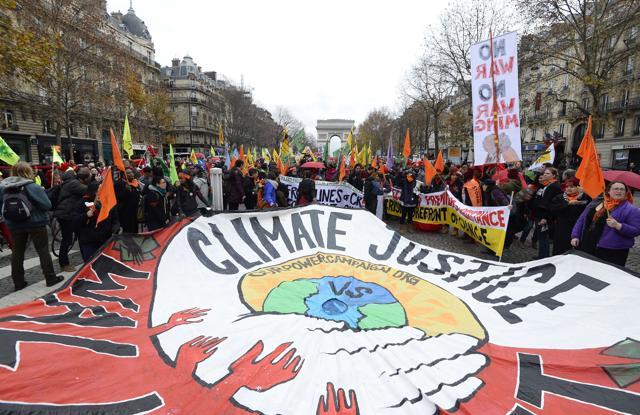
“It acknowledges climate justice and takes into account differentiated responsibilities of countries in respective capabilities in national circumstances,” Fabius said, while addressing a concern of the developing world led by India and China.
It will set a “floor” for such funding at $100 billion a year, he said, building on a 2009 pledge to provide at least that sum by 2020.
Sources said the final draft of the Paris agreement tried to balance concerns of all nations even as India had last-minute bilateral meeting with United States and France.
Developing nations led by India have insisted rich countries must shoulder the lion’s share of responsibility for tackling climate change as they have emitted most of the greenhouse gases since the Industrial Revolution.
Unlike the Kyoto Protocol, the last major climate deal agreed in 1997, the Paris pact will be a legally binding treaty.
Scientists have insisted on keeping the warming level less than two degree Celsius, the level they say is needed to avert the worst effects of warming including severe droughts and rising sea levels.
Devastating flooding in Chennai last week was attributed to climate change while a UN report too said that the record-breaking rain in the southern state could have been triggered by El Nino, a weather phenomena which sparks global weather extremes.
Asking negotiators from 196 nations not to be on the wrong side of the history, Hollande said the first universal agreement of history in climate history provide a choice to every country to become part of a major “leap for mankind”.
“We will not be judged on clauses in the text but as the agreement as a whole. Not for one day but a century,” he said, while complimenting India for its contribution to push renewable energy through solar alliance across the world.
Read | India talks tough as Paris climate summit enters final lap


