
 E-Paper



Philippines welcomes its 100 millionth citizen
Philippine officials welcomed the birth Sunday of their country's 100 millionth citizen with a cake, hope and concerns about how their poor Southeast Asian nation can help ensure a decent life for its swelling population.


Philippine officials welcomed the birth Sunday of their country's 100 millionth citizen with a cake, hope and concerns about how their poor Southeast Asian nation can help ensure a decent life for its swelling population.
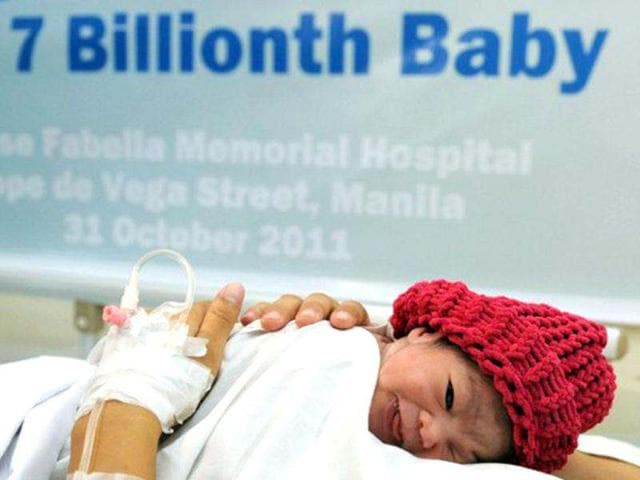
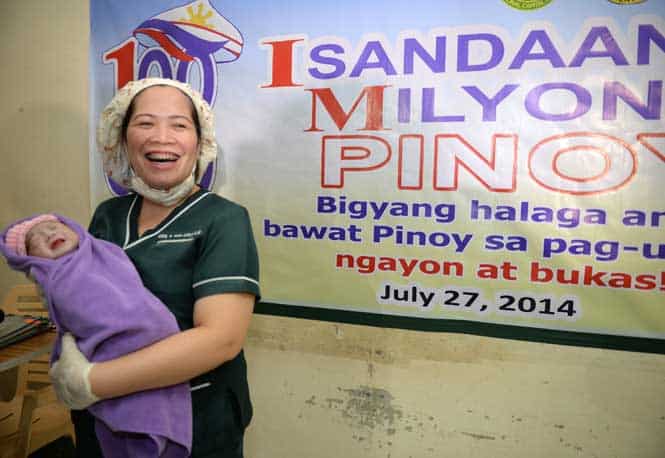
A baby girl named Chonalyn was born shortly after midnight at the government-run Jose Fabella hospital in Manila, pushing the country's estimated population to the milestone figure, said Juan Antonio Perez III, executive director of the Commission on Population.
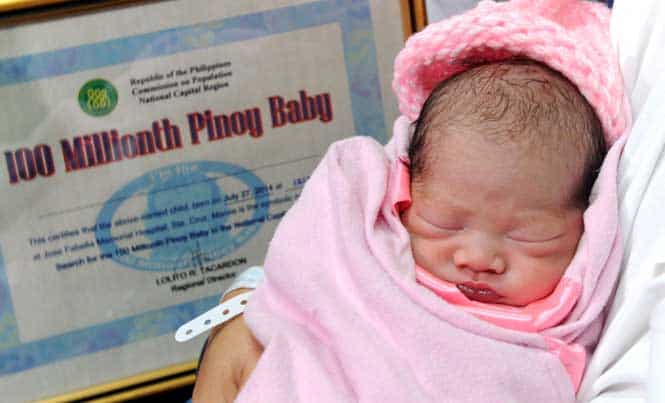
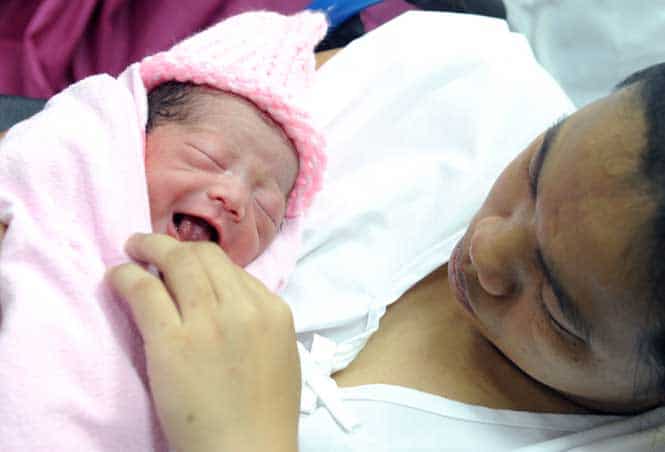
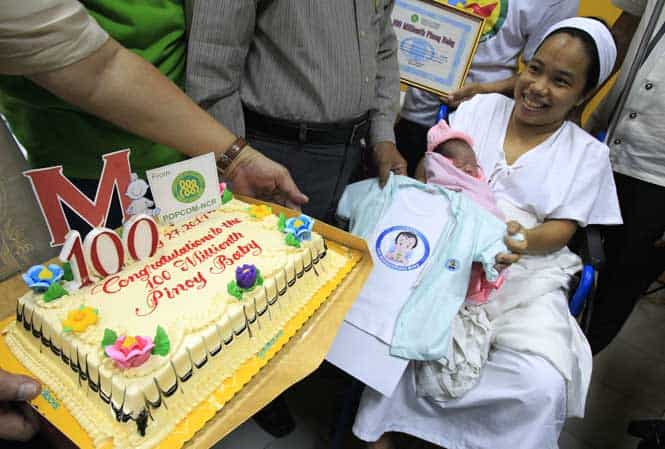
Wrapped in a blanket and pink bonnet and cradled by her beaming mother, Chonalyn was showered with a cake, infant clothes and other gifts by health and population commission officials at a hospital ceremony.
"We are faced with the challenge of providing for all 100 million Filipinos," Perez said.
The United Nations Population Fund said the milestone offers both challenges and opportunities to the Philippines, which is the world's 12th most populous country and has one of Asia's fastest-growing populations.
"It is important to emphasize that population is not merely a matter of numbers, but of human rights and opportunities," said Klaus Beck, the UNPF's Philippines representative.
With 54 percent of its population under the age of 25, the Philippines needs to provide the young with education, job opportunities and skills, Beck said. Nearly half of the country's people live in cities as more Filipinos migrate from rural areas to look for better opportunities elsewhere, fostering problems such as trafficking in girls and women that have to be addressed, he said.
In the poorest areas, women bear more children than they desire because of a lack of access to reproductive health information and services, Beck said.
President Benigno Aquino III signed a law in 2012 that directs government health centers to provide free access to nearly all contraceptives to everyone, particularly the poor, but its enforcement was delayed amid strong opposition from the dominant Roman Catholic church.
In April, the Supreme Court declared that the law was constitutional and gave the government the OK to enforce it.


