
 E-Paper



There’s more to Modi’s diplomacy than the hugs...
… and what’s wrong with the hugs anyway

 Prefer HTon Google


On September 29, 2016, Prime Minister Narendra Modi ordered surgical strikes against terrorist launch pads in Pakistan occupied Kashmir (PoK), challenging Islamabad’s nuclear flashpoint theory and denting the image of Prime Minister Nawaz Sharif, a man he had warmly hugged at Allama Iqbal airport in Lahore the previous Christmas day. The Indian Army wanted to announce the strike at 11 am but the press conference was postponed by an hour as Modi insisted on informing Pakistan first through diplomatic and military channels. The strike, the hug, and the deference to protocol were all to be expected.
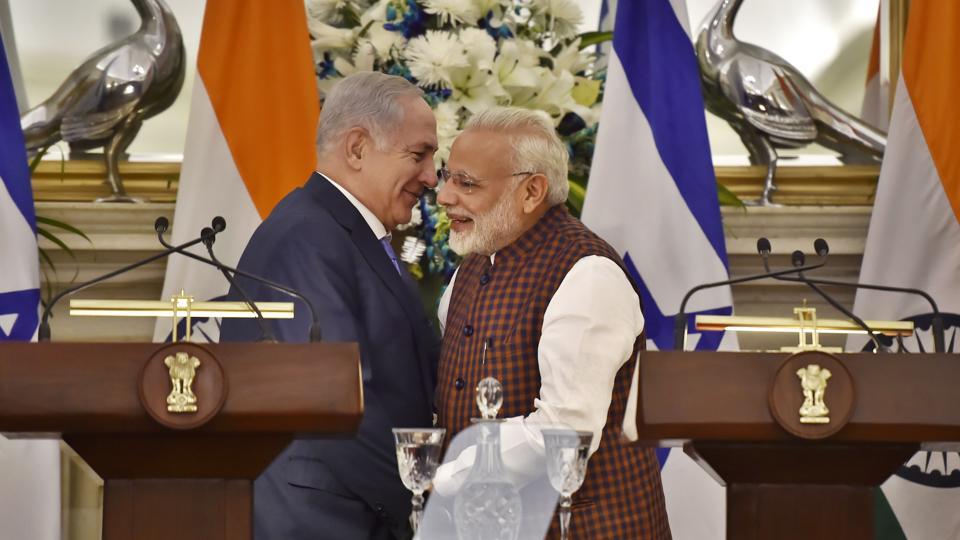
This piece is about hugs, and handshakes, and reaching out.
The main Opposition party in India, the Congress, recently released another video poking fun at Modi’s so-called “huglomacy” , but the Indian prime minister’s unorthodox and “not-so-stiff upper lip” style of greeting key global leaders with a warm hug has yielded results in situations beyond the control of India’s diplomats or military.
At the height of the unstable stand-off between the People’s Liberation Army (PLA) and the Indian Army at the Doklam plateau in Bhutan, Modi reached out to Chinese leader Xi Jinping by the hand on the sidelines of the G-20 summit last July (they were not expected to meet at all). The two shook hands and mutually agreed to defuse the crisis diplomatically. This was after the mandarins on both sides had given up, the media was in war-mode, Bhutan was jittery, and the armies of the two countries had been deployed in forward positions in case the red balloon went up. Modi’s outreach de-escalated the stand-off by August 28, 2017 and the prime minister followed up and the closed the issue by shaking hands with the Premier of the State Council of China Li Keqiang at the East Asia Summit on November 14. The first handshake broke the deadlock; the second ensured there was no blowback.
Modi’s diplomatic style is pragmatic. To my mind, it is as warm at the personal level as it is cold and calculating when it comes to ensuring India’s interests. In his diplomatic worldview, there is no point in sulking or starting. It would be safe to assume that Modi will hug Nawaz Sharif when he meets him in future and invite him for tea. It would also be safe to assume that he would then place India’s interests on the table.
The warmth of his greetings does not mean anything beyond the warmth of his greetings. For instance, Modi may have greeted US president Donald Trump effusively but he didn’t follow the latter out of the Paris Climate Accord, and, in fact, was one of the first to reaffirm his country’s commitment to it. And while Modi and Benjamin `Bibi’ Netanyahu have a bromance of sorts going on, India’s recent vote in the UN (on the US decision on Jerusalem) was driven by its own interests.
While previous regimes viewed diplomatic ties with West Asian countries and Saudi Arabia through the prism of Pakistan, Modi became the first Indian leader after Indira Gandhi (a hiatus of 34 years) to reach out to United Arab Emirates in 2015.
Last year, Abu Dhabi’s crown prince Mohammed bin Zayed Al Nahyan was the chief guest at India’s Republic Day (and did receive the customary hug). And just as India needs West Asian countries, it does ASEAN ones. This year, 10 ASEAN leaders are chief guests at the Republic Day parade.
He managed to forge excellent ties with the Saudi Royalty during his April, 2016 visit to Riyadh, but also had the courage to tell Saudi Arabia that he was going to visit Tehran the following month. The result is that neither Saudi nor UAE have had any qualms about deporting Indian criminals, including those on a Pakistani passport. Tehran has opened the gateway to Central Asia through Chah Bahr port, a mere 76 nautical miles west of Gwadar port built by China in Pakistan.
With a vision that is not clogged with a Cold War mindset, or India’s past experiences, Modi has openly reached out to US, Japan and even China. The latter, he is confident, will not engage in a military skirmish with New Delhi as it seeks to build its image as a responsible and mature superpower. He is now hosting his good friend Bibi in Delhi but is almost certain to hug Palestine President Mahmoud Abbas during his visit to the country with the traditional Israel-Palestine hyphen tossed into the Dead Sea.
shishir.gupta@hindustantimes.com


