
 E-Paper



69% of Chandigarh has no clue about e-waste; do you?
In this age of electronics, we barely give a second thought on how we dispose of our old TVs, ACs, refrigerators or mobile phones. Yet, these items known as e-waste (electronic waste) are toxic and could lead to chronic health problems.

 Prefer HTon Google


In this age of electronics, we barely give a second thought on how we dispose of our old TVs, ACs, refrigerators or mobile phones. Yet, these items known as e-waste (electronic waste) are toxic and could lead to chronic health problems.
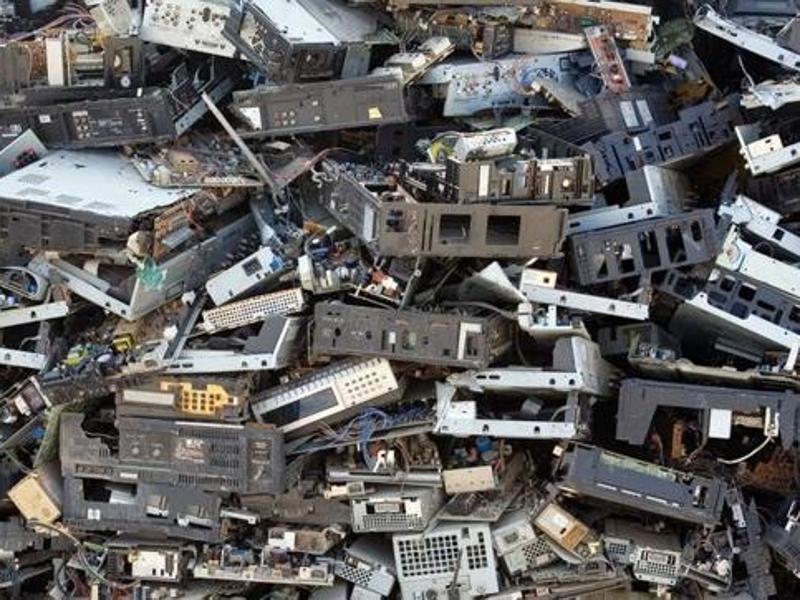
Most of the problems from e-waste occur when it is not recycled properly. For instance, discarded mobile phones can cause brain damage and respiratory and skin disorders due to the toxicity generated when they are left to rot. Brain development in children is also hit.
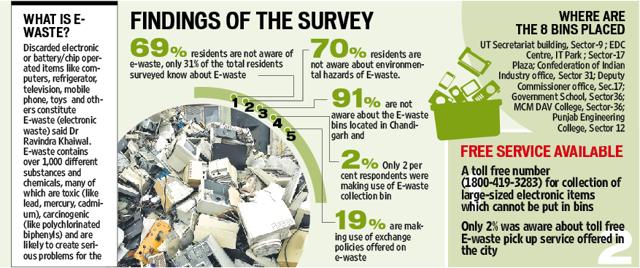
Yet, 69% of the city’s population does not even know what e-waste is with 91% not even aware that there are eight special bins placed in the city.
These shocking findings are revealed in a survey “Appraisal and Awareness of E- waste Management Practice in Chandigarh” conducted by Dr Ravindra Khaiwal, associate professor of environment health, school of public health and Dr Sumar Mor, assistant professor, department of environment studies, Panjab University, in 2015. The findings of the survey that interviewed 300 city residents from a cross-section raise a question on the role of Chandigarh administration in spreading awareness on e-waste and its management.
Another survey finding was that there is no exact or comprehensive data on e-waste production and monitoring with the Chandigarh administration.
There is only a rough estimate that states, “The city generates over 10,000 tonnes of hazardous waste, of which only 6,000 tonnes is recycled. The remaining 4,000 tonnes is dumped.”
In fact, e-waste contribute 10% to the total hazardous waste generated in the city.
Dr Khaiwal said, “In our survey, we have found that 30% of Chandigarh residents are aware on what e-waste means and their hazardous effects on environment and health.”
They found that 17 kg of e-waste is being generated by each household per annum. Refrigerators (36%) account for highest contribution by mass, followed by ACs (31.23%), washing machines (21.8%) and televisions (5%).
Dr Khaiwal emphasised that awareness activities and community engagement was essential to ensure that all electronic waste is recycled.


