
 E-Paper



Ecostani | Exit polls indicate Modi’s popularity is unmatched, difficult to dent
BJP was always geared up to build a narrative on issues raised by Modi in speeches and interviews, giving little time to the opposition to counterattack.

 Prefer HTon Google


The exit polls on Saturday gave the ruling Bharatiya Janta Party (BJP) a thumping majority with three exit polls predicting more than 400 seats for the National Democratic Alliance (NDA). The polls suggest big gains for the BJP in the southern states of Telangana, Tamil Nadu and Karnataka, and in the eastern states of West Bengal and Odisha, apart from continuing its hold in the Hindi heartland states of Uttar Pradesh, Bihar, Madhya Pradesh and Rajasthan.
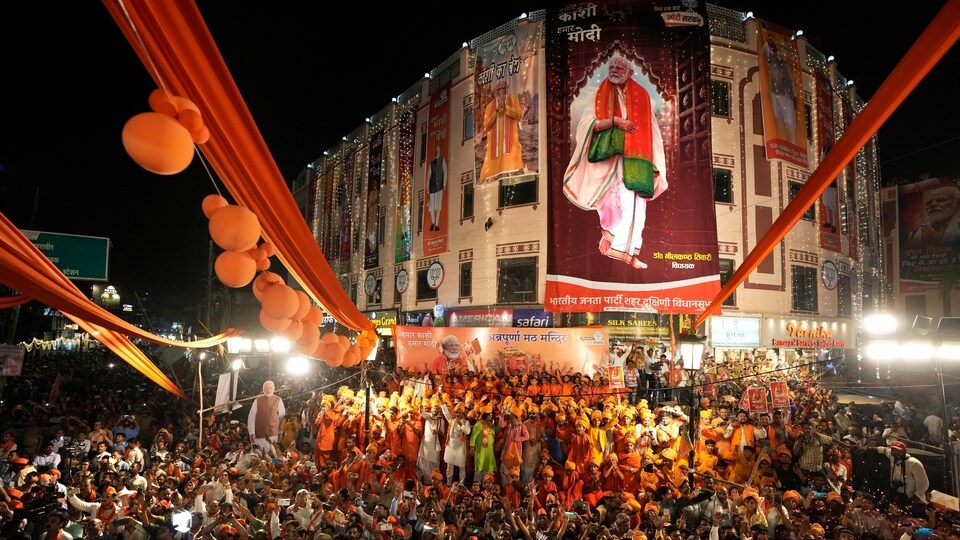
Although in the past, some exit poll results turned out to be wrong in their forecasts of voting trends, they do provide a broad indication of how citizens have voted.
The exit polls showed that the BJP was not losing anywhere in the country and pollsters claimed a definite “under current” for Prime Minister Narendra Modi. Most pollsters said voters were not vocal about their electoral preference and expressed their disdain for the political system, a reason for polling percentage in 2024 being about three percentage points less than in 2019. But Modi, as it turns out, remained their first choice.
If the exit poll results are true, we can come to three easy conclusions.
First, there is no other leader in India who can match Modi’s popularity and his ability to influence and sway popular imagination. The party worked in tandem: The BJP was always geared up to quickly build a narrative on issues raised by Modi in speeches and interviews, giving little time to the opposition to counterattack.
No opposition leader can match Modi’s energy for campaigning as he addressed more rallies and gave interviews compared to what Congress president, Mallikarjun Kharge, and Congress leader Rahul Gandhi did together.
On some days, the Modi held up to four election rallies and then a road show in sweltering heat. This was also a reflection of the BJP’s superior financial heft and better manpower management ability compared to the opposition.
Despite holding over 220 rallies, Modi continuously came up with new barbs targeting the opposition and his team clearly had a better strategy on building narratives.
Be it the old issue of the Katchatheevu Island off the Tamil Nadu coast being handed over to Sri Lanka to wealth redistribution to inheritance tax, the Modi-led BJP was ahead of the opposition in building political narratives.
Second, the BJP’s bid to polarise the elections on religious lines claiming that the opposition parties were framing policies for “appeasement” politics seems to have had an impact across the country. The BJP was able to create chatter over its unsubstantiated claim that the Congress plans to take away assets from Hindus and give them to Muslims, even though the latter did not make any such claim either in its manifesto or in speeches given by the party’s leaders.
Modi expectedly took credit for building Ram temple in Ayodhya and showcased himself as a guardian of the Hindu religion and Sanathan Dharma, while branding the opposition as anti-Hindu and pro-Muslim. The BJP was also able to create antagonism for the Congress’ secular politics, saying it was pro-Muslim and anti-Hindu.
Third, it appears that voters were swayed by the BJP’s claims that Modi has improved India’s global position and world leaders listened to Modi like no other PM in the country’s history. Attempts to decimate India’s first prime minister Jawaharlal Nehru’s legacy aided the BJP to showcase Modi as a better PM than him.
From bringing back Indian students from Ukraine to conducting the G20 summit in New Delhi to Modi receiving awards from some international organisations helped the BJP to create a narrative that India had emerged as a global power. Building that narrative was well planned and delivered by the BJP to its voters through lakhs of WhatsApp channels.
The exit poll results, if true, clearly show that development politics have taken a backseat and religion-based politics directed at one community has mainstreamed. People now tend to vote more on religion-based issues such as Hindu pride and anti-Muslim propaganda than on well-thought-out road maps to develop the nation. Religion-based politics has clearly bridged the caste divide for the BJP. To top it, the opposition has failed to dent Modi’s popularity.
Chetan Chauhan, national affairs editor, analyses the most important environment and political story in the country this week


