
 E-Paper



Surreal, 3D, in-game: Where the gig is going next

 Prefer HTon Google


As arenas stay closed, artists are using extended reality, videogame settings, even offering ‘VIP’ virtual access, to woo paying audiences around the world.
3D dragons have found themselves on stage with Billie Eilish, rapper Travis Scott has performed within a multi-player videogame, and Elton John has beamed himself in to perform on Dua Lipa’s livestream, as the virtual concert has got a makeover this year.
With the pandemic dragging on, artists are innovating to reach out to fans, and get them to pay.
Lipa’s event, called Studio 2054, was pitched as “more live movie than regular live show”. The concert was broadcast from a warehouse soundstage in London on November 27 and split into four acts. Standard tickets cost $11.99 (about Rs 900). Bundle tickets that came with access to exclusive pre-show behind-the-scenes footage were priced at $27.50 (about Rs 2,000), and included an invite to the after-show party livestream.
Tickets were available in India too, for Rs 150 and Rs 300 (because the virtual experience is so much newer and is yet to mature fully here, event partners BookMyShow said).
Accompanying the 25-year-old singer at the warehouse was a group of dancers, aerialists and acrobats. On stage, they were joined both virtually and in person by Elton John, FKA Twigs, Kylie Minogue and Miley Cyrus, among others.
Lipa’s event used its virtual format to position itself squarely between reality and fantasy. The hour-long show had the singer move through sets meant to evoke ’80s club nostalgia, with fluorescent hula hoops, roller skates, disco balls and psychedelic backdrops.
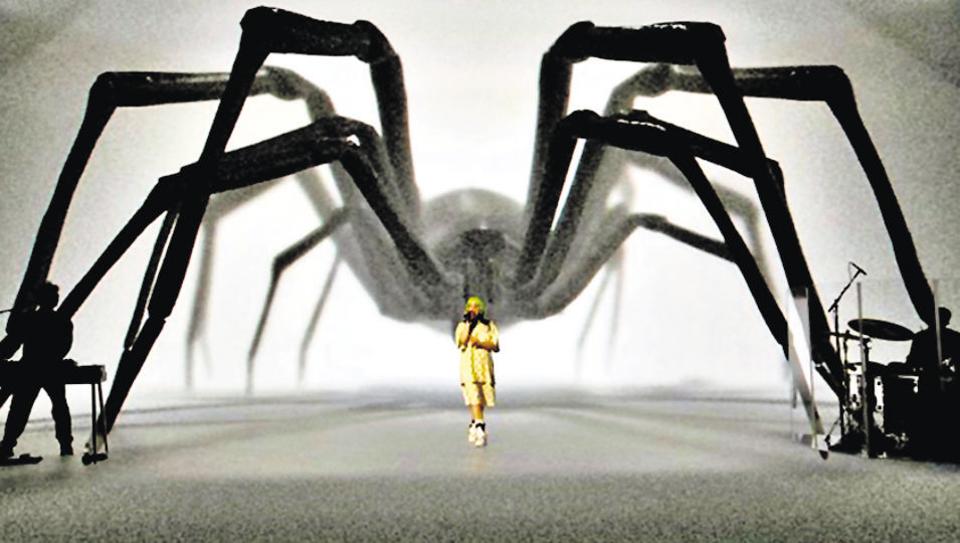
Earlier, in October, Eilish’s Where Do We Go? livestream, aired out of a studio in Los Angeles, spanned different real and imaginary worlds and used a number of gimmicks and props — from XR (extended reality; a combination of real and virtual environments) technology and multiple camera angles to 3D backdrops of enormous animated creatures, an outlandish rainforest and a giant spider that crept about as Eilish, her brother / composer Finneas and their drummer Andrew Marshall performed.
At one point the singer was seemingly devoured by a shark, and re-emerged singing on a giant floating fake moon. It helped that Eilish’s newest album, When We All Fall Asleep, Where Do We Go?, was inspired in part by dreams and night terrors.
The event also had a merchandise e-store, in the form of an interactive 360-degree room with apparel and Eilish’s albums on display. The effect was transportative, even if you were still on your couch in your living room.
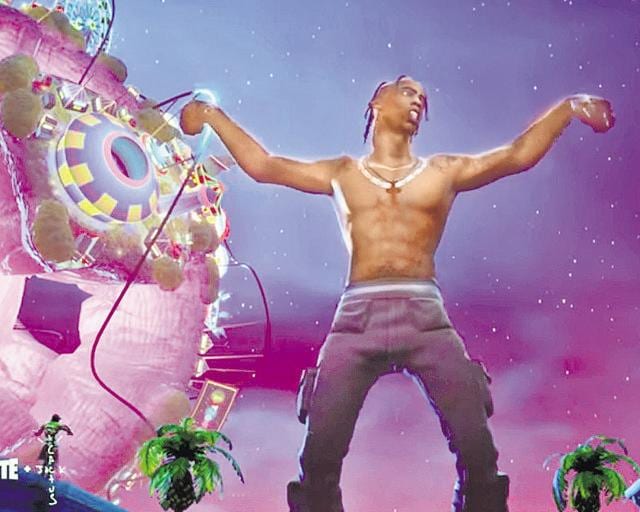
In April, meanwhile, rapper Scott teamed up with Fortnite for Astronomical, a five-concert series held within the popular video game over three days, open only to players, but free if you were one. Scott performed in the CG avatar of a skyscraper-sized cyborg, stomping around Fortnite’s island.
If you were in-game at the time, you could “run across” to catch a glimpse of the action from various angles — including events held underwater and in “outer space”. Here too, an in-game item shop sold concert merchandise.
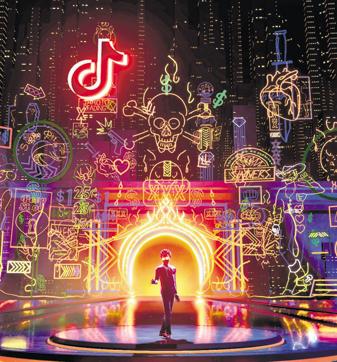
Even on TikTok, in August, a CG-animated avatar of The Weeknd made headlines for performing a snippet of a new song in a 20-minute augmented reality, interactive livestream.
“We are at a point where we have to make use of technology for all it’s worth,” says Gunjan Arya, CEO of media and entertainment company OML. “It can’t feel like you’re watching TV at home. And it can no longer be a one-way broadcast”
OML organises the NH7 Weekender music festival, usually held across multiple cities. This year, it was held virtually on December 5 and 6, with tickets priced at Rs 99 to Rs 199 per viewing experience, multiple “stages” in use simultaneously (as it would have been in an offline event), and a set of interactive features like virtual parties, an e-photo booth and a chat feature where attendees could say hello to performing artists.
“The question remains, how do you bypass the lack of physical human connection, the on-site feeding off of each other’s energy that you get at a live concert,” says Arya. “We are trying to find as many proxies as we can for that. So this year we sent over Weekender happiness kits to people’s houses, little NH7 memorabilia to dial up that connection.”
Given that prices are so much lower—tickets to an offline Dua Lipa concert cost between €48 (about Rs 5,000) and €267 (about Rs 26,000); for Weekender offline, they cost between Rs 3,000 and Rs 6,000 — Albert Almeida, COO for live entertainment at BookMyShow, believes the virtual gig is here to stay, predicting that they will persist alongside offline events, even when things normalise.
“The audience’s propensity to pay has increased. About 70% of our online events are now ticketed,” Almeida says. “And artists are able to create a differentiated experience and reach out to a much wider set of fans since geographical restrictions and price barriers have both fallen.”


