
 E-Paper



2-year-old murder case now focal point of Jharkhand poll campaign in mining town
Suraj Deo Singh’s family has been winning the seat because of the clout of the Janata Majdoor Sangh, said Mohammed Salim, a coal mine worker in Jharia, who senses a degree of anti-incumbency against the family.


In the coal mining town of Jharia in Jharkhand, the murder of a politician two years ago is the focal point of the election campaign of rival candidates and sisters-in-law Ragini Singh of the Bharatiya Janata Party and Purnima Singh of the Congress. The seat goes to polls on November 16 in the fourth round of the five-phase polling in Jharkhand.
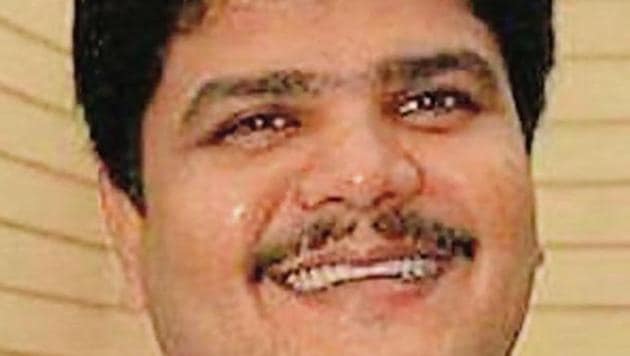
On March 22, 2017, Purnima Singh’s husband, Neeraj Singh, and three of his security guards were allegedly shot dead by hired gunmen near Dhanbad’s Steel Gate area. Police said Neeraj Singh was hit by 67 bullets after the assailants riding a motorbike intercepted his sports utility vehicle barely 100 metres from his home and opened fire with an AK-47 rifle and pistols.
The police arrested his cousin, Sanjeev Singh, the sitting BJP lawmaker and husband of Ragini Singh, for allegedly planning the murders that revived an old feud in a family that once held sway over Jharia coal mining areas.
Dhanbad superintendent of police Anshuman Kumar said the killing of Neeraj Singh was suspected to be in revenge for a murder attempt on Sanjeev Singh in January 2017, in which his driver Ranjay Singh was killed. Sanjeev Singh had claimed the attempt was carried out by the criminals hired by Neeraj Singh to avenge his younger brother Mukesh Singh’s murder a few years ago.
Sanjeev Singh, as a BJP candidate, defeated Neeraj Singh, a Congress candidate, in the 2014 assembly election from Jharia assembly seat by about 30,000 votes. Sanjeev Singh is the son of Suraj Deo Singh, a Dhanbad don-turned-politician, and Neeraj Singh is the son of the latter’s younger brother, Rajan Singh.
Legacy At Stake
Ramji Lal, a veteran Marxist leader in the region, said Suraj Deo Singh came to Jharia to work as a coal miner in the late 1960s. He established himself in the region and eventually got close to 10,000 workers, mostly Rajputs, from his native district of Ballia in Uttar Pradesh and neighbouring Ara in Bihar, to the region to work in the mines. He started his own workers union called, Janta Majdoor Sangh, and started collecting taxes from trucks loaded with coal from the mines.
“His clout grew and the members of Sangh became his core supporters in Dhanbad and Jharia, from which he derived his political strength,” Lal said. Suraj Deo Singh represented Jharia in the state assembly from 1977 until his death in 1991.
Since his death, the rivalry within the Singh family over control of the coal business has occasionally flared into violence in the neighbouring towns of Dhanbad and Jharia. According to state-owned Coal India Limited, Jharia, has 57 coal mines, which provide employment to about 200,000 people.
According to local residents, after Suraj Deo Singh’s death, his eldest son, Rajiv Singh, took control of the coal business and his brother, Ramadhir Singh, became his political heir. In 2003, Rajiv Singh went missing — he hasn’t been traced until now — and Suraj Singh Deo’s wife, Kunti Singh, took over. To keep the family together, Sanjeev Singh married Rajiv Singh’s wife, Ragini.
After taking over the business, Kunti Singh was opposed by her younger brother-in-law, Bachcha Singh, one of Suraj Deo’s five brothers. Bachcha Singh, considered Suraj Deo’s right hand man, was urban development minister in the BJP governments of Babulal Marandi and Arjun Munda between 2000 and 2006.
“Neeraj Singh was close to Bachcha Singh, who helped him in setting up business in Dhanbad and crafted his political journey. It was because of Bachcha Singh that Neeraj became deputy mayor of Dhanbad in 2015,” said Lal, who has been with the Marxist Workers’ Union since 1970s and was the personal secretary to former Lok Sabha Parliament member from Dhanbad, A K Roy.
Political Face-off
Now, the family is facing off on political turf in the confrontation between the sisters-in-law.
“Our family has been serving the people of Jharia for long. The party has once again shown confidence in our family. Now with the blessing of mother Kunti Singh [former Jharia MLA and mother-in-law of Ragini] and husband Sanjeev Singh, I would fight and retain the seat for the party and my husband,” Ragini Singh said on the campaign trail in Digwadi colony of Jharia town.
A kilometre away, Poornima Singh walked through an unauthorised colony, Bhalliapura, telling people that her husband had been killed because he was popular among the people of Jharia. “I am going to fulfil the promises made by my husband to the people of Jharia. It is a big sentimental issue here,” she told HT.
She said the election was about 15 years of misrule by Suraj Deo Singh’s family and their exploitation of coal mine workers. Before Sanjeev Singh, his mother, Kunti Singh, was the lawmaker from Jharia for 10 years. Sanjeev Singh, who is in jail and is facing trial in the Neeraj Singh murder case, succeeded her in 2014.
Diminishing Clout
Suraj Deo Singh’s family has been winning the seat because of the clout of the Janata Majdoor Sangh, said Mohammed Salim, a coal mine worker in Jharia, who senses a degree of anti-incumbency against the family.
Another coalmine worker, who was not willing to be identified, said the final result will depend on what sort of pressure is exerted by supporters of Sanjeev Singh and Neeraj Singh in the last few days of the campaign. “The door-to-door campaign you see is just an eyewash,” he said.
Lal said the clout of the Suraj Deo Singh family had diminished as the coal mine companies outsourced most of the mining work, leading to a decrease in employment opportunities. “The mines now employ 45,000 to 50,000, down from about 200,000 workers some four years ago. Many workers have been shifted to new mines which don’t fall in the Jharia assembly segment,” Lal said.
Killings have been a way of political life in the Dhanbad-Jharia coal belt.
In 2011, four assailants shot Congress leader and coal merchant Suresh Singh in Dhanbad Club. In 1999, a coal merchant was bushwhacked and shot just as another coal merchant Binod Singh was shot dead. In both cases, Ramadhir Singh, uncle of both Sanjeev Singh and Neeraj Singh, is serving a life sentence.
Before Neeraj Singh’s murder, at least seven persons were killed and members of Suraj Deo Singh’s extended family were named in the FIRs. They were exonerated in most cases due to want of evidence, police said. The most high-profile murder was on March 28, 1979 of Congress trade union leader-turned-don, B P Sinha. His family suspected role of then Jharia MLA Suryadeo Singh. Singh was charged with murder, but exonerated.
“The killing of Sinha led to rise of Suraj Deo as the Congress went out of the centre stage and the Left was getting weak. He became an undisputed king of the coal mining business,” said Pramod Pathak, a professor of management at the Indian Institute of Mines, Dhanbad.


