E-Paper



Depleting ground water eucalyptus trees to be uprooted en route Dindori to Anuppur
Tall eucalyptus trees lining both sides of the 200 km stretch of road between Dindori to Anuppur via Amarkantak will soon be uprooted, according to a plan of the state government.

 Prefer HTon Google


Tall eucalyptus trees lining both sides of the 200 km stretch of road between Dindori to Anuppur via Amarkantak will soon be uprooted, according to a plan of the state government.
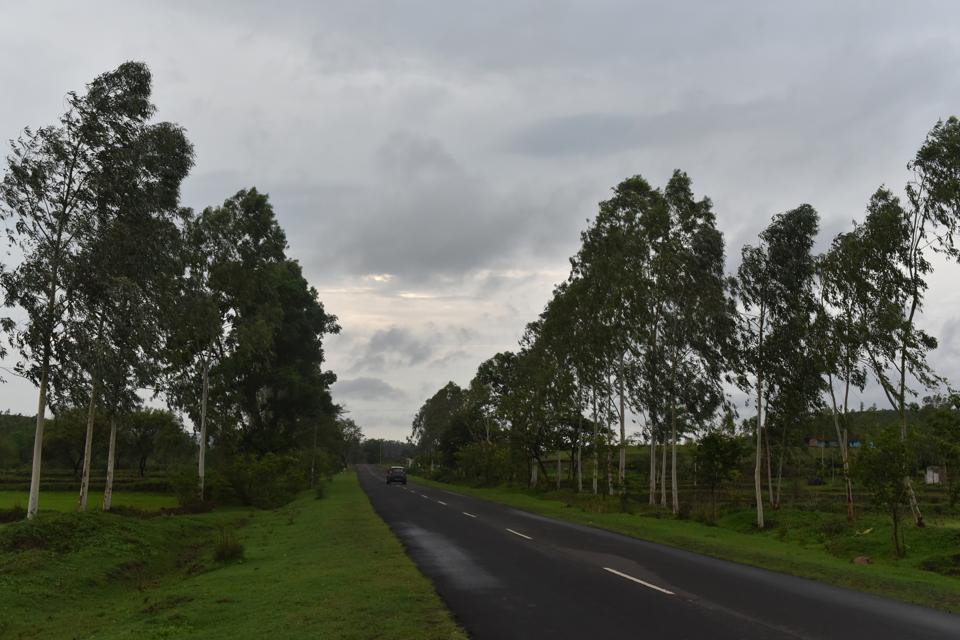
The government recently said that these trees were depleting the groundwater and creating a water shortage despite the presence of the Narmada river. Locals have been looking to cut down these trees ever since.
In place of these trees, the government will promote the cultivation of indigenous species of flora, according to the plan.
According to a forest official, the trees are located in Amarkantak, the originating point of the Narmada river, and other cities including Dindori, Mandla and Anuppur located along the banks of the river.
The government has alleged that these trees are drying up the local groundwater.
“To resolve this issue, the government took the decision after consulting with forest department that eucalyptus trees would be replaced by indigenous variety of shady and fruit bearing trees which are not only good for environment but for farmers too. The Forest department has started discouraging the plantation of eucalyptus while district administration has started uprooting it,” said Jauwad Hasan, principal chief conservator of forest (PCCF) and head of the forest department. In May 2017, chief minister Shivraj Singh Chouhan had announced a plan to rid Amarkantak free of eucalyptus.
A resident of Retwar village of Dindori district Pramila Marawi, 57, said, “We never understood why eucalyptus trees were planted in our area as these trees are beneficial for industrialists only. We don’t get anything from these trees. Now, we came to know that they are taking away water from us so we are waiting to see felling of these trees.”
Dindori district collector Mohit Bundas said, “The eucalyptus trees would be uprooted in phased manner. Mainly the trees were planted by paper industry so we have asked them to uproot it. We have sent a proposal to horticulture department to provide saplings of indigenous fruit bearing trees like drum stick, jamun and mango. These trees would improve the health of farmers too.”
However, environmentalist and retired PCCF RN Saxena said, “Eucalyptus saplings were planted after obtaining prior approval from government of India. It was a perspective planning to grow large size trees in the state to meet the demand of timber. The trees provide much better covered to the soil and retain water in the soil strata. The consumption of water is not high. I don’t agree with the government’s decision.”