E-Paper



Landless households come down in MP, finds survey
The number of landless people in Madhya Pradesh came down by more than 10% in the last two decades, a recent survey of the National Sample Survey Office has found.


The number of landless people in Madhya Pradesh came down by more than 10% in the last two decades, a recent survey of the National Sample Survey Office has found.
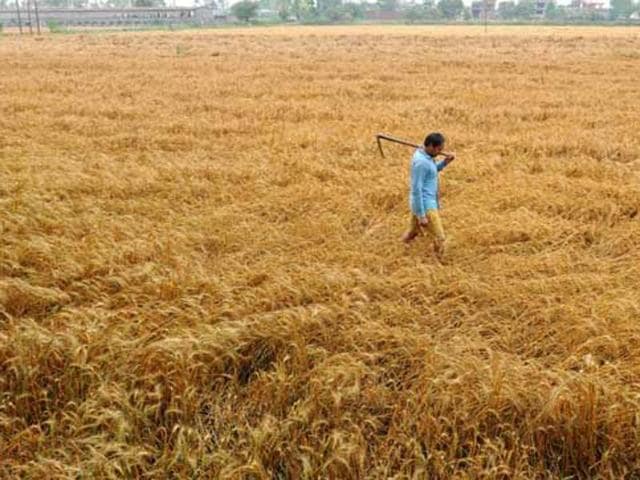
The report on “Household ownership and operational holdings in India” also found that the state has the second highest average of land owned by families in the country after Rajasthan.
The percentage of landless families in the state came down from 15.2 in 1992 to 12.05 in 2003, and in 2013, it further declined to 5.56, the survey found.
The downward trend in the state is higher when compared to the national figure. Across the country, the percentage of landless households decreased from 11.3 in 2003 to 7.4 in 2013, the survey shows.
During the same period, the average land owned by a household (in hectares) came down from 1.7 in 1992 to 1.3 in 2003, the report found. In 2013, the average land owned per household in the state was 1.12, the survey has found. The change is low compared to the figure at the national level.
Balram Chaudhary, a farmer from Dhana village in Sagar, said one the main reasons for the trend was that people have left farming and moved to urban areas for jobs.
“My father owned 10 hectares of land, and we are four brothers. One is working in Korba, another in the forest department while the third is in Sagar town. So my family is the only one left farming on the land,” he said.
Bhav Singh Ahirwar, another farmer, said that he and his brother inherited 12.5 acre land.
“My brother works in the horticulture department and has no time for farming. So I am the only one growing crops on the land,” he said.
PS Meena, commissioner agriculture production, told Hindustan Times that two factors have played a key role in the decrease in the number of landless families.
“Since 2006-07, the state government has given land rights to more than 2.3 lakh tribes people in the state under the Forest Rights Act...Between 1998 and 2003, the state government distributed charnoi or common grazing land to landless Dalits and tribes people,” he said.
EXPERTS SCEPTICAL
Experts say the data is misleading. Devinder Sharma, an agriculture expert, said such a reduction in the number of landless families was something that needs to be studied as the trend in the country was that more farmers were becoming landless. “There seems be some anomaly when you look at it from the national perspective,” he said.
PK Bisen, another expert , said that at a time when agriculture land was being converted for other purposes, the number of landless families should actually have gone up. “This data needs to be studied in detail,” he said.
HOW VARIOUS STATES ARE PLACED
Percentage of landless households in MP and other neighbouring states
State 1992 2003 2013
Madhya Pradesh 15.2 12.05 5.56
Maharashtra 19.6 17.66 12.84
Gujarat 16.3 13.60 12.50
Rajasthan 6.4 5.65 3.89
Uttar Pradesh 4.9 3.82 3.32
India 11.3 10.04 7.41
Average area in hectares owned per household in MP and other states
State 1992 2003 2013
Madhya Pradesh 1.74 1.3 1.1
Maharashtra 1.59 1.02 0.9
Gujarat 1.38 1.01 0.8
Rajasthan 2.55 2.07 1.48
Uttar Pradesh 0.83 0.61 0.49
India 1.01 0.72 0.59
(Landholdings less than or equal to 0.002 hectares is classified as ‘landless’ category)