E-Paper



‘Link cow rearing with economy of farmers to protect bovine’
Veterinary Council of India president Dr Umesh Chandra Sharma said one cannot ensure cow protection in an agrarian country like India unless the economics of cow rearing from the perspective of farmers is addressed first.


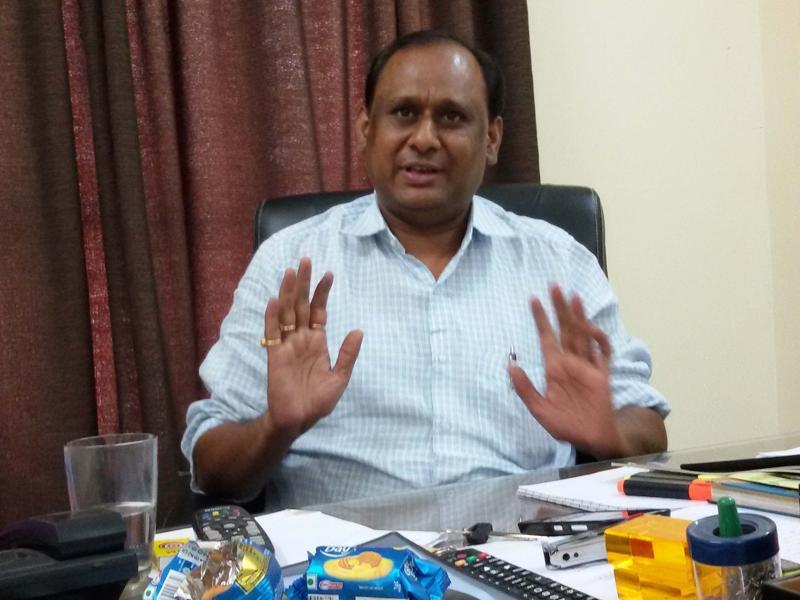
Viewing cow protection merely through a political or religious lens is a narrow view, believes Veterinary Council of India (VCI) president Dr Umesh Chandra Sharma. He says one cannot ensure cow protection in an agrarian country like India unless the economics of cow rearing from the perspective of farmers is addressed first. In an interview to HT, Dr Chandra, who was in Bhopal recently, spoke at length about various issues related to cows and how their existence is linked to the farmers and the village economy. Excerpts:
Voices on cow protection are getting louder in the country. What is your take on it as an expert?
You cannot protect cow in this country unless you address the economics of cow rearing from the perspective of farmers in the rural areas of India. Over the years, rearing cows has become a burden on farmers. Cows, unlike buffaloes, don’t give much milk and input cost on rearing cow is also increasing.
Because of these factors, many farmers have given up rearing cows. As a veterinary doctor and somebody who comes from a farming background, I can say this with certainty that only a farmer can save cows in this country. You have to link cow rearing with economy of the farmer and make it remunerative for them.
Despite demands for cow protection, shortage of veterinary doctors remains a major concern. What is your take on this issue?
I totally agree. The norm is there should be a veterinary doctor for every 5,000 cattle units. At present, there is a shortage of around 70,000 veterinary doctors in India.
We have roughly 50,000 active veterinary doctors against a requirement of 1.2 lakh. In Madhya Pradesh, against the availability of around 1,200 veterinary doctors, there is a requirement of around 5,000 doctors.
The problem is that even now across India we have just 54 veterinary colleges, with each college creating an average of just 60 doctors annually. We have made a recommendation that seats in each of those colleges be increased to 80 and the same has been started in some colleges from this year.
What do mean by ‘addressing the economics of cow rearing’?
If you make cow rearing profitable for farmers, you can reduce farmer suicides in this country considerably. Farmers take the extreme step when their crop fails due to deficient monsoons or some plant disease. They have nothing to fall back upon. But, if they have some alternative source of income, they would not take the extreme step of committing suicide.
But improving the economics of cow rearing at the village level can only succeed if farmers are able to sell their milk through an established supply chain — like it is in Gujarat. In Madhya Pradesh, only a small part of the total milk produced is sold through supply chains. If you compare Gujarat with Madhya Pradesh, this will become clear.
Gujarat procures 129 lakh litres of milk every day from lakhs of its cooperative member households, while MP is procuring merely 8 to 9 lakh litres of milk every day. MP’s procurement is less than 10% of the total milk produced.
What is your take on banning cow slaughter from the perspective of a veterinary expert?
India is primarily an agrarian society. Cows and buffaloes play a crucial role in the economy at the village level. So I support ban on cow slaughter and believe the government should also consider banning slaughter of buffaloes, given their importance in the village economy.
If the government provides a good market to the farmers where they can sell their milk, in the long run, cows and buffaloes can become alternative sources of income for them, especially in times of agrarian crisis, and help in preventing farmer suicides.
Do you think looking at the cow issue through a political or religious lens will help in protecting cows?
I think a holistic vision is needed. A narrow political or religious view could harm the cause of cow protection. As an expert, I feel cow protection is linked to how we deal with livestock in our country as a whole.